
Investment Casting for Railways & Defence Parts in the UK
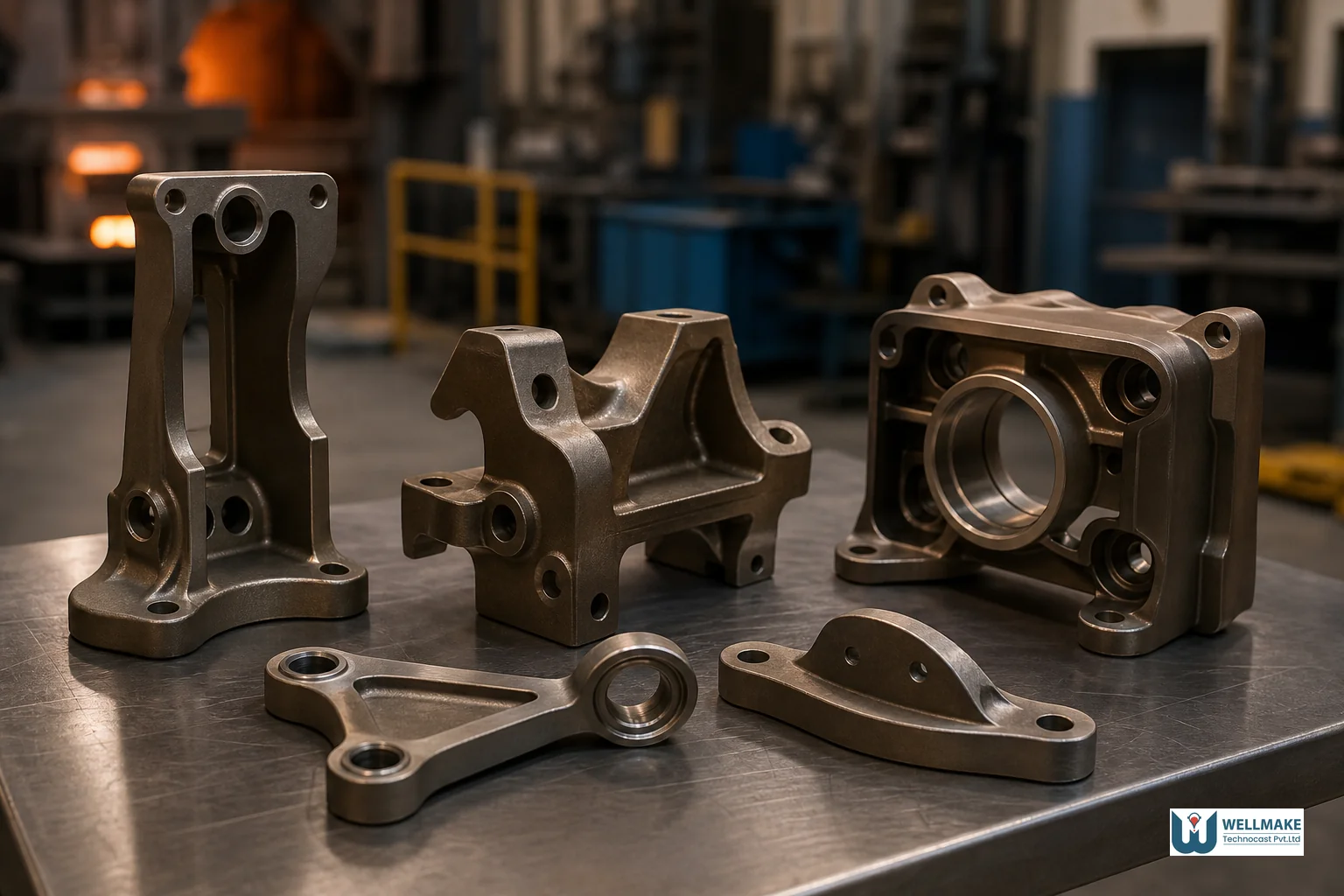
A signalling cabinet bracket that fails a dimensional check three weeks before a rolling stock delivery deadline is not a paperwork problem, it is a schedule problem. UK railways and defence programmes increasingly rely on investment casting for railways defence components UK supply chains because the process delivers tight tolerances, complex geometries, and certified traceability in one repeatable workflow, without the fabrication welds and machining waste that slow down conventional routes. This guide walks through what gets cast, how the process works end to end, and how to qualify a foundry, including an overseas one, without gambling your programme timeline.
Key Takeaways
- Component scope: Investment casting suits rolling stock brackets, bogie housings, connector bodies, and defence structural mounts where welded fabrications add weight and weak points.
- Tolerance reality: Standard investment casting holds roughly ±0.13mm to ±0.4mm depending on section size, with machined features tightened further after casting.
- Certification baseline: ISO 9001 is the minimum expectation; ISO 14001 and ISO 45001 are increasingly requested by UK defence and rail procurement teams alongside full material traceability.
- Cost and lead time: Sourcing from an established Indian foundry typically runs 30-40% below UK domestic casting rates, though shipping adds 4-6 weeks versus a local supplier.
- Single-source advantage: Ordering un-machined and CNC-machined line-ready parts from one foundry removes a handoff point where dimensional errors and schedule slippage usually happen.
At a Glance: UK Railways & Defence Casting Sourcing
| Factor | Typical Range or Requirement |
|---|---|
| Common components | Brackets, bogie housings, connector bodies, valve and pump housings, structural mounts |
| Materials used | Carbon steel, stainless steel (304/316/17-4PH), duplex stainless, aluminium and copper alloys |
| Standard tolerance | ±0.13mm to ±0.4mm as-cast; tighter with post-machining |
| Weight range (this foundry) | A few grams up to 180 Kgs per component |
| Core certifications | ISO 9001, ISO 14001, ISO 45001, mill certs, batch traceability |
| Typical first-order lead time | 10-16 weeks including tooling, sampling and first article inspection |
| Repeat-order lead time | 4-8 weeks depending on volume and machining scope |
| Cost differential vs UK foundry | Roughly 30-40% lower landed cost from an established Indian supplier |
Why UK Railways and Defence Programmes Turn to Investment Casting
Rolling stock and defence platforms share a common design pressure: parts must be light, strong, and geometrically precise, often in shapes that welding or bar-stock machining cannot produce economically. A bogie suspension bracket with an internal fillet radius, a variable wall thickness, and a mounting boss in one piece is exactly the kind of part where investment casting replaces three or four fabricated pieces and their weld joints. Fewer joints mean fewer fatigue failure points, which matters on components that see constant vibration loading over a 30-year rail vehicle service life.
Defence equipment adds its own layer of demand. Vehicle brackets, weapon system housings, and communications enclosure bodies often need to meet shock and vibration specifications that a welded assembly struggles to certify consistently. Casting the part as a single near-net-shape piece, then machining only the critical interfaces, gives engineers a part that behaves predictably under test. That predictability is why procurement teams researching how investment casting works step by step usually end up specifying it for exactly these structural, safety-adjacent components.
There is also a supply resilience argument. UK domestic foundry capacity has contracted over the past decade, and several regional casting shops serving rail and defence primes have closed or scaled back due to energy costs. That has pushed buyers to look at ISO-certified investment casting foundry options for UK buyers outside the domestic market, particularly foundries with export experience into regulated sectors.
1. Typical Components Cast for Railways and Defence Programmes
Not every part belongs on a casting drawing. The components that consistently make sense are the ones with structural complexity, moderate to high strength requirements, and a production volume that justifies tooling. In railways and defence work, that typically covers:
- Rolling stock brackets and clamps: Mounting brackets for HVAC units, cable trays, door mechanisms, and coupler assemblies, usually in carbon steel or stainless steel depending on corrosion exposure.
- Bogie and suspension housings: Components carrying dynamic loads where fatigue resistance and dimensional consistency across a production batch are non-negotiable.
- Electrical and signalling connector housings: Often in stainless steel or bronze alloys, requiring sealed mating faces and tight bore tolerances for cable gland fitment.
- Structural mounts and brackets for defence vehicles: Weapon mount interfaces, armour panel brackets, and equipment housings that need to pass shock and vibration testing as a single-piece design.
- Pump and valve housings for onboard fluid systems: Braking systems, hydraulic actuation, and cooling circuits on both rail vehicles and defence platforms frequently use cast valve bodies, a category covered in more depth in guidance for investment casting for pump and valve manufacturers.
Material selection follows the operating environment. Carbon steel handles most structural brackets where cost matters more than corrosion resistance. Stainless grades (304, 316, or precipitation-hardened 17-4PH) come into play for exterior or fluid-contact parts. Aluminium and copper alloys show up where weight reduction or electrical conductivity is the driving specification. A foundry with broad material capability across ferrous and non-ferrous alloys can usually cover an entire bill of materials without splitting the order across suppliers.
2. The End-to-End Investment Casting Process, Step by Step
Understanding the process helps a buyer ask the right qualification questions later. The path from drawing to line-ready part runs through eight distinct stages.
- Tooling and wax pattern injection: A hardened tool produces a wax replica of the finished part, built to account for shrinkage during solidification.
- Pattern assembly: Multiple wax patterns are attached to a central wax sprue, forming a tree that maximises furnace utilisation per pour.
- Ceramic shell building: The wax tree is dipped repeatedly in ceramic slurry and stucco, building up a shell strong enough to hold molten metal.
- Dewaxing: The shell goes into an autoclave or flash-fire oven, melting out the wax and leaving a hollow ceramic mould.
- Shell firing and pouring: The shell is fired to full strength, then filled with molten metal at a controlled temperature specific to the alloy grade.
- Shell removal and cutting: Once cooled, the ceramic is broken away, and individual parts are cut from the tree and ground at the gate marks.
- Heat treatment: Parts undergo normalising, quenching, or ageing as required to hit the specified mechanical properties.
- CNC machining and finishing: Critical bores, mating faces, and threaded features are machined to final tolerance, followed by surface treatment and final inspection.
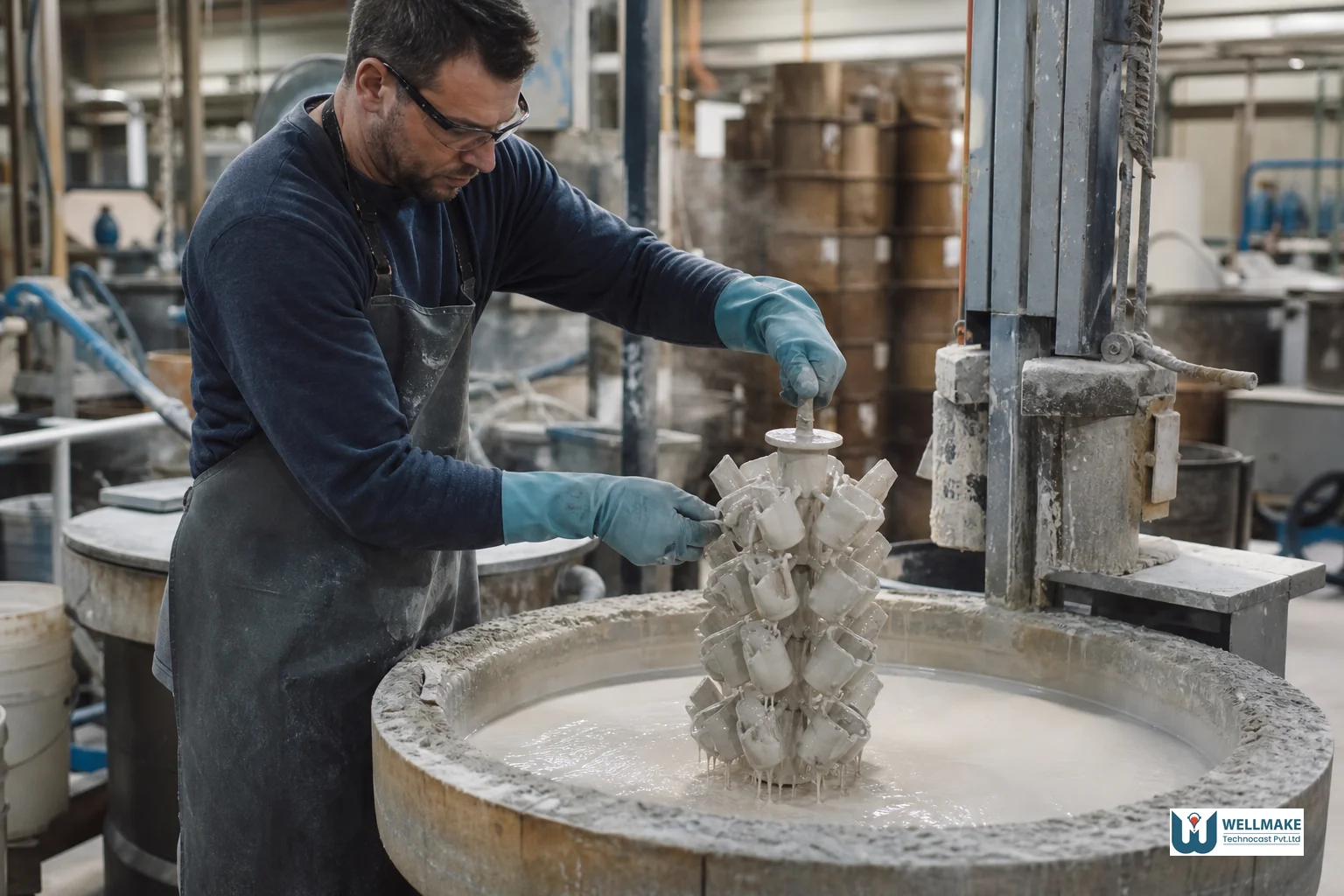
For railways and defence work, the last two stages matter most to procurement. A part that arrives un-machined still needs a machining step downstream, which reintroduces a supplier handoff and a second quality sign-off. Ordering both the casting and the finish-machining from one foundry, when that foundry has in-house CNC capability, removes that handoff entirely. That single-source model is increasingly what UK buyers ask for when they compare investment casting against pure machining routes for cost and control.
A useful reference point on total production time: from confirmed tooling drawing to first shippable batch, expect roughly 10 to 16 weeks for a new part number, with repeat orders running considerably faster once the tooling exists and the process is proven.
3. Quality and Compliance Expectations for Railways & Defence Work
Rail and defence procurement teams rarely accept a foundry's word alone. They want documented evidence at every stage, and for good reason: a bracket that fails in service on a passenger train or armoured vehicle carries safety consequences well beyond the cost of the part itself.
Certifications that matter
ISO 9001 for quality management is the baseline expectation from any serious casting supplier. ISO 14001 (environmental management) and ISO 45001 (occupational health and safety) are increasingly requested by procurement teams auditing supply chains for both compliance risk and corporate responsibility reporting. A foundry holding all three, alongside sector-specific quality requirements referenced in standards bodies such as the Office of Rail and Road, signals a mature quality system rather than a one-off certification exercise.
Material traceability
Every batch of metal poured should trace back to a mill certificate showing chemical composition and mechanical properties. For defence-adjacent parts, buyers typically want batch-level traceability maintained through the casting, heat treatment, and machining stages, so any non-conformance can be traced to a specific melt and machining run rather than an entire production lot.
Dimensional tolerances and inspection
Standard as-cast tolerance for investment casting sits around ±0.13mm to ±0.4mm depending on part size and geometry, tighter than sand casting but not as tight as fully machined stock. Critical mating features get machined afterward to hold tolerances as tight as ±0.02mm where the application demands it. Foundries serving this sector should run coordinate measuring machine (CMM) inspection on first-article samples and provide dimensional reports against the drawing, not just a pass/fail statement. For a fuller breakdown of what is realistically achievable, see this guide on tolerances investment casting can achieve.
Non-destructive testing
Structural and pressure-bearing components often require dye penetrant inspection, radiography, or ultrasonic testing to catch internal porosity or shrinkage defects invisible to the eye. A foundry's in-house lab, ideally equipped with spectrometer analysis, universal testing machines, hardness testers, and impact testing equipment, should be able to run these checks without outsourcing them, which shortens the feedback loop when a batch needs rework.
4. Investment Casting vs Alternative Manufacturing Routes
Buyers new to casting sometimes default to machining from bar stock or forging because those routes feel more familiar. For rail and defence brackets and housings with moderate complexity and mid-to-high volume, investment casting usually wins on total cost and design freedom once tooling is amortised. The table below compares the four routes most commonly weighed against each other for this component category.
| Method | Best For | Tooling Cost | Design Complexity | Typical Tolerance | Material Waste |
|---|---|---|---|---|---|
| Investment casting | Complex brackets, housings, connectors, mid-high volume | Moderate, amortised over volume | High, near-net-shape | ±0.13-0.4mm as-cast | Low |
| Sand casting | Large, simple structural parts, low volume | Low | Moderate | ±0.8-1.5mm | Moderate |
| CNC machining from bar stock | Low volume, prototypes, very tight tolerance features | None to low | Limited by tool access | ±0.01-0.05mm | High |
| Forging | High-stress load-bearing parts, simpler geometry | High | Low to moderate | ±0.3-0.6mm | Moderate |
Machining from solid stock still wins where a part is simple and low-volume enough that tooling cost never pays back, or where a single feature needs a tolerance tighter than casting can hold as-cast. Forging remains the right call for parts under severe cyclic stress with simpler geometry, such as certain axle components. For the bracket, housing, and connector geometries typical of rail and defence programmes, casting followed by targeted machining usually delivers the best balance, a comparison explored further in investment casting versus die casting cost analysis.
5. UK Local Foundry vs Sourcing From an Indian Foundry: Cost and Risk
UK casting capacity has been shrinking for years, driven by high energy costs and consolidation among domestic foundries. That leaves buyers with fewer regional options and longer quoted lead times, particularly for niche alloys or lower-volume defence programme parts. Sourcing from an established Indian foundry typically brings landed costs down by roughly 30-40% compared to UK domestic casting rates, even after freight, duty, and inspection costs are factored in.
The trade-off is lead time and communication overhead. Ocean freight from India adds four to six weeks compared to a domestic UK supplier, and time zone differences mean engineering queries take longer to resolve than a same-day call with a local shop. These are manageable risks, not disqualifying ones, provided the foundry has genuine export experience, a native-English-speaking technical sales team, and a track record shipping to regulated European or North American buyers. The same cost-versus-risk calculation appears when UK teams weigh a local foundry against an Indian supplier for Australian buyers, and the underlying logic holds for UK programmes too.
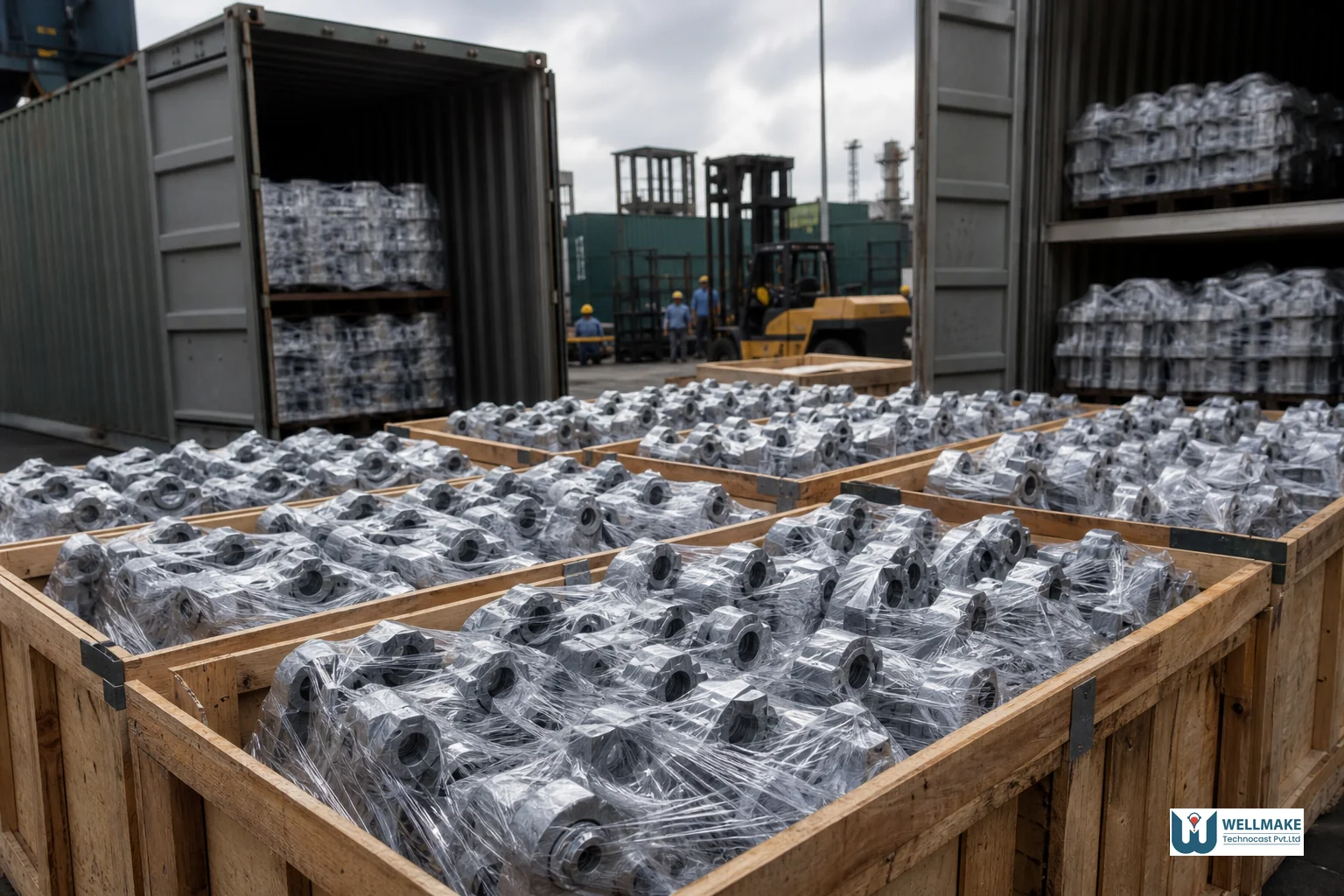
Currency exposure and Incoterms also deserve attention during quoting. A foundry quoting in GBP or offering CIF terms to a UK port removes a layer of logistics complexity that buyers otherwise have to manage themselves. Ask for a landed cost breakdown, not just an ex-works price, so the true comparison against a UK quote is apples to apples.
6. How to Evaluate and Onboard an Indian Foundry Like Wellmake Technocast
Qualifying an overseas casting supplier for railways or defence work should follow a structured process rather than a single sample part and a sales call. Wellmake Technocast, based in Rajkot, Gujarat, and operating since 2005, works with UK and European rail and defence buyers under this kind of structured onboarding, built around triple ISO certification (9001, 14001, 45001) and 70 MT of monthly production capacity spanning ferrous and non-ferrous alloys.
A practical onboarding checklist looks like this:
- Verify certifications independently: Request current ISO certificates and confirm they are active with the issuing body rather than accepting a scanned copy at face value.
- Request a documented sample run: Ask for first-article inspection reports, material certificates, and dimensional data alongside the physical sample, not just the part itself.
- Audit process control: Ask how the foundry controls wax pattern shrinkage, shell thickness consistency, and pour temperature, the variables that most often cause dimensional drift between batches.
- Confirm in-house machining: If you need line-ready parts, verify the foundry has its own CNC capability rather than subcontracting machining to a third party with no shared quality system.
- Protect IP and drawings: Put an NDA in place before sharing full drawings, and confirm tooling ownership terms in writing before committing to a production order.
- Run a pilot batch before scaling: Order a smaller pilot quantity, verify it against your own incoming inspection, and only then commit to full programme volume.
This process mirrors the broader framework covered in how to qualify an overseas investment casting supplier and the practical checklist in how to choose the right investment casting foundry. Skipping steps to save a few weeks upfront is the most common cause of the quality escapes covered in guidance on red flags to avoid when sourcing from a foundry.
One advantage worth weighing heavily for rail and defence buyers specifically: a single-source supplier that delivers both un-machined castings and fully machined, line-ready components removes an entire supplier relationship from the chain. Instead of managing a casting vendor and a separate machine shop, with two quality sign-offs and two shipping schedules, the programme runs through one accountable partner. You can review the current range of machined and un-machined casting products to see how that scope maps against a typical bill of materials.
7. Lead Times, MOQs and Managing Programme Risk
New part tooling adds real time to a first order. Expect roughly 10 to 16 weeks from a confirmed drawing to a shippable first batch, covering tool manufacture, wax pattern trials, shell process validation, and first article inspection. Repeat orders on existing tooling typically ship in four to eight weeks depending on batch size and machining scope, a timeline discussed in more depth in guidance on investment casting tooling cost breakdowns.
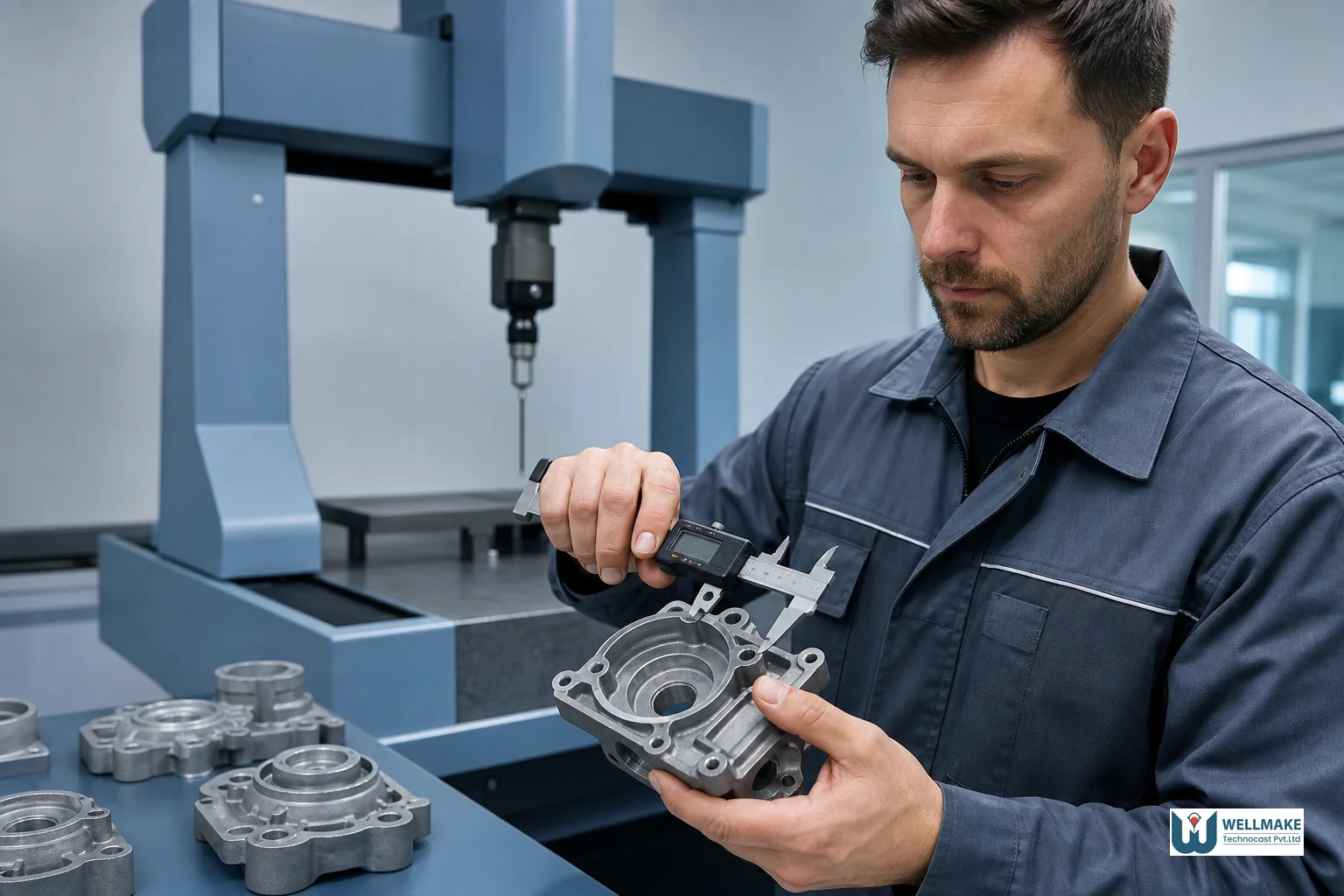
Minimum order quantities affect unit cost more than most buyers expect. Tooling cost gets amortised across the batch, so a small first order carries a higher effective unit price than a repeat run at volume. For defence programmes with unpredictable annual demand, it is worth negotiating a tooling arrangement upfront that allows smaller repeat batches without a full re-tooling charge each time.
For safety-critical or long-lead defence components, many procurement teams run a dual-sourcing strategy: a primary overseas foundry for cost and capacity, with a smaller domestic or European backup supplier qualified on the same drawing in case of a supply disruption. This is not a signal of distrust in the primary supplier, it is standard risk management for any single point of failure in a regulated supply chain.
FAQs on Investment Casting for UK Railways and Defence Components
What tolerances can be held on defence-grade cast components?
As-cast tolerances typically run ±0.13mm to ±0.4mm depending on part size and wall thickness. Where a feature needs tighter control, such as a bearing bore or a sealing face, post-cast CNC machining can bring that specific feature down to ±0.02mm to ±0.05mm without machining the entire part.
Do export controls or ITAR apply to castings sourced from India?
Most structural brackets, housings, and connectors for rail and general defence support equipment are not subject to ITAR, which is a US regulation. UK defence programmes should still check classification against the UK Strategic Export Control Lists for any component tied to a controlled system, and confirm with legal or compliance teams before finalising an overseas sourcing decision on sensitive parts.
Can one foundry supply both un-machined and fully machined parts?
Yes, and it is worth prioritising suppliers that can. A foundry with in-house CNC machining alongside its casting operation can deliver line-ready parts under one quality system, removing the handoff risk that comes from splitting casting and machining across two separate vendors.
How long does a first order take from RFQ to delivery?
Budget 10 to 16 weeks for a new part number, covering tooling, sample approval, and first article inspection. Once tooling exists, repeat orders typically ship in four to eight weeks, though this varies with batch size, alloy, and machining scope.
What documentation should a UK buyer request before the first shipment?
At minimum, request material mill certificates, a dimensional inspection report against the drawing, heat treatment records, and, for critical parts, NDT results such as dye penetrant or radiography reports. These should be traceable to the specific batch shipped, not a generic quality statement.
Sourcing precision cast components for a railways or defence programme is ultimately a supplier relationship decision as much as a technical one. If you are evaluating investment casting for railways defence components UK supply, start by reviewing the current range of ferrous and non-ferrous cast components Wellmake Technocast produces for structural, connector, and housing applications, then request a sample run against your own drawing to see how the process performs before committing to full programme volume. Get in touch with the technical sales team to discuss certifications, tooling timelines, and a pilot order tailored to your bill of materials, or contact us today to request a formal quote against your next drawing package.