
Investment Casting Tooling Costs: Full Breakdown 2026
A tooling quote lands on a procurement engineer's desk for a new duplex stainless valve body program. The unit price per casting looks reasonable. Then a separate line item appears: a one-time tooling charge that's nearly three times the cost of a single finished part. Is that number fair, inflated, or simply how the process works? Without a clear investment casting tooling cost breakdown, most buyers can't tell the difference between a foundry padding its margin and a foundry pricing a genuinely complex die.
This guide breaks tooling cost into its real components, shows how to amortize that spend across a production run, and gives you a framework to decide whether tooling investment makes sense for your volumes. It's written for OEM procurement teams and industrial buyers who need to budget a new casting program without guesswork.
What Tooling Cost Actually Covers in Investment Casting
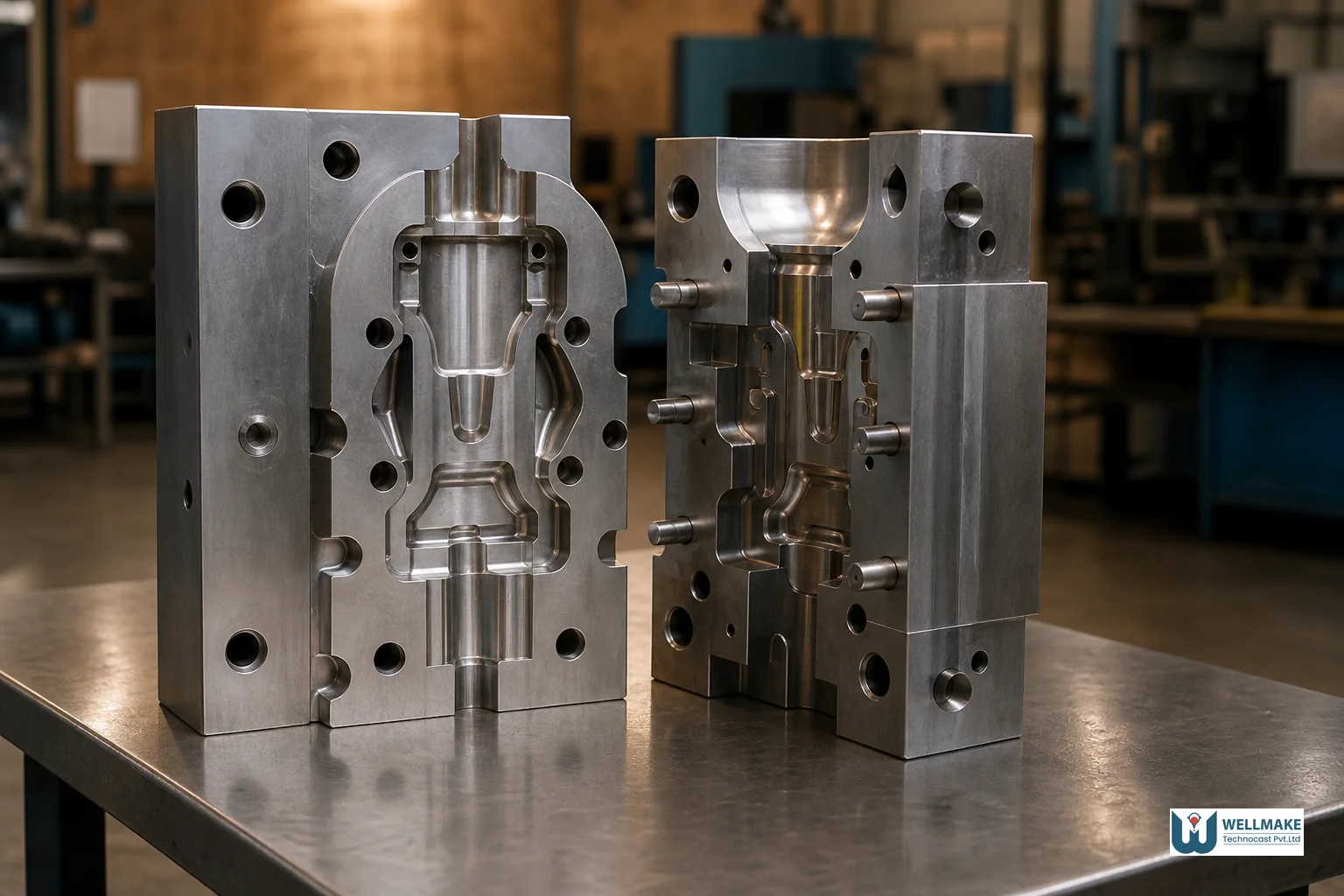
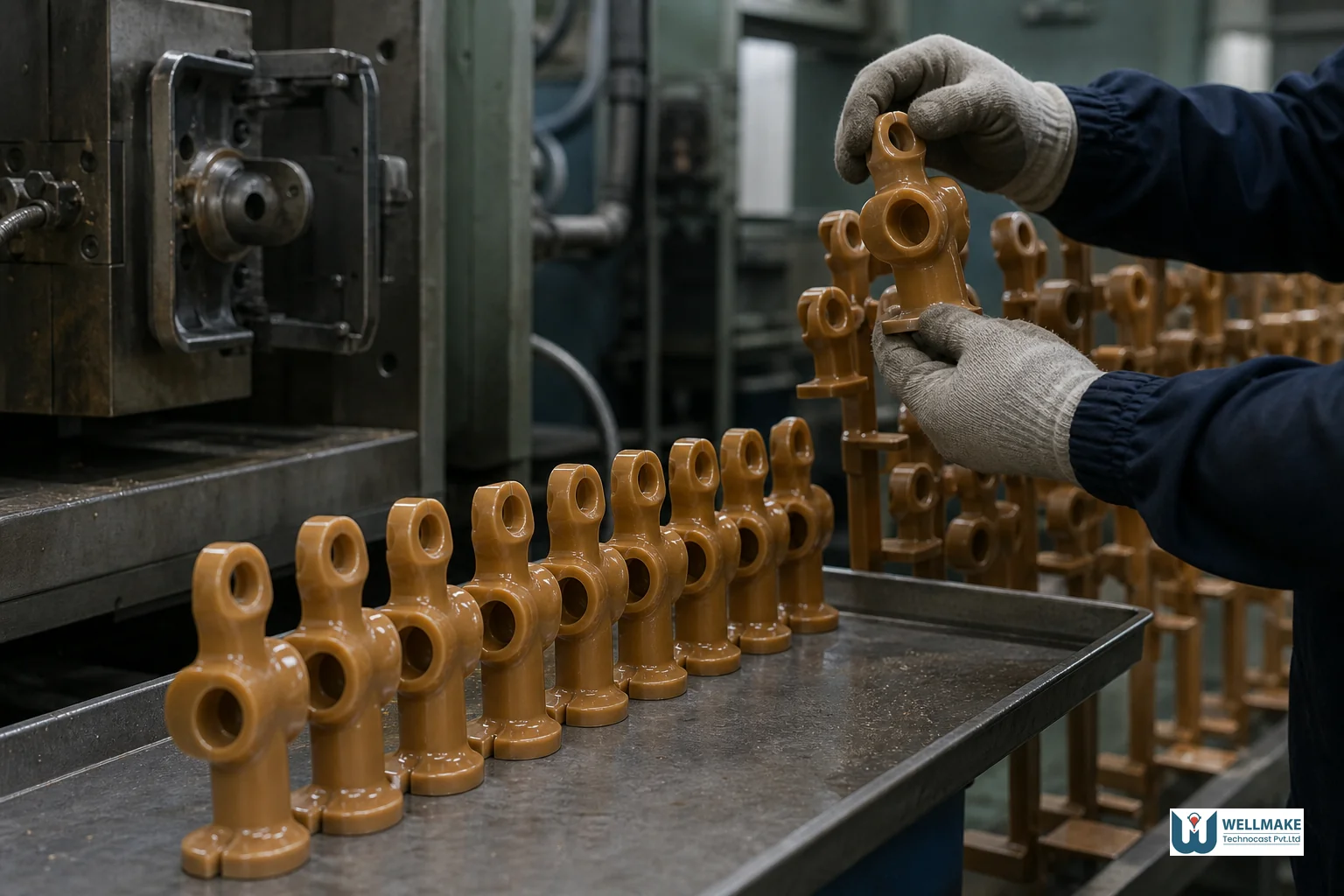
In investment casting, "tooling" almost always means the wax injection die, the metal tool used to injection-mold wax patterns that will later be shelled in ceramic, dewaxed, and filled with molten metal. This is fundamentally different from die casting, where the "tool" is a hardened steel mold that directly withstands molten metal pressure. In investment casting, the die only ever touches wax at relatively low pressure and temperature, which is one reason tooling costs sit lower than die casting but still represent a real capital investment.
A tooling quote typically bundles several deliverables into one number:
- Die block material — aluminum or tool steel, machined to form the cavity that shapes the wax pattern
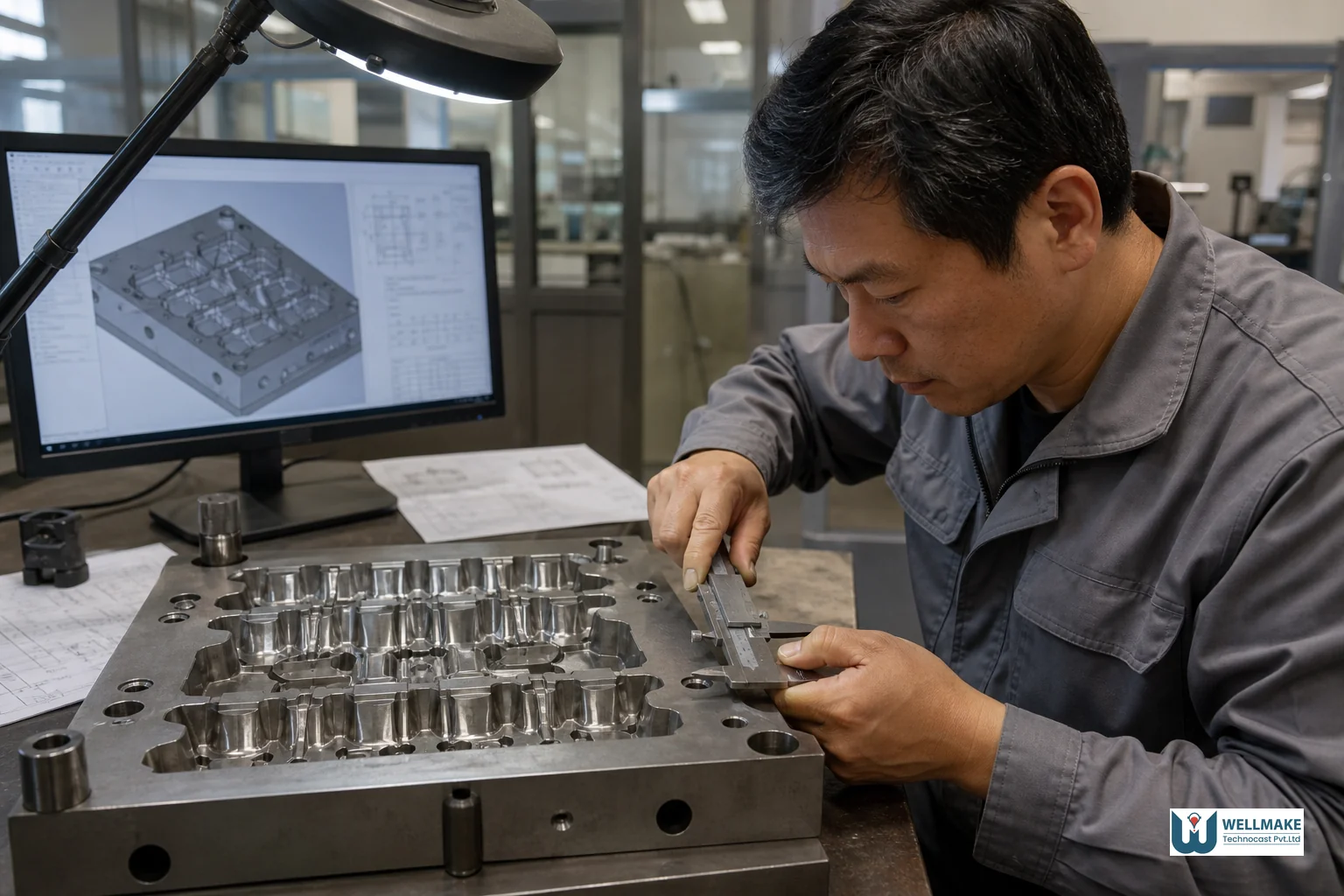
- CNC machining and, where needed, EDM work to cut the cavity to the part's exact geometry
- Core boxes or loose cores for internal passages, bores, or undercuts that can't be formed by the main cavity alone
- Gating and parting line design so wax flows cleanly and patterns eject without distortion
- Trial shots and first article inspection to confirm the tool produces parts within tolerance before production begins
This is a one-time, upfront cost, separate from the recurring per-piece casting price you'll pay on every purchase order afterward. Confusing the two is the most common budgeting mistake buyers make when comparing quotes across foundries. A supplier with a higher tooling charge but a lower per-piece price can easily beat a supplier with cheap tooling and inflated unit costs once you run the numbers across a full production year.
The Cost Drivers Behind an Investment Casting Tooling Quote
Six factors explain almost every dollar in a tooling quote. Understanding them lets you challenge a quote intelligently instead of just accepting or rejecting a total figure.
Part Complexity and Cavity Count
A simple bracket with two or three flat faces needs a straightforward two-piece die. A pump volute with internal passages, variable wall thickness, and multiple undercuts needs a die with sliding cores, loose pieces, or collapsible sections. Every extra moving element adds machining hours and design risk, and that shows up directly in the quote.
Tool Material: Aluminum vs Hardened Steel
Aluminum tooling costs less and machines faster, making it a common choice for prototype runs or programs under a few thousand pieces. Hardened tool steel costs more upfront but survives many more injection cycles before cavity wear affects dimensional accuracy. If your program is expected to run for several years, steel tooling often pays for itself through longer service life and fewer refurbishment cycles.
Part Size and Draft Requirements
Larger parts need larger, heavier die blocks and longer machining time. Parts with minimal draft angle or tight undercuts need more sophisticated ejection mechanisms, which adds engineering hours before a single wax pattern is ever produced.
Tolerance and Surface Finish Demands
Tight dimensional tolerances and fine surface finish requirements mean the die cavity itself must be machined to a higher standard, often with additional EDM finishing on complex internal features. If your drawing calls for tolerances near the tight end of what investment casting can achieve, expect the tooling quote to reflect that precision. For a deeper look at what's realistic, see how cost per kg is affected by tolerance and finish requirements once the part moves into production.
Number of Cavities
A single-cavity die produces one wax pattern per injection cycle. A four-cavity or eight-cavity die produces multiples per cycle, which speeds up wax pattern production and lowers per-piece labor cost at volume, but the die itself costs more to build. This trade-off matters most for programs with annual volumes in the tens of thousands.
Design-for-Manufacturability Engineering
Time spent reviewing your drawing, identifying shrinkage allowances, planning gating locations, and simulating wax flow is real engineering labor. A foundry that skips this step to save you money upfront often costs you more later in scrap, rework, or tooling corrections after the first trial shot.
Investment Casting Tooling Cost Breakdown: A Line-Item View
When a foundry gives you a full tooling quote, it generally splits across five categories. Knowing the rough proportions helps you spot an outlier line item that deserves a question.
- Die design and engineering — typically the smallest visible line item, but the one that prevents costly surprises later
- Raw tool material, aluminum or steel block stock, priced by weight and grade
- CNC machining of the cavity, usually the largest single cost driver, scaling with part complexity and size
- EDM or fine detail work, needed for sharp internal corners, ribs, or features standard milling can't reach cleanly
- Trial shots and first article inspection, producing sample wax patterns, inspecting them against the drawing, and making any needed corrections before sign-off
Some foundries also itemize tooling corrections separately if the first trial reveals a dimensional issue. A transparent quote will show this as a contingency line rather than burying it inside the base tooling price. This is one area where a single-source foundry with in-house dimensional inspection, rather than one that outsources trial-shot measurement, tends to catch issues faster and cheaper.
It's worth noting that tooling cost is entirely separate from the per-kg casting price you'll pay on every production order. If you haven't already reviewed how alloy selection, machining, and finishing affect that recurring cost, it's worth reading alongside this breakdown so your total program budget accounts for both the one-time and ongoing spend.
How to Amortize Tooling Cost Across Production Runs
Tooling cost only makes sense in the context of volume. The formula is simple: divide total tooling cost by the number of units you expect to produce over the tool's usable life. That gives you the amortized tooling cost per piece, which you then add to the per-unit casting price to get your true landed cost per part.
Tool life in investment casting is generally measured in the number of wax injection cycles a die can run before cavity wear starts affecting dimensional accuracy. Aluminum tooling might handle several thousand cycles before needing refurbishment; hardened steel tooling can often run tens of thousands of cycles with proper maintenance. Your foundry should be able to state an expected cycle life for your specific tool material and part geometry.
Here's a simplified example showing how amortized tooling cost drops as volume rises, assuming a fixed hypothetical tooling investment:
| Annual Production Volume | Amortized Tooling Cost per Piece | Effect on Total Landed Cost |
|---|---|---|
| 500 units | High per-piece burden | Tooling cost can dominate total unit price |
| 2,500 units | Moderate per-piece burden | Tooling still a visible share of unit cost |
| 10,000 units | Low per-piece burden | Tooling cost becomes a minor fraction of unit price |
| 50,000+ units | Negligible per-piece burden | Unit price is driven almost entirely by material and process cost |
Some foundries, including single-source operations like Wellmake, structure amortization flexibly. You can pay the full tooling cost upfront and own the tool outright, or spread it across the first few purchase orders as a small surcharge per piece until the tool is paid off. The right structure depends on your cash flow preferences and how confident you are in long-term volume. Either way, ask for the amortization schedule in writing before the program starts, not after the first invoice arrives.
Investment Casting Tooling Cost vs Other Casting and Machining Methods
Tooling cost is one of the biggest variables when comparing investment casting against alternative manufacturing methods. Here's how the major options stack up.
| Method | Relative Tooling Cost | Typical Volume Breakeven | Achievable Tolerance |
|---|---|---|---|
| Sand Casting | Low (pattern only) | Low volumes, one-offs to a few hundred units | Loose, heavy machining allowance usually needed |
| Investment Casting | Moderate (wax injection die) | Hundreds to hundreds of thousands of units | Tight, near-net-shape, minimal machining allowance |
| Die Casting | High (hardened steel mold under pressure) | Tens of thousands to millions of units | Tight, but typically limited to non-ferrous alloys |
| CNC Machining from Billet | None (no dedicated tooling) | Best for one-offs and very low volumes | Very tight, but higher material waste and per-unit cost |
Sand casting patterns cost less than investment casting dies, but sand-cast parts need heavier machining allowances and can't match the near-net-shape precision investment casting offers. Die casting tooling costs considerably more because the mold must withstand molten metal injected under high pressure, and it's largely restricted to aluminum, zinc, and magnesium alloys rather than the ferrous alloys common in pump, valve, and defence applications. Machining from solid billet avoids tooling cost entirely, but material waste and cycle time make it uncompetitive once volumes climb past a few hundred units.
If you're weighing investment casting against machining for a specific part, it's worth reading our detailed comparison on investment casting vs machining costs, which walks through the volume thresholds where each method wins. For buyers evaluating die casting specifically, our breakdown of investment casting vs die casting cost differences covers tooling and alloy tradeoffs in more depth. Given the complexity investment casting can achieve without matching die-casting tooling costs, it's also worth reviewing whether investment casting suits your part's geometry before committing to a tooling spend.
Minimum Order Quantity and Its Impact on Tooling Economics
Minimum order quantity and tooling cost are directly linked. A foundry sets an MOQ partly because tooling only becomes economical past a certain volume threshold. Order below that threshold and your amortized tooling cost per piece can exceed the material and labor cost combined.
For genuinely low-volume programs, prototype runs, or one-off replacement parts, some foundries offer alternatives to full hardened tooling:
- Soft or aluminum prototype tooling, faster to machine, lower upfront cost, shorter service life, well suited to pilot production or design validation runs
- 3D-printed sacrificial patterns, bypass die tooling entirely for very small batches, at a higher per-piece cost but zero tooling investment
- Shared or family tooling, combining several similar part variants into cavities of a single die block to spread cost across a broader product family
If your annual volume genuinely sits below a few hundred pieces, it may make sense to accept the higher per-piece price of soft tooling or additive patterns rather than commit to hardened steel tooling you'll never amortize properly. Our detailed guide on how MOQ affects investment casting costs walks through this decision in more detail, including how to negotiate MOQ terms with a foundry.
Is the Tooling Investment Justified for Your Component Volumes?
Not every program should invest in dedicated investment casting tooling. Use this framework to test your specific case before committing budget.
- Estimate your annual and lifetime program volume. A part with a five-year production life at 5,000 units per year amortizes very differently than a one-time replacement order of 50 units.
- Weigh tolerance and geometry needs against alternatives. If your part has thin walls, internal passages, or tight tolerances that sand casting or machining can't hit economically, investment casting's near-net-shape precision often justifies the tooling spend even at moderate volumes.
- Factor in total cost of ownership, not just tooling price. A cheaper tool from an unqualified supplier that produces inconsistent wax patterns will cost you more in scrap and rework than a properly engineered die from an experienced foundry.
- Consider program stability. Long-running, qualified programs in automotive, pump and valve, oil and gas, and railways and defence sectors are where amortized tooling delivers the strongest return, because volumes are predictable and part designs rarely change once qualified.
- Know when to walk away. If your total lifetime volume is under a few hundred pieces and geometry is simple enough for machining or sand casting, dedicated investment casting tooling may not be the most economical route.
Sectors like pump and valve manufacturing, oil and gas, and railways and defence tend to run stable, multi-year component programs with predictable reorder cycles, which is exactly the profile where tooling amortization works in the buyer's favor. Wellmake regularly works with OEMs in these sectors precisely because program longevity, not just initial order size, determines whether tooling investment pays off.
How a Single-Source Foundry Reduces Total Tooling Cost of Ownership
Tooling cost doesn't exist in isolation. It's tightly connected to how casting, machining, and quality control workflows integrate around it. When tooling design, wax pattern production, casting, and final machining all sit with one supplier, the tooling data (drawings, shrinkage allowances, trial shot inspection reports) flows through a single system instead of being re-entered or re-interpreted across multiple vendors.
This integration matters in three concrete ways:
- Fewer costly tooling corrections. In-house quality control, including spectrometer analysis, universal testing machines, hardness testers, and impact testing, means dimensional and material issues surface during the first trial shot rather than after a full production batch has shipped. Catching a problem at the tooling stage is dramatically cheaper than catching it after castings reach your dock.
- Less communication overhead. When your tooling vendor, your casting foundry, and your machining shop are three separate companies, every design revision requires three rounds of approval and re-sync. A single-source supplier collapses that into one conversation and one point of accountability.
- Consistent tool life management. A foundry running steady production volume, like Wellmake's 70 MT monthly capacity, has the throughput and process discipline to track tool wear, schedule refurbishment proactively, and avoid the dimensional drift that shows up when a die runs past its rated cycle life without maintenance.
Wellmake's 8-step investment casting process, built around ceramic shell technology and supported by ISO 9001, ISO 14001, and ISO 45001 certification, is designed so tooling data and quality records stay linked from initial die trial through final machined delivery. For buyers weighing an overseas supplier against a local foundry, this kind of integrated workflow is often the difference between a smooth tooling handoff and a costly re-engineering cycle. If you're still evaluating foundries generally, our guide on how to choose the right investment casting foundry covers the qualification questions worth asking before you commit tooling budget to any supplier. You can also review how the investment casting process works step by step to see exactly where tooling fits into the broader production sequence.
FAQ: Investment Casting Tooling Costs
How long does it take to build investment casting tooling?
Lead time depends on part complexity, but a straightforward single-cavity die typically takes several weeks from design approval to first trial shot. Multi-cavity dies with sliding cores or tight tolerance requirements take longer, since additional CNC and EDM work is involved. Always ask your foundry for a tooling lead time estimate separate from the casting production lead time.
Can tooling be modified after production starts?
Yes, in most cases. Minor dimensional adjustments, such as compensating for shrinkage variance discovered during early production, are common and usually low-cost. Major geometry changes, like adding a new feature or changing wall thickness, may require significant rework or a new tool section entirely. It's always cheaper to finalize your design before the first trial shot than to modify tooling mid-program.
Who owns the tooling, the buyer or the foundry?
This varies by contract. Many foundries include tooling ownership transfer to the buyer once the tooling cost is fully paid, whether upfront or amortized across purchase orders. Some suppliers retain physical possession of the tool for maintenance purposes even after ownership transfers, which is standard practice as long as it's documented in writing. Clarify ownership and transfer terms before signing your tooling agreement.
Does tooling cost differ for ferrous vs non-ferrous alloys?
The wax injection die itself doesn't touch molten metal, so tooling cost is driven mainly by part geometry, not alloy choice. However, different alloys shrink at different rates during solidification, so the cavity must be sized with the correct shrinkage allowance for your specific alloy. Switching alloys after a tool is built can require cavity rework, which is why confirming your final alloy specification before tooling starts is worth the extra planning time.
Budgeting accurately for a new casting program means treating tooling cost as a distinct line item, understanding what drives it, and running the amortization math against your real production volume before you sign a purchase order. A well-engineered die from an experienced foundry costs more upfront in some cases, but it protects you from the far larger expense of scrap, rework, and missed deadlines further down the line.
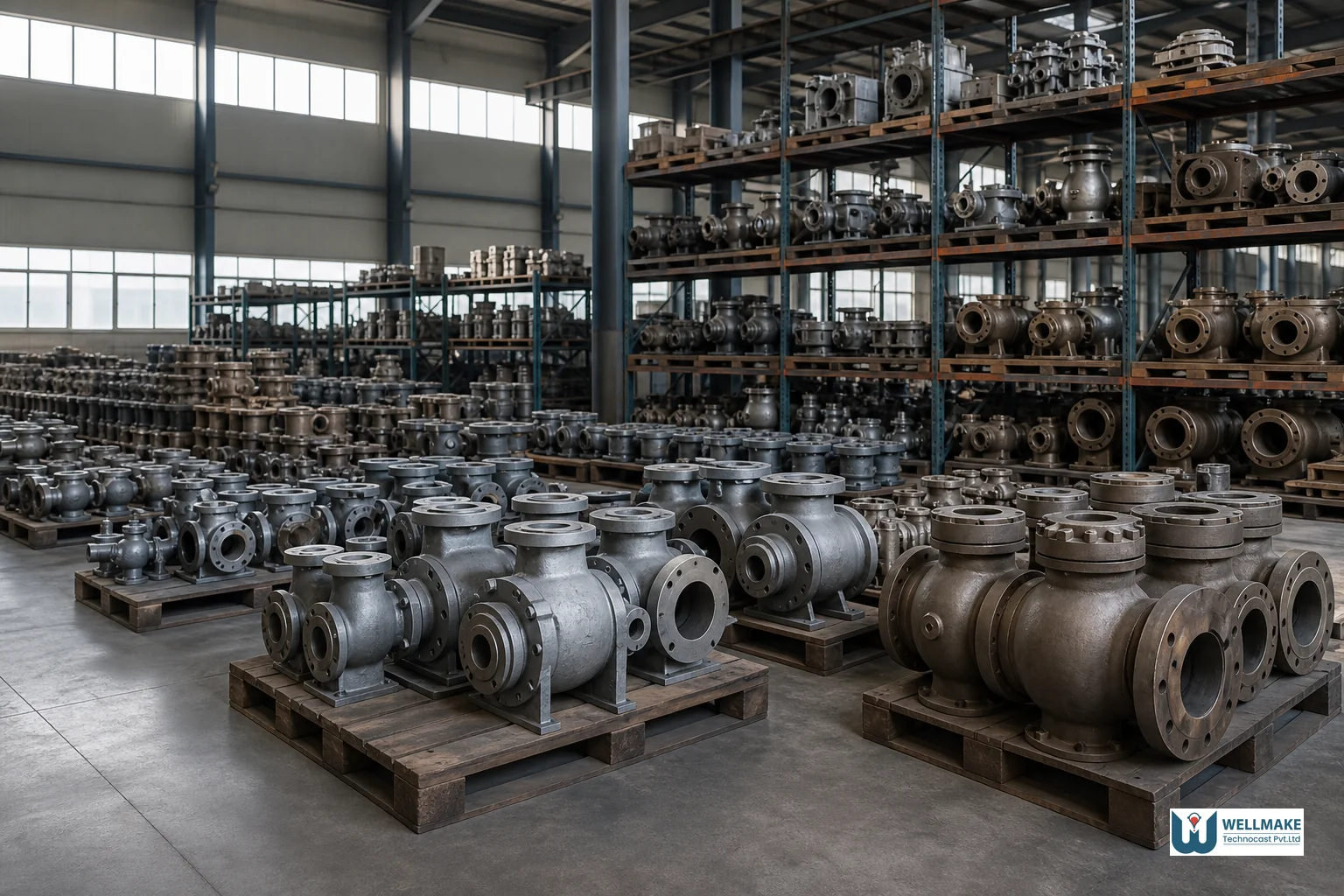
If you're planning a new component program and want a transparent, line-item tooling quote, get in touch with Wellmake's engineering team to discuss your part geometry, expected volumes, and alloy requirements. You can also explore Wellmake's product range across automotive, pump and valve, oil and gas, and railways and defence components to see the scale of programs we support, or contact us today to request a detailed tooling cost breakdown for your next casting project.