
India vs Local Foundry: Best Castings for Australia?
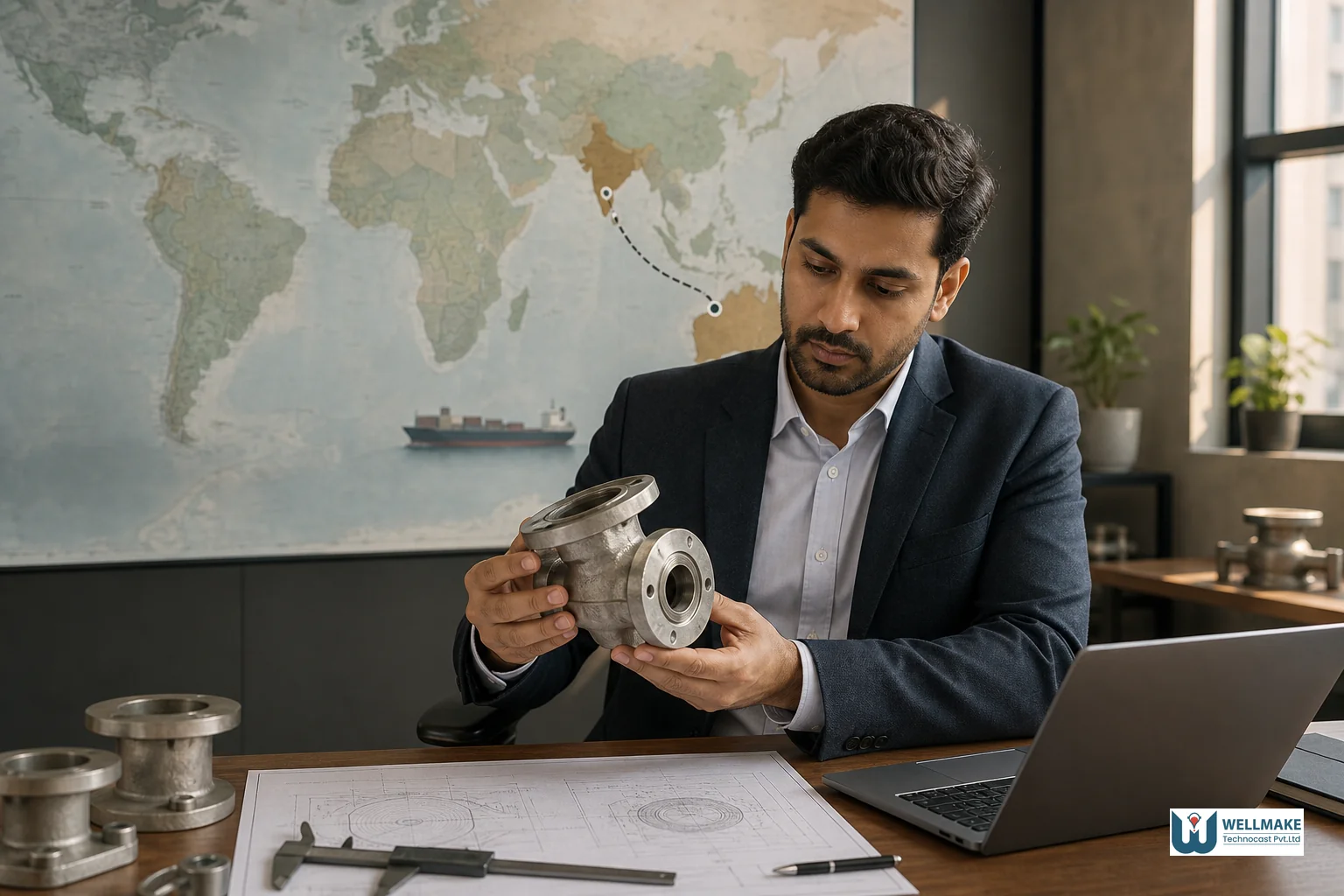
A procurement manager at a mining equipment fabricator outside Perth recently faced a decision that used to be simple. Her regional foundry, one of the last still pouring alloy steel in Western Australia, told her a batch of wear-resistant impeller housings would take 20 weeks. A second quote, from an ISO-certified investment casting foundry in India, came back with a landed cost 30% lower and a delivery window nearly half as long. The catch was the 11,000-kilometre supply line. Was the savings worth the distance?
That question sits at the center of every sourcing conversation happening across Australian industrial procurement right now. The debate over investment casting vs local foundry Australia sourcing isn't theoretical anymore. It's a line item that affects margins, delivery schedules, and whether an OEM can win the next contract bid. This comparison breaks down cost per kg, lead times, quality certifications, material range, and machined component availability, using an ISO-certified Indian exporter like Wellmake Technocast as a reference point for what overseas sourcing actually looks like in practice.
Why Australian OEMs Are Rethinking Their Casting Supply Chain
Australia's manufacturing base has changed shape over the past two decades. Heavy casting work that once ran through dozens of regional foundries now concentrates in a handful of larger operations, mostly serving mining and defence contracts. Smaller and mid-sized OEMs, especially those in pump and valve manufacturing, general engineering, and fire safety equipment, often find themselves competing for capacity with larger accounts that get priority scheduling.
At the same time, energy costs in Australia remain among the highest in the developed world for energy-intensive industries like metal casting. That cost gets passed straight through to the quoted price per kilogram. Add rising wages and a shrinking pool of skilled foundry labour, and it's easy to see why procurement teams are widening their supplier search beyond state borders and into export markets like India.
This isn't a story about abandoning local suppliers entirely. It's about understanding where an ISO-certified overseas foundry genuinely outperforms a domestic shop, and where proximity still wins.
The State of Local Foundries in Australia in 2026
Australia still has capable foundries, particularly for large-format sand casting tied to mining and rail infrastructure. But precision investment casting, the process used for tight-tolerance, complex-geometry components, is a narrower field. Several regional operations have scaled back or closed casting lines entirely in the past five years, citing energy prices and difficulty recruiting skilled pattern makers and metallurgists.
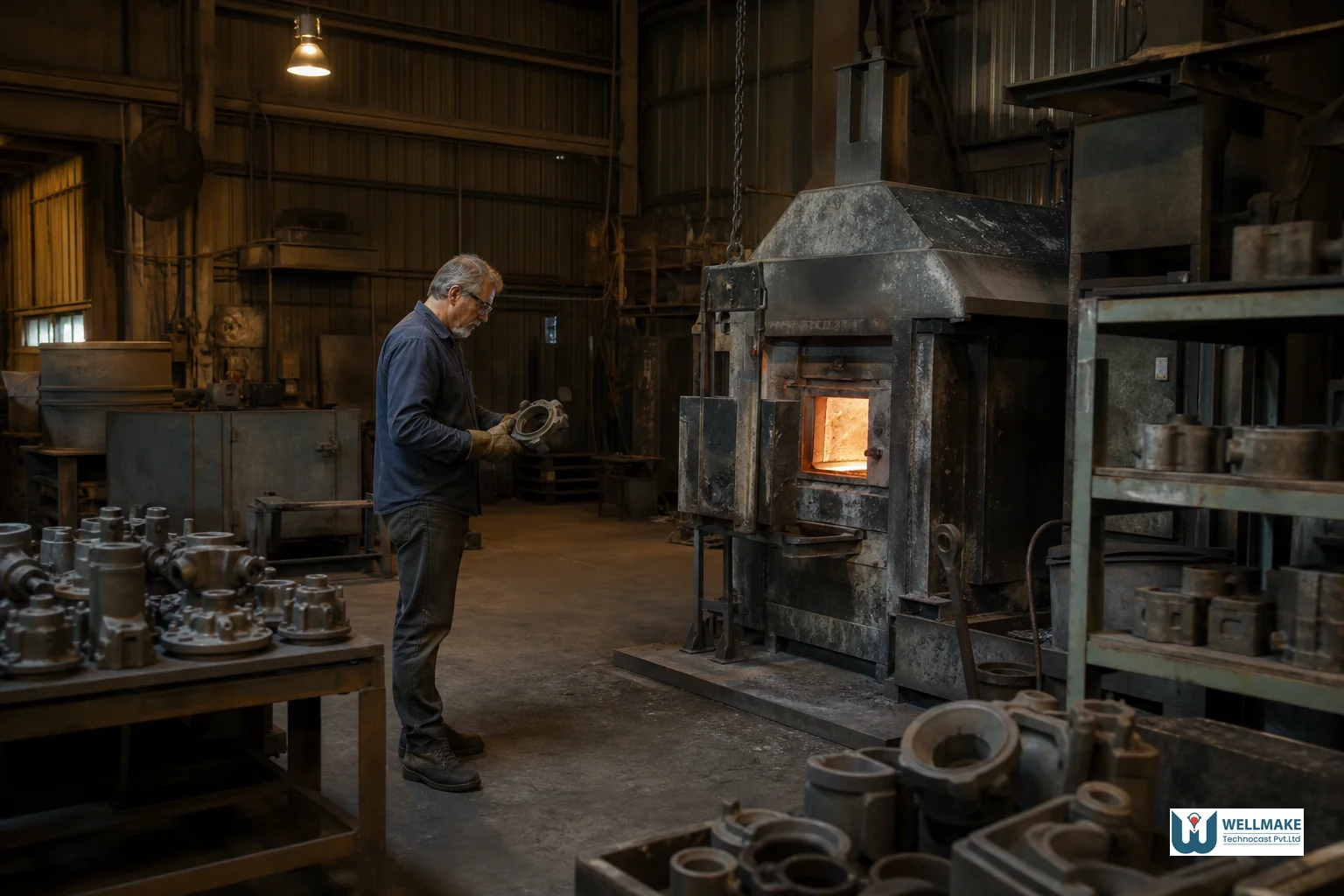
The practical effect shows up in three places. First, backlogs stretch out because fewer shops are competing for the same orders. Second, alloy range narrows, since smaller foundries tend to specialize in one or two metal families rather than carrying the full ferrous and non-ferrous range that diversified OEMs need. Third, capital investment in modern quality control equipment, spectrometers, universal testing machines, and impact testers, lags behind what export-focused foundries in India and China have installed to meet international buyer requirements.
None of this means Australian foundries lack skill. It means capacity and specialization have narrowed, pushing complex or high-volume work toward suppliers who've built scale specifically to serve that gap.
Investment Casting vs Local Foundry Australia: Side-by-Side Comparison
The clearest way to weigh these options is to line up the factors that actually affect a purchase order: unit cost, delivery time, order flexibility, certification depth, material range, and whether machined parts arrive ready for the assembly line.
| Factor | ISO-Certified Indian Foundry (e.g., Wellmake Technocast) | Typical Local Australian Foundry |
|---|---|---|
| Cost per kg (landed, incl. freight) | Generally 25-40% lower even after freight and duties | Higher base cost driven by energy and labour rates |
| Typical lead time | 6-10 weeks including ocean freight | 10-24 weeks depending on backlog |
| Minimum order quantity | Moderate MOQ, often negotiable for repeat OEM accounts | Lower MOQ but limited scheduling slots |
| Quality certifications | ISO 9001, ISO 14001, ISO 45001 common among established exporters | Varies widely; certification less standardized among small shops |
| Material versatility | Broad ferrous and non-ferrous range in one facility | Often limited to one or two alloy families |
| Machined, line-ready parts | In-house CNC finishing available from a single source | Frequently outsourced to a separate machine shop |
| Component weight range | A few grams up to roughly 180 kg | Depends on furnace and mold capacity, often narrower |
| Design complexity handling | Strong for thin walls and intricate internal passages | Capable, but limited by pattern shop tooling investment |
No single row decides the sourcing question by itself. A defence contractor prioritizing proximity for classified design reviews will weigh things differently than a pump manufacturer chasing landed cost on a 5,000-unit annual order. The sections below unpack each factor in more depth.
Cost Per Kg: Why the Landed Price Still Favours India
Cost per kilogram is usually the first number procurement teams compare, and it's also the most misunderstood. A quote from a local Australian foundry might look competitive on paper until you factor in machining, secondary finishing, and the premium charged for small production runs. An Indian foundry's per-kg price often looks lower before freight, then stays lower even after ocean freight, insurance, and import duties are added.
The underlying driver is straightforward: labour and industrial energy costs in India remain a fraction of Australian rates, and established exporters have built the scale to absorb tooling and pattern costs across large production runs. That said, cost per kg isn't the whole picture. Our detailed breakdown of what affects investment casting cost per kg covers the six variables, alloy selection, part complexity, surface finish requirements, tooling amortization, batch size, and post-processing, that determine whether a quote is genuinely competitive or hiding costs downstream.
One caution worth flagging: a lower unit price only helps if the parts arrive right the first time. Rework, rejected batches, and demurrage charges from held containers can erase a freight-adjusted cost advantage quickly. That's why certification and quality control matter just as much as the number on the quote sheet.
Lead Times and Production Capacity
Lead time is where the gap between local and overseas sourcing has widened the most over the past few years. Regional Australian foundries, squeezed by fewer operating shifts and thinner order books, often quote 4 to 6 months for anything beyond a straightforward repeat order. Established Indian exporters, by contrast, have built dedicated production capacity specifically to serve international OEM demand.
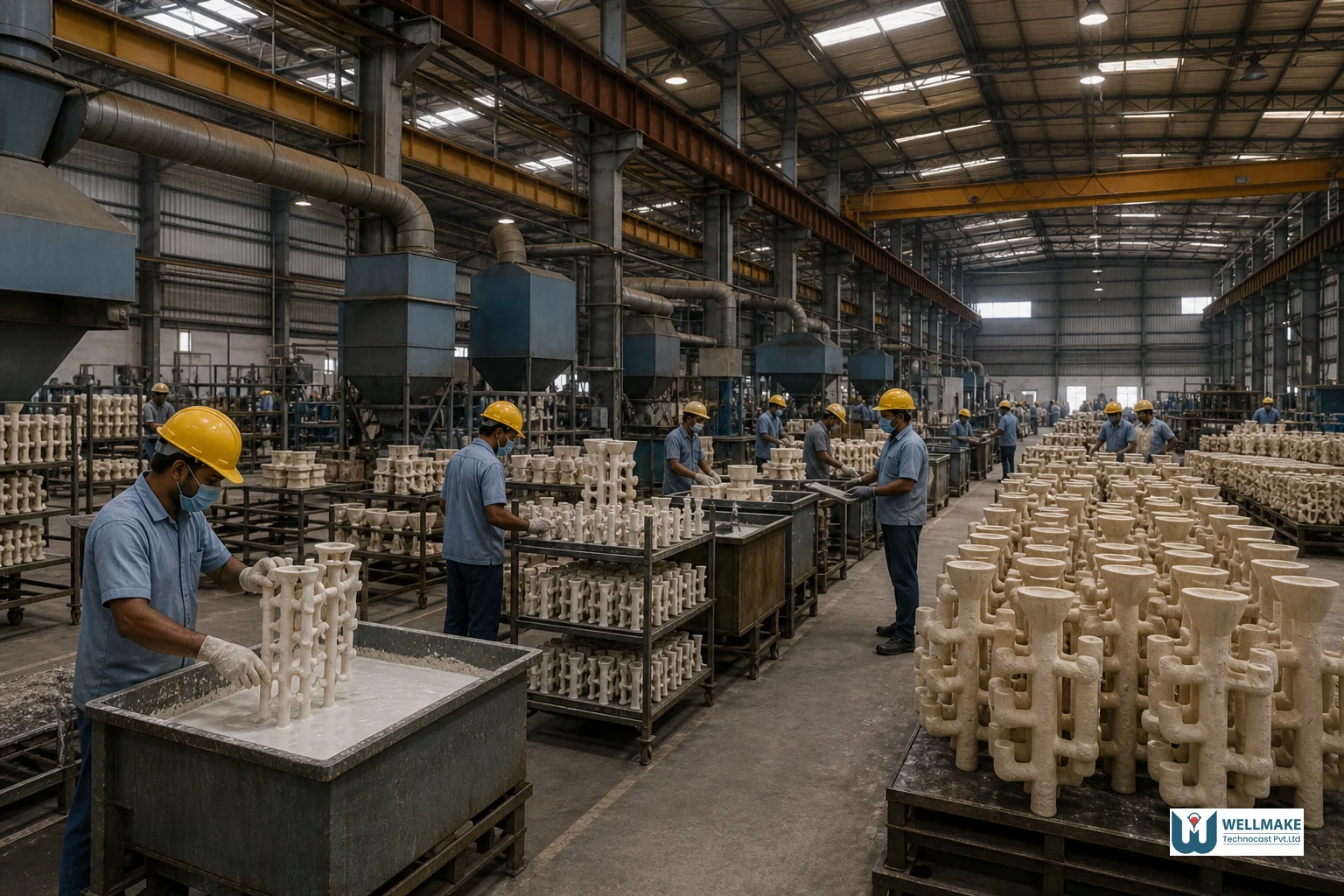
Wellmake Technocast, for example, operates at roughly 70 metric tons of monthly capacity, running an eight-step ceramic shell casting process that supports both prototype batches and recurring production orders without the scheduling bottlenecks smaller domestic shops face. For an Australian buyer, that translates into predictable delivery windows, typically 6 to 10 weeks door-to-door including ocean freight, and the ability to plan production schedules with confidence rather than chasing a supplier for status updates. Our related article on cost drivers in investment casting also touches on how batch consistency affects total landed pricing over a full year of orders.
Consistency across repeat orders matters just as much as the first delivery. A foundry with deep bench strength in metallurgists and quality engineers is far more likely to reproduce the same dimensional accuracy on order twelve as it did on order one.
Quality Certifications and Compliance: What Australian Buyers Should Verify
Certification is the area where Australian buyers should apply the most scrutiny, regardless of which sourcing route they choose. Not every overseas foundry claiming "ISO certified" status has current, verifiable certificates, and not every local shop is automatically compliant either.
Look for three things specifically:
- ISO 9001 for quality management systems, confirming the foundry has documented, repeatable process controls.
- ISO 14001 for environmental management, increasingly relevant as Australian buyers face their own sustainability reporting obligations.
- ISO 45001 for occupational health and safety, which signals a foundry takes worker safety seriously, a proxy for overall operational discipline.
Beyond paper certificates, ask what in-house testing equipment the foundry actually operates. A spectrometer for chemical composition verification, a universal testing machine (UTM) for tensile strength, a hardness tester, and an impact testing machine are the baseline tools a serious investment casting supplier should have on-site rather than outsourced to a third-party lab. This matters especially for Australian buyers in mining, rail, and defence, sectors where material traceability and mechanical property documentation are often contractual requirements, not nice-to-haves.
If you're building a supplier qualification checklist, our guides on how to qualify an overseas investment casting supplier is worth reading alongside red flags to avoid when sourcing from a foundry, since the two cover complementary ground: what to verify and what should make you walk away.
Material Versatility and Complex Geometry Capability
Australian OEMs working across mining, oil and gas, and general engineering rarely need just one alloy. A single project might call for duplex stainless steel valve bodies, carbon steel brackets, and a non-ferrous bronze component, all in the same production run. Smaller local foundries often specialize narrowly, forcing a buyer to split orders across multiple suppliers just to cover the material range.
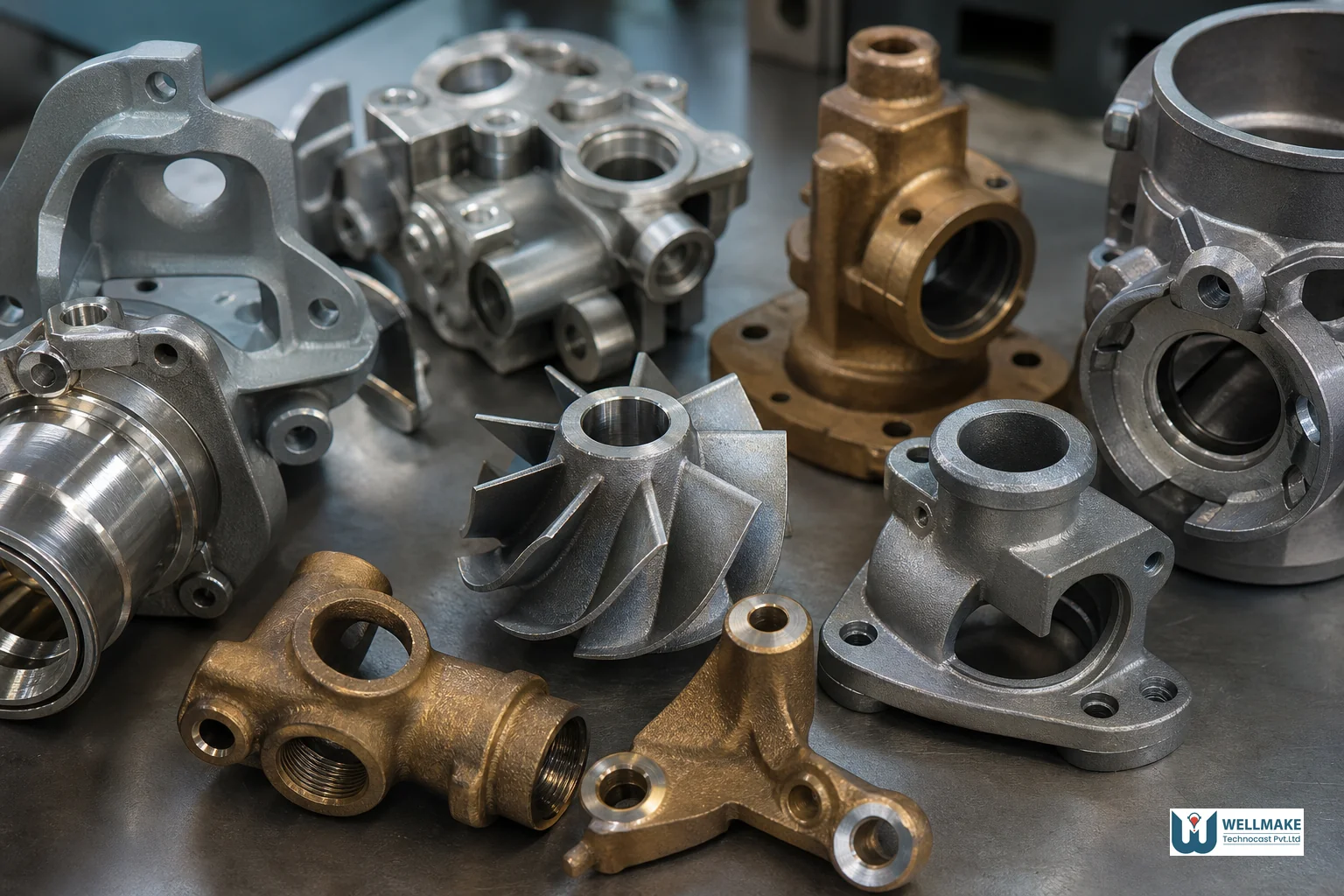
Established investment casting exporters typically carry a broader material catalogue in one facility, spanning carbon steel, alloy steel, stainless steel grades, and non-ferrous metals like bronze and aluminum, with components ranging from a few grams up to roughly 180 kilograms. That range matters when a buyer wants a single-source relationship rather than juggling three separate vendor qualifications.
Investment casting also holds a structural advantage over both sand casting and CNC machining when parts involve thin walls, curved internal passages, or intricate geometries that would require expensive multi-axis tooling to machine from bar stock. If you're weighing whether the process fits your part design at all, our piece on investment casting vs machining cost comparison and our overview of materials used in investment casting both go deeper into where the process earns its keep versus alternative methods.
Machined, Line-Ready Components: The Single-Source Advantage
One of the most overlooked factors in the local-versus-overseas debate is what happens after the casting leaves the mold. A raw casting still needs machining, in most cases, before it's ready for final assembly. If a local Australian foundry doesn't offer in-house CNC finishing, the buyer ends up managing two separate vendor relationships: one for the cast part, another for machining, with two shipping legs, two quality inspections, and two points where a scheduling delay can stack up.
Foundries that offer both casting and machining under one roof remove that friction. A part arrives line-ready, meaning it's dimensionally finished and ready to bolt onto an assembly without a secondary machining stop. For Australian OEMs in pump and valve manufacturing, mining equipment fabrication, or rail and defence component supply, this single-source model typically cuts total lead time and reduces the number of quality handoffs where defects can slip through unnoticed.
It also simplifies supplier audits. Instead of qualifying two separate facilities against two separate quality systems, a procurement team audits one ISO-certified operation covering the full process, from wax pattern to finished, machined component. You can explore the full range of machined and un-machined cast components to see how that single-source model applies across different part families and industries.
When a Local Australian Foundry Still Makes Sense
None of this argues for abandoning domestic suppliers outright. There are situations where a local Australian foundry remains the better call, and a credible comparison should say so plainly.
- Urgent one-off repairs. If a mining site needs a single replacement part within days, ocean freight from India simply isn't fast enough, regardless of unit cost.
- Early-stage prototyping with rapid design changes. When a design is still being iterated weekly, physical proximity to the foundry can shorten the feedback loop meaningfully.
- Highly classified defence work. Some contracts carry restrictions on where components can be manufactured, making a domestic supplier the only compliant option regardless of cost.
- Very small, irregular order volumes. If annual demand is a handful of units, the cost and complexity of managing an international supplier relationship may outweigh the per-unit savings.
A balanced sourcing strategy often blends both: a local shop for urgent, low-volume, or design-in-flux work, and an ISO-certified overseas partner for planned production runs where cost, lead time, and material range make the biggest difference.
How to Qualify and Onboard an Overseas Investment Casting Supplier
Switching, or adding, an overseas supplier doesn't have to be a leap of faith. A structured qualification process reduces risk considerably.
- Request certified sample parts against your actual drawings, not generic catalogue samples, and inspect them against your own tolerance and surface finish standards.
- Verify certifications directly with the issuing body rather than accepting a scanned certificate at face value.
- Ask about in-house testing capability. A foundry that runs its own spectrometer, hardness tester, and impact testing avoids the delays of third-party lab dependency.
- Review Incoterms and freight arrangements carefully. Understand who bears responsibility for customs clearance into Australian ports and what insurance covers in transit.
- Start with a trial order before committing to a full annual volume, and use that batch to evaluate consistency, documentation, and communication responsiveness.
This mirrors the process outlined in our guide to qualifying an overseas investment casting supplier, which walks through documentation checklists and audit questions in more detail. For reference on international quality benchmarks, the ISO 9001:2015 standard documentation outlines the exact requirements a certified foundry should be able to demonstrate on request, and Australia's own Department of Industry, Science and Resources publishes guidance on supply chain resilience that's worth reviewing when building a diversified sourcing strategy.
Frequently Asked Questions
Is investment casting from India actually cheaper than a local Australian foundry?
In most cases, yes, even after adding freight, insurance, and import duties. The gap comes down to labour and energy cost differences, though the size of the savings depends heavily on part complexity, order volume, and whether machining is included.
How long does shipping take from an Indian foundry to Australia?
Ocean freight from major Indian ports to Australian ports typically adds 3 to 5 weeks to the production lead time, bringing most orders to a total door-to-door window of 6 to 10 weeks for an established exporter with available capacity.
Can Indian investment casting foundries meet Australian mining and defence quality standards?
ISO-certified foundries with documented traceability, in-house mechanical testing, and material certification can meet most industrial specification requirements used in mining and general defence supply chains. Buyers should still confirm specific standards, such as AS/NZS material callouts, are within the foundry's demonstrated scope before placing an order.
What is the typical minimum order quantity for an Indian investment casting supplier?
MOQs vary by part size and complexity, but many established exporters offer flexible minimums for OEM accounts with repeat order potential, especially compared to the scheduling constraints smaller Australian foundries face for one-off small batches.
Does investment casting work well for complex geometries needed in pump and valve components?
Yes. Investment casting is specifically suited to thin walls, curved internal passages, and intricate shapes that would be costly or impossible to machine from solid stock, which is why it remains the preferred process for pump, valve, and impeller components across multiple industries.
The real sourcing question isn't "local or overseas" in the abstract. It's whether a specific supplier, wherever they're based, can prove consistent quality, hold their quoted lead time, and document every batch the way your industry demands.
Australian procurement teams facing rising domestic lead times and narrowing local capacity have a real alternative in ISO-certified Indian foundries built specifically to serve export markets. Wellmake Technocast combines triple ISO certification (9001, 14001, 45001), 70 MT of monthly capacity, and in-house machining to deliver line-ready components without the coordination overhead of managing separate casting and finishing vendors. If your current supply chain is stretched thin on lead time or cost, it's worth putting a real quote next to your existing one. Explore the full product range to see which component families fit your production line, or get in touch to discuss your drawings and specifications directly. For OEMs ready to move beyond backlog-driven sourcing decisions, our team can walk through certifications, sample parts, and freight logistics tailored to your Australian delivery point. Contact us today to start the conversation.