
Best Investment Casting Foundry for UK Buyers 2026
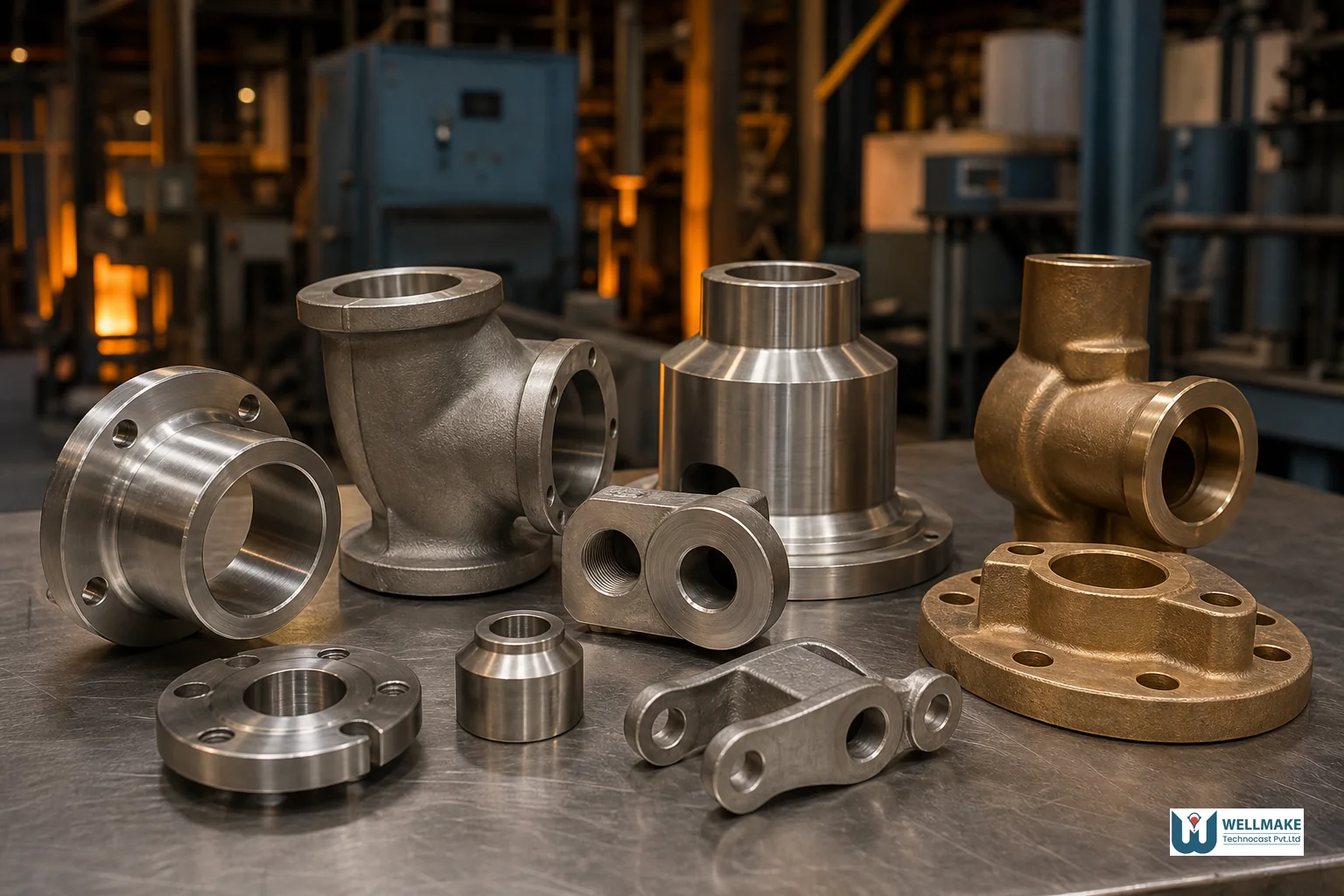
A sourcing manager at a UK pump assembly plant recently spent six weeks chasing a quote for 400 duplex stainless steel valve bodies. Two regional foundries had already closed their casting shops in the past two years, citing energy costs. The third quoted a lead time that would have pushed her production schedule into the next fiscal quarter. She eventually placed the order with a foundry in Gujarat, India, and received first article samples in under four weeks.
That story is becoming common across UK manufacturing. Buyers searching for an investment casting foundry UK teams can rely on for machined components are finding that the most competitive, quality-consistent option often sits outside the country entirely. This guide walks through what UK procurement teams should know before committing to an overseas foundry, what "machined components" actually means in this context, and how a supplier like Wellmake Technocast fits into a modern UK supply chain.
Why UK Manufacturers Are Looking Beyond Local Foundries
The UK's domestic casting capacity has been shrinking for years. Energy prices, skilled labour shortages, and consolidation have pushed several long-standing foundries to reduce shifts or close entirely. For buyers in automotive, pump and valve, oil and gas, and defence sectors, that means fewer domestic options and longer queues at the ones that remain.
At the same time, expectations have shifted. UK OEMs no longer just want raw castings delivered to their own machine shops. They want line-ready machined components that arrive ready for assembly, with tolerances, surface finish, and material certification already verified. That combination, casting plus finish machining plus documented quality, is harder to find domestically at a competitive price, which is why qualified overseas suppliers have become a serious option rather than a last resort.
This isn't unique to the UK. Buyers in Germany, France, and Sweden face similar pressure, and many have already made the shift to Indian suppliers for the same reasons: capacity, cost, and single-source convenience. You can see how German OEMs approach this in our guide to sourcing investment castings from Germany.
What "Machined Components" Really Means in Investment Casting
Investment casting produces a near-net-shape part directly from the mold, which is already a major advantage over machining from solid bar stock. But most functional parts, valve bodies, pump housings, aerospace brackets, still need certain surfaces machined to final tolerance: mating faces, bores, threads, and sealing surfaces.
An "as-cast" component leaves the foundry with rough dimensions on critical features, and the buyer's own machine shop has to finish it. A "machined" or line-ready component arrives with those critical features already cut to final tolerance, deburred, and often inspected against a first article report. For a UK OEM, sourcing both steps from one supplier removes a handoff, a shipping leg, and a quality risk. It also means one point of accountability if a dimension is out of spec, instead of a dispute between a foundry and a separate machine shop.
This is precisely the model Wellmake Technocast has built around: casting and CNC-finish machining under one roof, so the component that leaves the facility is ready to bolt onto a UK assembly line. If you want the mechanics of the casting process itself, our step-by-step breakdown of how investment casting works covers the ceramic shell process in detail.
What to Look for in an ISO-Certified Investment Casting Foundry in the UK Supply Chain
Certification claims are easy to print on a website and harder to verify from another continent. UK procurement teams should treat ISO certification as a starting filter, not a guarantee, and then dig into what sits behind it.
- ISO 9001 covers quality management systems, consistent processes, and documented corrective action. Ask for the certificate number and the issuing body, and check it against the certifier's public registry.
- ISO 14001 covers environmental management, which matters increasingly for UK buyers with their own ESG reporting obligations to satisfy.
- ISO 45001 covers occupational health and safety, relevant for defence and infrastructure buyers who need to show due diligence across their supply chain.
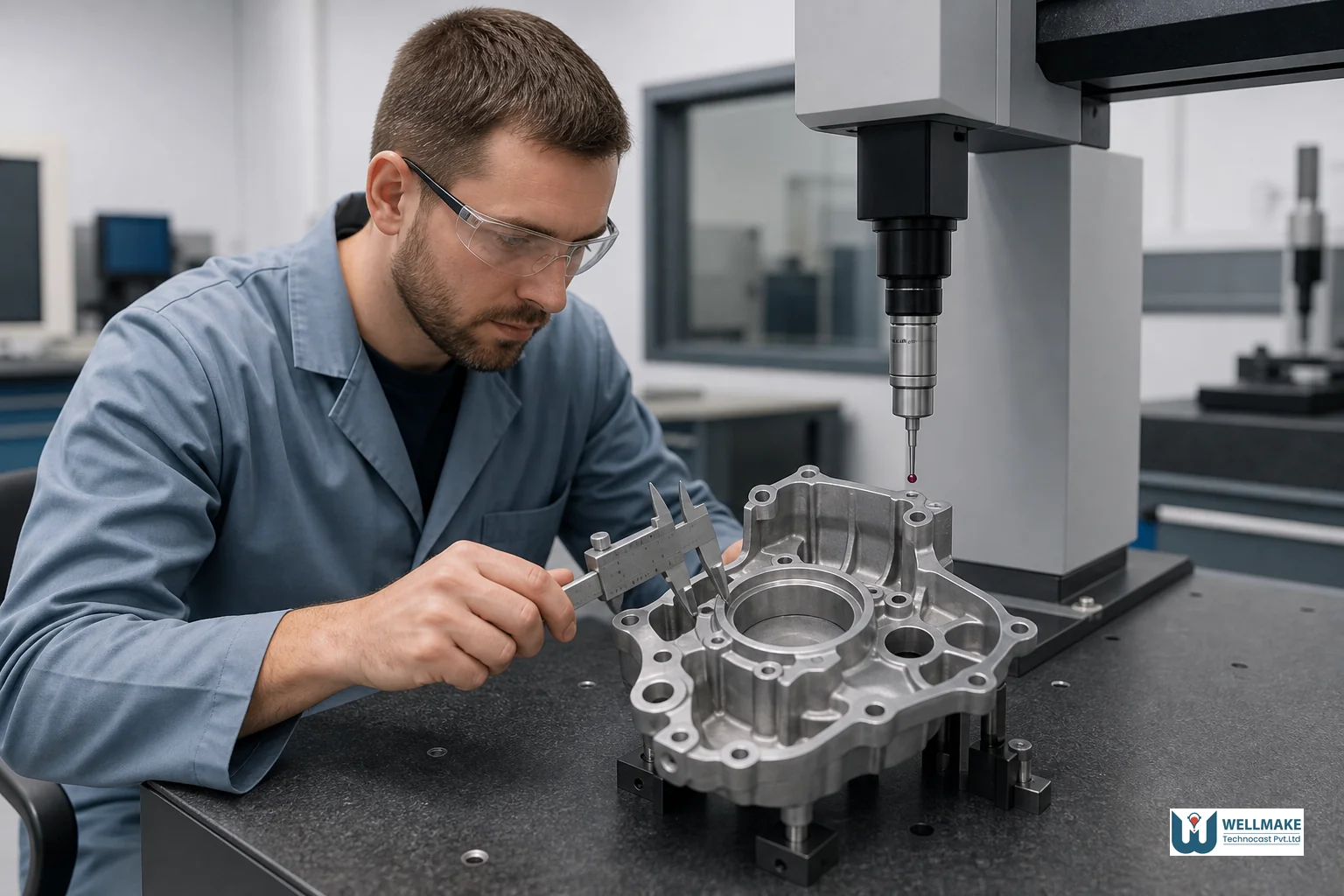
Beyond the certificates, ask what equipment the foundry actually runs for quality control. A spectrometer for alloy verification, a universal testing machine (UTM) for tensile and yield strength, a hardness tester, and an impact testing machine are the baseline instruments a serious foundry should have in-house rather than outsourced. Wellmake Technocast runs all four as standard on production batches, which matters for buyers in pump and valve or defence sectors where material certificates need to be backed by actual test data, not just paperwork.
Sector-specific expectations also apply. Aerospace and defence buyers will want NADCAP-adjacent process controls and full material traceability. Oil and gas buyers often need NACE-compliant materials for sour service. A foundry serving multiple sectors, rather than one narrow niche, is more likely to have already built the documentation habits these standards require.
How Indian Foundries Like Wellmake Technocast Serve UK OEMs
Wellmake Technocast operates from Rajkot, Gujarat, a region with a long-established investment casting cluster and a deep pool of skilled foundry labour. Founded in 2005, the company runs a 70 MT monthly production capacity, casting components that range from a few grams up to 180 kilograms, in both ferrous and non-ferrous alloys.
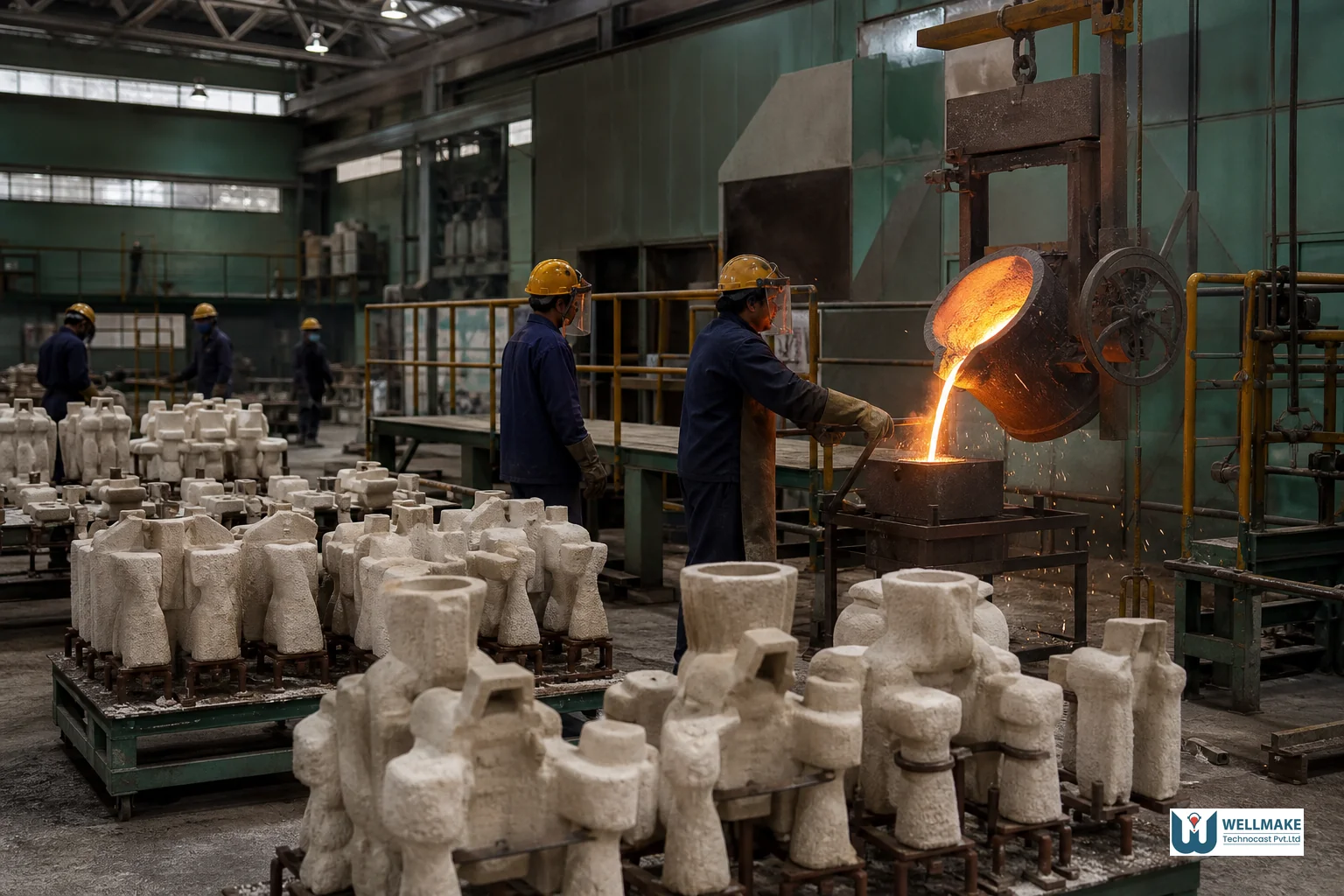
What distinguishes this kind of supplier for UK buyers isn't just cost. It's the combination of triple ISO certification (9001, 14001, 45001), an 8-step ceramic shell casting process, and in-house CNC machining that turns a raw casting into a finished, line-ready part without a second supplier in the loop. Wellmake serves automotive, pump and valve, oil and gas, railways and defence, and fire safety sectors, which means the foundry has already encountered most of the tolerance and certification demands a UK buyer is likely to bring.
Sustainability is a growing part of that conversation too. Wellmake's use of renewable energy and waste recycling in production is directly relevant to UK buyers who now need supply chain emissions data for their own environmental reporting, a requirement that's only getting stricter under UK and EU disclosure rules.
Compared to larger global players such as Impro Precision Industries or Precision Castparts Corp, a mid-sized Indian foundry like Wellmake typically offers more flexible order quantities and closer, more direct communication with engineering staff, without the layered account management structures that come with sourcing from a large multinational casting group. That flexibility matters most for UK buyers who need design iteration support during new part development, not just repeat production runs. For a closer look at what to check before signing with any supplier, see our guide on how to choose the right investment casting foundry.
Cost Comparison: UK Local Foundry vs Indian Investment Casting Supplier
Cost gaps between UK and Indian investment casting suppliers usually come down to four factors: labour rates, energy costs, tooling amortisation, and machining rates. UK energy prices for industrial gas and electricity have risen sharply since 2022, and that cost feeds directly into furnace operation and shell burnout, two of the most energy-intensive steps in the casting process. Indian foundries operating at higher volumes with lower energy and labour costs can often deliver the same alloy and tolerance at a materially lower per-piece price, even after freight and duty are added.
Tooling is where buyers sometimes get caught out. A wax injection die built in India can cost less upfront than a UK-built tool, but buyers should always ask for a full tooling cost breakdown, including amortisation schedule, before comparing quotes side by side. Our detailed breakdown of what affects investment casting cost per kg is a useful reference when your quotes don't line up the way you expect.
Local UK or European sourcing still makes sense in specific situations: urgent low-volume prototype runs, parts requiring rapid design iteration with an engineer on-site, or extremely time-sensitive maintenance replacements. For production volumes with stable specifications, though, the economics increasingly favour a qualified Indian supplier. Buyers comparing this trade-off across other European markets can see similar patterns in our guides on investment casting for pump and valve makers in Sweden and casting versus machining cost trade-offs generally, covered in investment casting vs machining: which costs less.
Logistics and Compliance Considerations for UK Procurement Teams
Post-Brexit trade rules add a layer of complexity that wasn't there a decade ago. UK buyers now need to confirm UKCA marking requirements where applicable, alongside any CE marking still needed for parts destined for EU-based assembly lines. Correct HS code classification for cast metal components affects the import duty rate, so it's worth confirming this with a customs broker before the first shipment, not after.
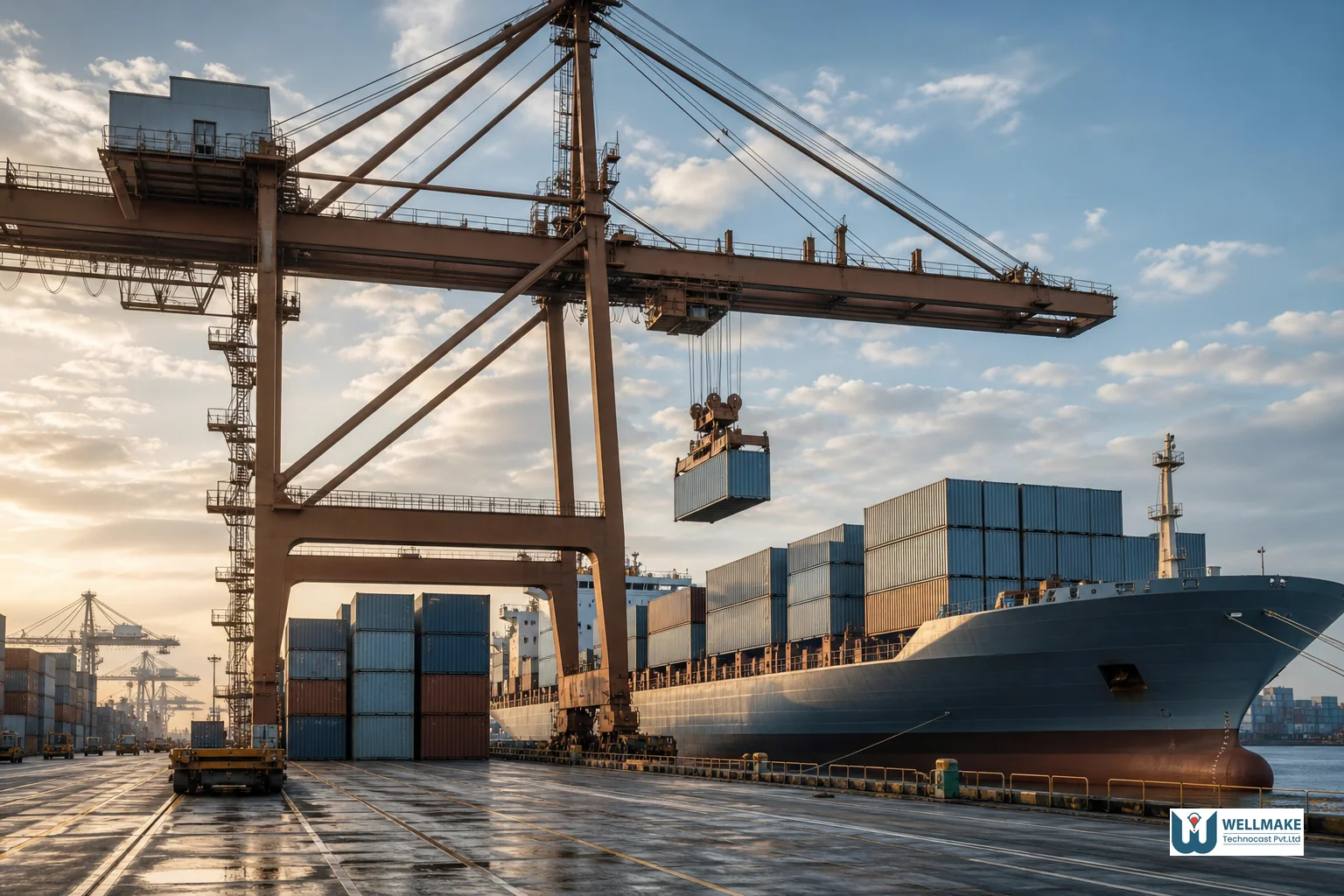
Freight from Gujarat to UK ports typically moves by sea, with transit times in the range of four to six weeks depending on the route and transhipment point. Air freight is available for urgent or lower-volume shipments but at a significant cost premium, and it's usually reserved for prototype samples or first article parts rather than full production runs. Buyers should agree Incoterms upfront: FOB (Free On Board) shifts freight risk and cost to the buyer once goods are loaded at the Indian port, while CIF (Cost, Insurance, Freight) and DAP (Delivered At Place) shift more of the logistics burden onto the supplier. For a first-time supplier relationship, DAP terms often reduce the administrative load on a UK buyer's logistics team considerably.
Payment terms and currency exposure also deserve attention. Most Indian foundries invoice in USD or GBP for export orders, and it's reasonable to negotiate staged payments tied to first article approval and pre-shipment inspection, rather than full payment upfront. A supplier confident in its own quality process won't object to that structure.
How to Qualify and Vet an Overseas Investment Casting Supplier
Distance makes due diligence harder, but it doesn't make it optional. UK buyers should treat supplier qualification as a formal process with documented steps, not a one-off phone call.
- Request a first article inspection report with full dimensional data against your drawing, not just a pass/fail statement.
- Ask for material test certificates tied to the specific heat or batch number, cross-checked against spectrometer readings.
- Order sample components before committing to a production volume, and have your own quality team inspect them independently.
- Request a virtual factory tour or, for higher-value programmes, schedule an in-person or third-party audit of the facility.
- Review the foundry's in-house testing equipment, spectrometer, UTM, hardness tester, and impact testing machine, since outsourced testing adds delay and reduces traceability.
Watch for red flags: a supplier that can't produce a certificate number you can independently verify, vague answers about lead time, or reluctance to provide sample parts before a large order. Our detailed guide on evaluating suppliers for Nordic and European buyers covers many of the same qualification steps in more depth, and applies just as well to UK sourcing teams building their first overseas supplier relationship.
Tolerances, Surface Finish and Design Freedom for Complex UK Components
One reason investment casting keeps winning against machining from bar stock or fabrication is design freedom. Complex internal passages, thin walls down to around 3mm, and intricate external geometry that would require multiple machining setups can often be cast in a single piece. That reduces both part count and the risk of weld failures in assemblies like valve bodies and pump housings.
Standard investment casting tolerances typically fall in the range of ±0.1mm to ±0.5mm depending on part size and geometry, with critical features refined further through CNC machining to hold tighter tolerances where needed. Surface finish on as-cast parts commonly reaches 3.2 to 6.3 Ra micrometres, improving significantly on machined surfaces. For UK buyers specifying components against ISO 8062 or similar casting tolerance standards, it's worth confirming upfront which features will be left as-cast and which will be machined to final print, since that decision affects both cost and lead time.
These capabilities matter across sectors well beyond pump and valve work. Aerospace brackets, mining equipment components, and railway fittings all benefit from the same combination of near-net-shape casting and targeted machining. UK buyers working across multiple product lines will find it worth reviewing what alloys are typically specified for each application in our guide to materials used in investment casting.
Frequently Asked Questions
Is investment casting cheaper than CNC machining for UK buyers?
For medium to high production volumes, yes, in most cases. Investment casting reduces material waste since parts start near their final shape, whereas machining from solid bar stock removes significant material as scrap. For very low volumes or highly simple geometries, machining alone can sometimes be cheaper, so it's worth requesting quotes for both approaches on a new part.
How long does shipping take from India to the UK?
Sea freight typically takes four to six weeks door to door, including port handling and customs clearance. Air freight can reduce this to under a week but comes at a much higher cost, and is generally reserved for urgent samples or first article parts rather than full production batches.
What industries benefit most from Indian investment casting suppliers?
Automotive, pump and valve, oil and gas, railways and defence, and fire safety sectors see the strongest results, largely because these industries need certified materials, documented traceability, and machined-to-print components at production volumes where per-piece cost savings compound significantly.
How do UK buyers verify ISO certification claims?
Ask the supplier for the certificate number and issuing certification body, then check that registration against the certifier's own public database. A legitimate foundry will provide this without hesitation, and reputable certifiers maintain searchable registries for exactly this purpose.
Can complex geometries really be cast rather than fabricated or machined?
Yes. Investment casting is specifically suited to intricate shapes, internal cavities, and thin-wall sections that would otherwise require multiple machining operations or welded assemblies. This reduces part count, assembly time, and points of potential failure in the finished component.
Choosing the Right Partner for Your Next Sourcing Decision
UK procurement teams facing shrinking domestic foundry capacity don't need to compromise on quality to find a cost-effective supply chain. A triple ISO-certified, single-source foundry that handles casting and machining together removes handoffs, shortens supplier chains, and gives your engineering team one point of contact for both dimensional accuracy and material certification.
Wellmake Technocast has built its export business around exactly that model for OEMs across Europe, North America, and the Middle East. If you're evaluating your options for an investment casting foundry in the UK supply chain for machined components, explore Wellmake Technocast's product range to see the sectors and component types they already manufacture at scale. When you're ready to discuss your drawings, tolerances, or first article requirements, get in touch with the Wellmake Technocast team to start a qualification conversation, or contact us today to request sample components for your next production run.