
How to Choose the Right Investment Casting Foundry
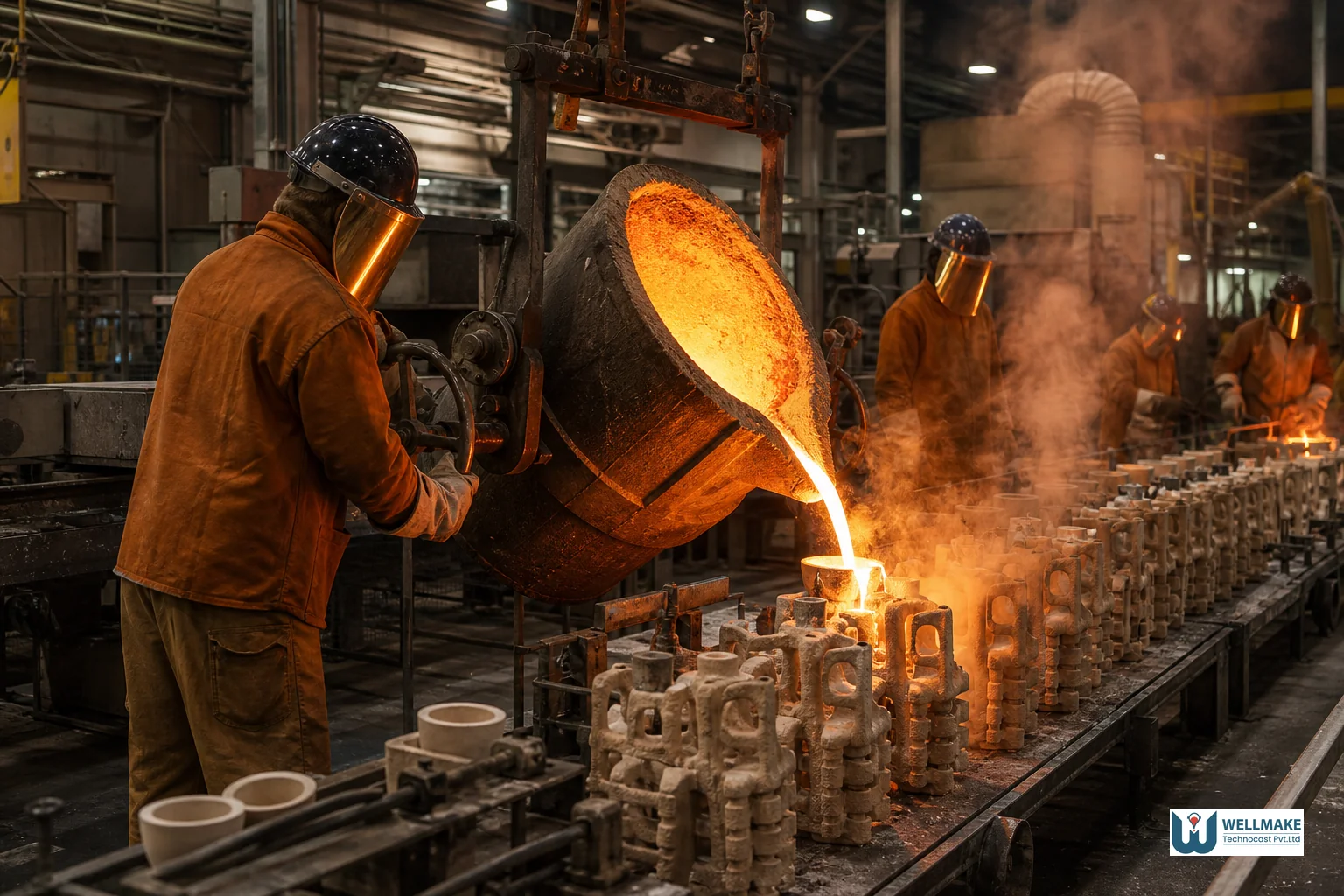
A procurement manager at a mid-sized valve manufacturer once told a colleague that choosing a casting supplier felt like "signing a contract you can't read yet." The quote looks fine on paper. The sample part looks fine on the bench. But you won't know if the foundry can hold tolerance across a 5,000-unit production run, or handle a metallurgical curveball, until months into the relationship — when switching costs are already high.
That's the real risk buyers face when they search for how to choose an investment casting foundry. It's not a one-time transaction decision. It's closer to selecting a long-term manufacturing partner whose process discipline, testing rigor, and material expertise will directly shape your product's reliability, your delivery schedule, and your total landed cost. Get it wrong, and you inherit rework, failed audits, and missed customer deadlines. Get it right, and you gain a supplier who can scale with you across product lines and years.
This guide breaks down the specific criteria that separate a dependable investment casting foundry from a risky one — certifications, material capability, in-house testing, tolerance control, capacity, and single-source machining — along with the red flags that should stop a shortlist conversation cold.
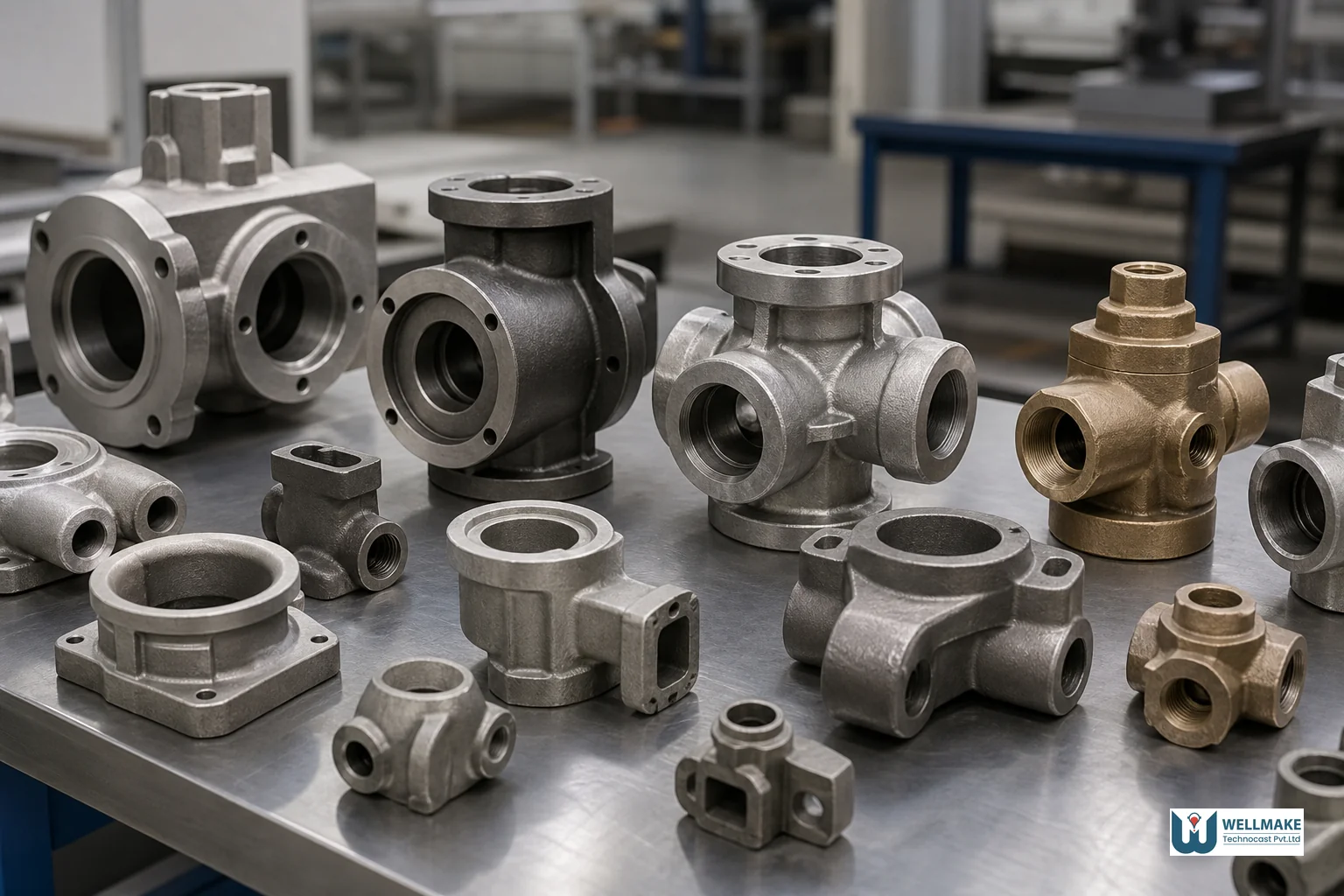
1. Verify Certifications and Quality Management Systems
Certifications are the fastest way to filter a long supplier list down to a serious one. ISO 9001 is the baseline for any quality management system, but it only confirms that a foundry has documented processes — not that those processes are good. Look deeper at what sits alongside it.
ISO 14001 (environmental management) and ISO 45001 (occupational health and safety) indicate a foundry has invested in operational maturity beyond the minimum. A supplier holding all three certifications together is usually managing the full plant, not just the paperwork trail auditors ask for. This combination also matters if your own company reports on supply chain sustainability or works with customers who require ESG disclosures.
Depending on your industry, ask for sector-specific credentials too:
- IATF 16949 for automotive component supply chains
- AS9100 or NADCAP-aligned processes for aerospace castings
- PED (Pressure Equipment Directive) compliance for pump, valve, and pressure-retaining components destined for the EU
Don't just take a certificate number at face value. Ask the foundry for the current certificate, check the issuing body's accreditation, and confirm the scope of certification actually covers the process you need (casting, machining, or both). A certificate that expired eight months ago, or one scoped only to "wax pattern production," tells you very little about the finished component leaving their dock.
2. Confirm Material and Alloy Capabilities
Not every foundry casts every alloy well. Some specialize in carbon and low-alloy steels for structural or automotive parts. Others focus on stainless grades like CF8 and CF8M for corrosive service in pump and valve applications, or non-ferrous metals such as aluminum and bronze for lighter, non-magnetic components. Before you send an RFQ, confirm the foundry's metallurgical track record matches your actual application, not just its marketing page.
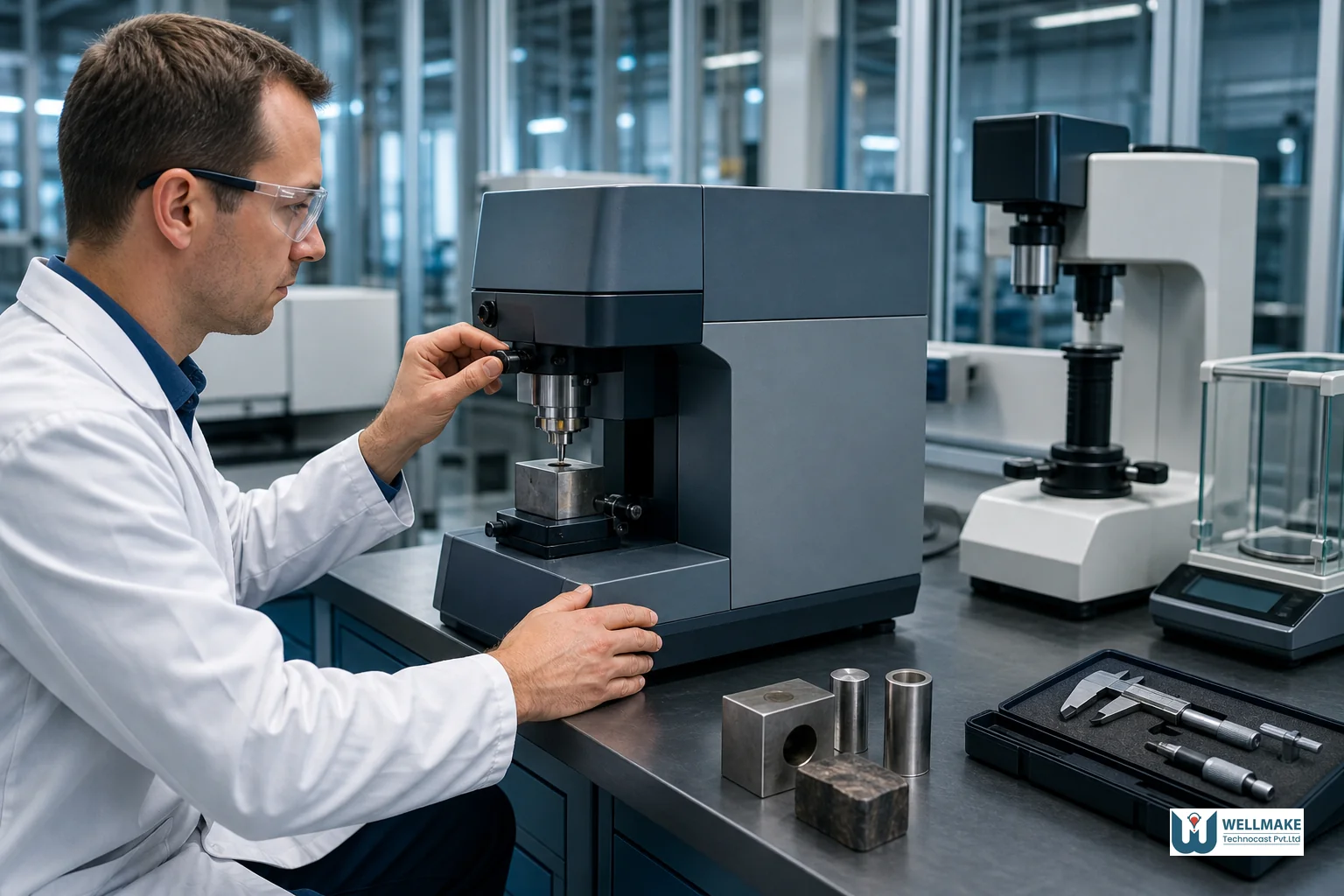
A foundry serving oil and gas or mining equipment customers, for example, needs demonstrated experience with duplex stainless steels and abrasion-resistant alloys, not just generic carbon steel runs. One supplying aerospace or defence components needs traceability documentation down to the heat number and melt certificate. Ask for a materials list, a sample certificate of conformance, and, where possible, references from customers in your specific sector.
It's also worth understanding what shapes the material decision in the first place, since alloy choice interacts directly with cost, weight, and mechanical performance. For a deeper technical breakdown, see what affects investment casting cost per kg, which covers how alloy selection, part complexity, and yield rate combine to set your final unit price.
3. Assess In-House Quality Testing Infrastructure
This is where many buyers underestimate risk. A foundry can claim tight tolerances and strong mechanical properties, but without testing equipment on-site, every claim depends on a third-party lab's turnaround time and honesty. In-house testing infrastructure isn't a luxury add-on. It's the mechanism that catches defects before they reach your production line.
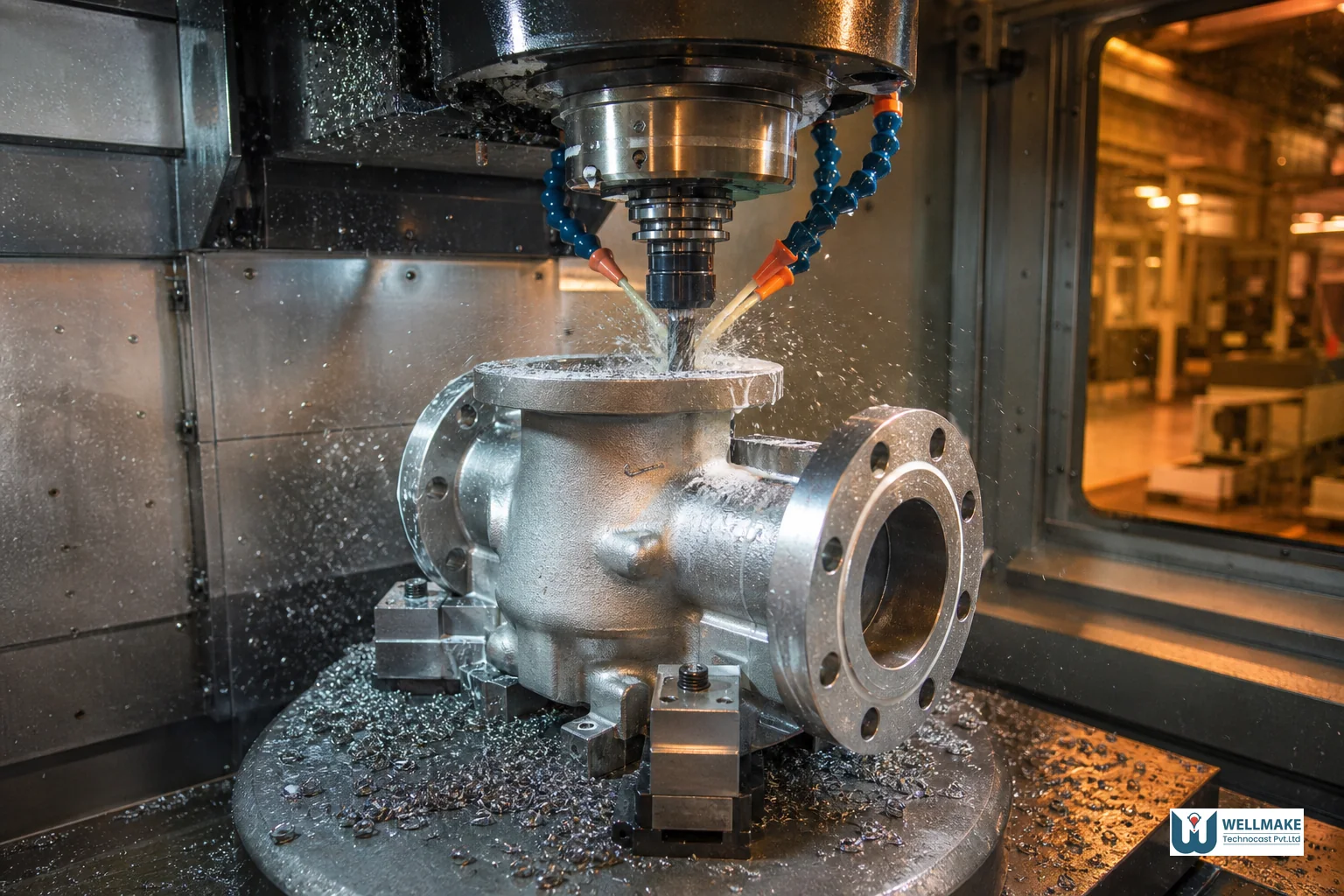
At minimum, ask what the foundry has on its own floor:
- Spectrometer analysis to verify chemical composition against the specified alloy grade, batch by batch
- Universal Testing Machine (UTM) to confirm tensile strength, yield strength, and elongation
- Hardness testing to validate heat treatment results
- Impact testing for components used in low-temperature or high-stress service
- Dimensional inspection, ideally with CMM (coordinate measuring machine) capability for tight-tolerance geometries
A foundry with these tools in-house can turn around a nonconformance investigation in days instead of weeks, because they're not waiting on an external lab's schedule. That speed matters most when a shipment is already in transit and a customer is asking questions.
4. Evaluate Tolerances, Surface Finish, and Dimensional Accuracy
Investment casting exists because it delivers tighter tolerances and better surface finish than sand casting or die casting, straight out of the shell, with less need for secondary machining. But "tight tolerance" means different things to different foundries. Ask for their standard tolerance class under ISO 8062 (commonly CT4 to CT6 for investment casting) and request sample inspection reports, not just a verbal claim.
Surface finish matters just as much, especially for parts that will see fluid flow, sealing surfaces, or cosmetic exposure. A capable foundry should be able to quote typical Ra values for their as-cast surface and explain what additional finishing (shot blasting, polishing, or machining) is needed to hit your drawing requirements.
This connects directly to your total cost. A foundry that consistently casts near-net-shape with tight dimensional control reduces the machining stock you need to remove later, which lowers tool wear, cycle time, and scrap. If you want to understand the mechanics of the casting process itself and where dimensional control comes from, how investment casting works step-by-step walks through the wax pattern, shell-building, and pouring stages that determine final accuracy.
5. Check Production Capacity and Scalability
A foundry that impresses you with a prototype run can still struggle when you scale to full production volume. Ask directly about monthly tonnage capacity, and how that capacity is allocated across existing customers. A foundry running near its ceiling may quote you attractive prices upfront, then fall behind on delivery once your order competes with others for furnace time and shell-building capacity.
Component size range matters too. Some foundries are optimized for small, high-volume parts weighing a few grams. Others handle large, heavy components up to 150–180 kg. If your product line includes both small precision fittings and larger housings, confirm the foundry can handle that full range without subcontracting part of the work — which introduces a second point of quality risk you can't directly audit.
Lead time consistency is the practical test. Ask for typical lead times across different order sizes and alloy types, and compare that against what they've delivered historically to existing customers. If you want a fuller picture of what drives casting lead times and how to plan around them, it's worth understanding how OEMs evaluate casting suppliers when reliability and delivery consistency are the deciding factor, not just unit price.
6. Prioritize Single-Source Casting Plus Machining
One of the most overlooked selection criteria is whether a foundry can deliver line-ready, fully machined components, not just raw castings. Splitting casting and machining across two separate vendors introduces real risk: tolerance stack-up between two independent processes, longer total lead time, duplicated freight and handling costs, and two separate points of contact when something goes wrong.
A single-source supplier that casts and machines under one roof can control the entire dimensional chain from wax pattern to final bore tolerance. That reduces the risk of miscommunication between a casting shop and a separate machine shop, and it usually shortens your total procurement cycle since you're not coordinating two shipments and two inspection reports. It also simplifies your supplier qualification workload, since you're auditing one quality system instead of two.
For buyers in pump, valve, oil and gas, and defence sectors, where finished components often need precise bores, threads, and sealing faces, this single-source model is frequently the difference between a smooth production ramp-up and a program stalled by finger-pointing between two vendors. If you're building out a product range that spans both simple castings and fully machined assemblies, it's worth reviewing the [Explore Products](https://wellmaketechnocast.com/products) that combine both capabilities under a single quality system before you split your sourcing across multiple suppliers.
7. Red Flags to Watch for When Shortlisting Foundries
Some warning signs show up before you ever place an order, if you know where to look. Watch for these during your RFQ and shortlisting process:
- Vague or unverifiable certification claims. A foundry that can't produce a current certificate on request, or gets defensive when you ask to verify scope, is a risk regardless of what their sales deck says.
- No in-house testing equipment. If every mechanical or chemical test is outsourced to a third-party lab, expect longer turnaround on nonconformance issues and less transparency into batch-level quality.
- Reluctance to allow facility audits or share process documentation. A confident foundry will walk you through its shell-building room, pouring floor, and inspection area, virtually or in person. Hesitation here is worth taking seriously.
- Unusually low quotes with no clear explanation. A price significantly below the rest of your shortlist, without a documented reason (different alloy grade, smaller test scope, longer lead time), often means corners are being cut somewhere in the process.
- Slow or inconsistent technical communication. If it takes days to get a straight answer to a metallurgical or tolerance question during the RFQ stage, expect that same lag once you're a live customer with production issues.
These signals apply whether you're evaluating a domestic supplier or sourcing internationally. If you're specifically vetting an overseas partner, pay close attention to how they handle export documentation, incoterms, and quality escape reporting across time zones and language barriers — gaps here tend to surface only after the first shipment lands.
8. A Practical Foundry Evaluation Checklist
Use this condensed checklist during supplier calls, RFQ reviews, or facility audits:
- Request current ISO 9001, ISO 14001, and ISO 45001 certificates, plus any sector-specific credentials relevant to your industry.
- Confirm the foundry's alloy range and ask for material certificates matching your specification.
- Ask what testing equipment is on-site versus outsourced, and request a sample inspection report.
- Get their standard tolerance class (per ISO 8062) and typical surface finish (Ra) for your part geometry.
- Ask for monthly tonnage capacity and how much of it is currently committed to other customers.
- Confirm whether they offer in-house machining, or only raw castings.
- Request references from customers in your specific industry sector.
- Ask directly about typical lead times for both prototype and full production orders.
- Clarify their process for handling nonconformances, returns, and corrective action reports.
- Where possible, schedule a virtual or in-person facility audit before committing to a production order.
Running through this list before you commit to a supplier turns a subjective "they seem reliable" impression into a documented, comparable evaluation across your shortlist.
Frequently Asked Questions
What is the difference between ISO 9001 and IATF 16949 for casting suppliers?
ISO 9001 is a general quality management standard applicable to any manufacturing sector. IATF 16949 builds on ISO 9001 with automotive-specific requirements around defect prevention, process control, and supply chain traceability. If you're sourcing castings for automotive production, IATF 16949 alignment (even without full certification) is a meaningful signal of process discipline.
How do I qualify an overseas investment casting foundry?
Start with document verification: certificates, material certs, and sample inspection reports. Follow with a virtual or in-person facility audit, a trial order with full first-article inspection, and a review of their communication responsiveness across the RFQ and sampling stages. Treat the first order as a qualification run, not a full production commitment, until you've verified consistency across at least one repeat batch.
What questions should I ask a foundry before placing a first order?
Ask about their alloy experience with your specific material, in-house testing equipment, standard tolerance class, current production capacity and lead times, whether they offer machining alongside casting, and how they handle nonconformance reporting. Their answers, and how quickly they provide them, tell you almost as much as the content itself.
How long does supplier qualification typically take?
For a new industrial buyer, a realistic qualification timeline runs from a few weeks for document review and sampling to two or three months when a full first-article inspection and pilot production run are included. Sectors with stricter compliance requirements, such as aerospace or defence, often take longer due to additional documentation and traceability checks.
Choosing a Partner, Not Just a Price
Selecting an investment casting foundry is ultimately a risk management decision as much as a cost one. The criteria that matter most, certifications you can verify, materials that match your application, testing equipment that catches problems early, tolerances backed by data, capacity that scales with you, and single-source machining that removes an entire layer of coordination risk, are the same factors that separate a supplier relationship that lasts for years from one that unravels after the first difficult shipment.
Wellmake Technocast has built its process around exactly these standards: triple ISO certification (9001, 14001, 45001), in-house spectrometer, UTM, hardness, and impact testing, a 70 MT monthly capacity spanning components from a few grams to 180 kg, and single-source casting-to-machining delivery for customers across automotive, pump and valve, oil and gas, mining, railways, defence, and fire safety sectors. If you're currently evaluating foundries against this checklist, [Get in Touch](https://wellmaketechnocast.com/contact) to walk through your drawings, alloy requirements, and production volumes with our engineering team. When you're ready to move from evaluation to a working relationship, [Contact Us Today](https://wellmaketechnocast.com/contact) and start the qualification conversation with a supplier built to meet it.