
What Materials Are Used in Investment Casting?
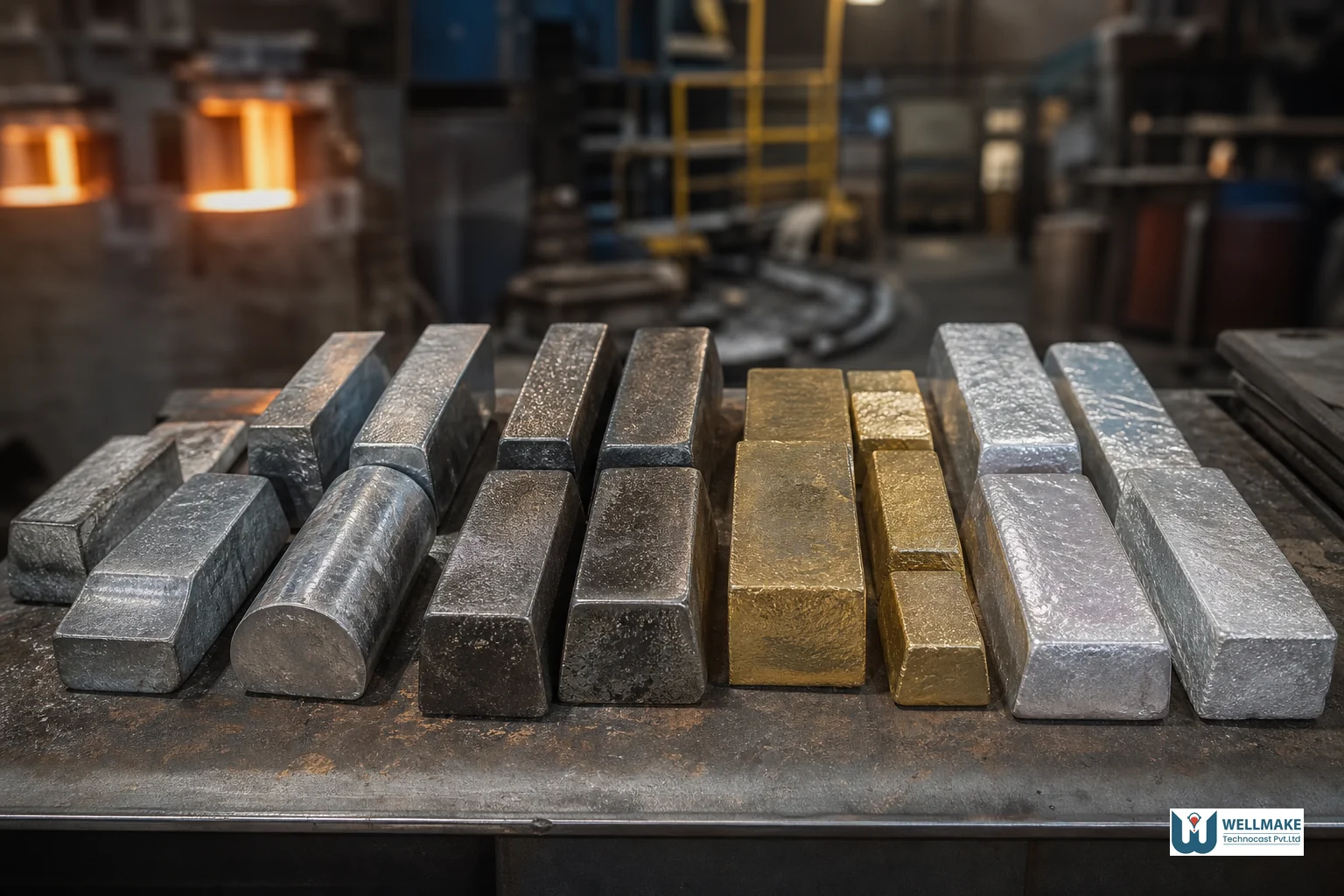
A procurement engineer at a fire safety equipment manufacturer once sent the same drawing to three foundries and got back three different material recommendations. One suggested carbon steel. Another pushed for a duplex stainless. The third asked more questions before answering at all. The part was identical. The confusion wasn't about geometry, it was about what materials can be used in investment casting and which one actually fits the application.
That confusion is common, and it's expensive when it goes unresolved. Choosing the wrong alloy can mean a component that corrodes early, fails under load, or costs far more to machine than it should have. This guide walks through the ferrous and non-ferrous metals available in investment casting, how each performs, and how to specify the right grade before you ever request a quote.
Why Material Selection Is the First Decision in Any Casting Project
Every investment casting project starts with a design, but the material decision is what actually determines whether that design will work in the field. The alloy you pick affects tensile strength, resistance to corrosion, weight, machinability, and the final price per kilogram. Get it wrong and you either overpay for properties you don't need, or underspec a part that fails inspection or, worse, fails in service.
Investment casting, also called lost-wax casting, is compatible with a wide range of ferrous and non-ferrous alloys. That's part of why the process is so widely used across Automotive, Oil & Gas, Pump & Valve, Aerospace, Railways, Defence, and Mining sectors. Unlike die casting, which is largely restricted to lower-melting-point non-ferrous metals like aluminium and zinc, investment casting handles high-melting-point ferrous alloys just as easily. If you're still weighing which process fits your part, our breakdown of investment casting vs die casting cost comparison covers that decision in more depth. Note: see internal link section below for correct slug usage.
Before you request a quote, it helps to understand the full menu of alloy families available, and how each one is typically applied. That's what the rest of this guide covers.
Ferrous Alloys Used in Investment Casting
Ferrous alloys, meaning iron-based metals, make up a large share of investment casting production worldwide because they offer high strength at a relatively low cost. They fall into three broad families.
Carbon Steel
Carbon steel is the workhorse grade for structural and general engineering components. Grades similar to WCB (ASTM A216) are common in valve bodies, brackets, and housings where high strength matters more than corrosion resistance. Low and medium carbon steel castings are easy to weld and machine, which makes them a cost-effective choice for parts that will be painted, coated, or used in dry indoor environments.
Alloy Steel
Alloy steels add elements like chromium, molybdenum, or nickel to plain carbon steel to boost hardness, wear resistance, or strength at elevated temperatures. These grades show up in mining equipment, railway components, and defence parts that face heavy mechanical loads or abrasive conditions. If your application involves repeated impact or friction, an alloy steel grade will usually outlast a plain carbon steel part by a wide margin.
Stainless Steel
Stainless steel is the most requested ferrous family in export-driven investment casting, and for good reason. It splits into several sub-families:
- Austenitic stainless steel (304, 316): Non-magnetic, highly corrosion-resistant, and widely used in food processing, chemical handling, and marine environments. 316 grade adds molybdenum for better resistance to chlorides and acids.
- Martensitic stainless steel (410, 420): Higher hardness and strength than austenitic grades, often used where wear resistance matters more than extreme corrosion protection, such as valve trim and cutlery-grade components.
- Duplex and super duplex stainless steel: A mix of austenitic and ferritic microstructure that delivers both high strength and excellent resistance to chloride stress corrosion cracking. This is the standard choice for offshore oil & gas valve bodies and pump housings exposed to seawater or sour service conditions.
Stainless steel castings typically cost more per kilogram than carbon steel, but for applications exposed to moisture, chemicals, or offshore environments, the extra cost prevents premature failure and unplanned downtime.
Non-Ferrous Alloys Used in Investment Casting
Non-ferrous alloys, metals without iron as the primary element, open up a different set of properties: lighter weight, better electrical conductivity, and in some cases, easier machinability.
Aluminium Alloys
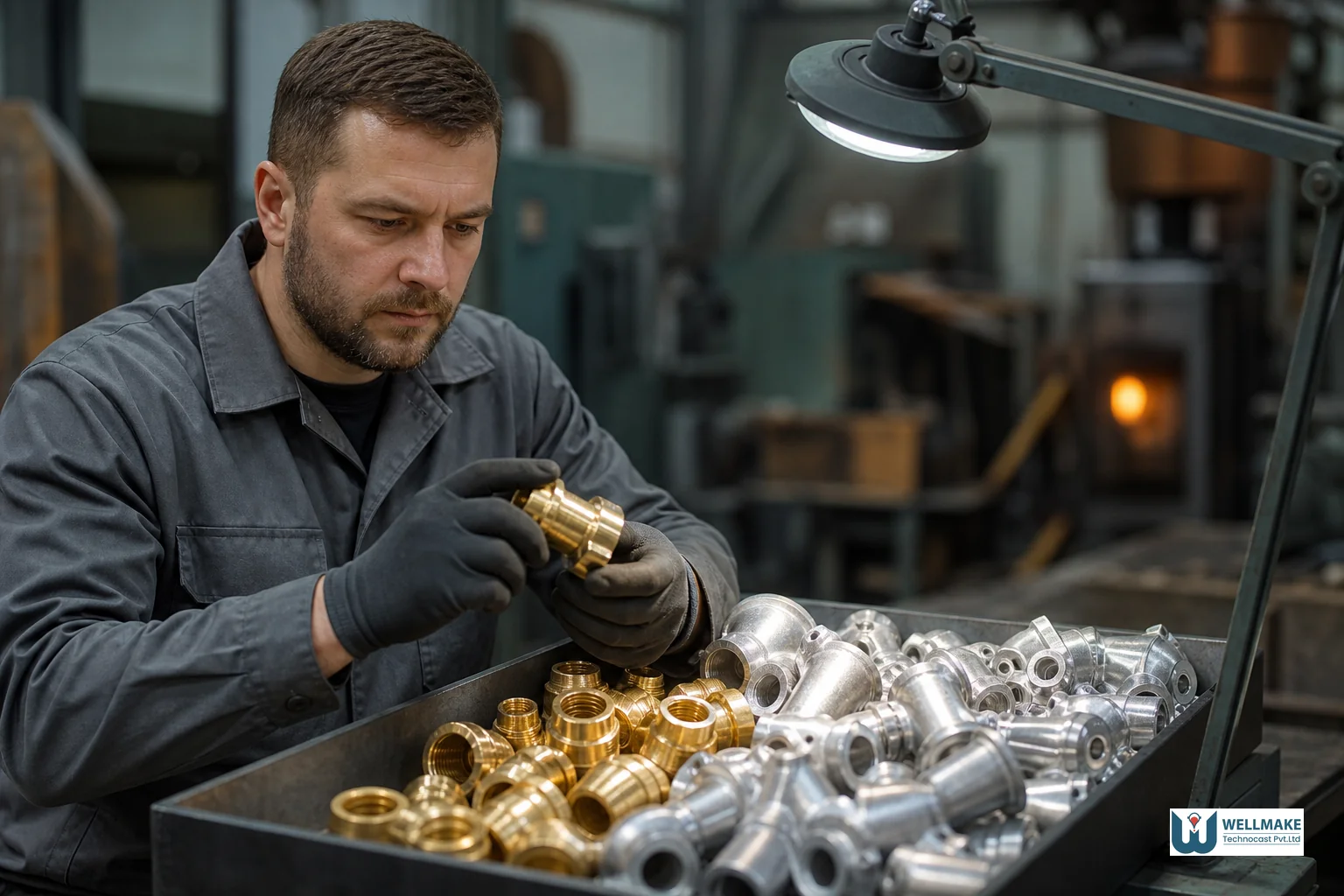
Aluminium castings weigh roughly a third of an equivalent steel part, which makes them attractive for automotive brackets, aerospace fittings, and any application where reducing weight improves fuel efficiency or handling. Aluminium also resists atmospheric corrosion well without additional coating, though it doesn't match stainless steel for strength at high temperatures.
Brass and Bronze
Brass (a copper-zinc alloy) and bronze (a copper-tin alloy) are common in plumbing fittings, marine hardware, and decorative architecture components. Both resist corrosion in water and marine environments and machine cleanly, which is why they remain popular in valve and pump fittings that handle potable water or low-pressure fluid systems.
Copper Alloys
Pure copper and copper-based alloys are specified when electrical or thermal conductivity is the primary requirement, such as in electrical fittings or heat-transfer components. These are a smaller share of typical foundry output but remain important for specialized engineering applications.
Nickel-Based Superalloys
For parts that face extreme heat, such as turbine components or certain aerospace fittings, nickel-based superalloys hold their strength at temperatures where steel would soften. These are more specialized and costly, generally reserved for aerospace and high-temperature industrial applications where no other alloy family will perform reliably. If your project involves aerospace-grade components, our guide on investment casting for aerospace components looks at qualification requirements specific to that sector. (See correct slug list below.)
How Material Choice Impacts Strength, Corrosion Resistance, and Cost
Every alloy decision is a trade-off. Higher strength usually means higher weight or higher cost. Better corrosion resistance often means a harder-to-machine material. Understanding these trade-offs upfront saves you from costly redesigns later.
Consider two valve bodies that look identical on a drawing. One is specified in carbon steel because the fluid is non-corrosive and the operating environment is indoor and dry. The other is specified in duplex stainless steel because it will sit on an offshore platform exposed to saltwater spray. The carbon steel part might cost 30 to 40 percent less to produce, but if you swapped the materials, the indoor part would be needlessly expensive and the offshore part would corrode and fail within a few years.
Material selection also changes what happens after casting. Stainless steel and nickel alloys are harder on cutting tools during machining, which increases tooling wear and cycle time. Aluminium and brass machine faster and with less tool wear, but they can't take the same mechanical loads as steel. A precision foundry that offers both casting and machining under one roof, rather than outsourcing the machining step, can flag these downstream cost implications before you commit to a grade.
Matching Materials to Industry Applications
Different industries gravitate toward specific alloy families because of the operating conditions their components face.
Oil & Gas
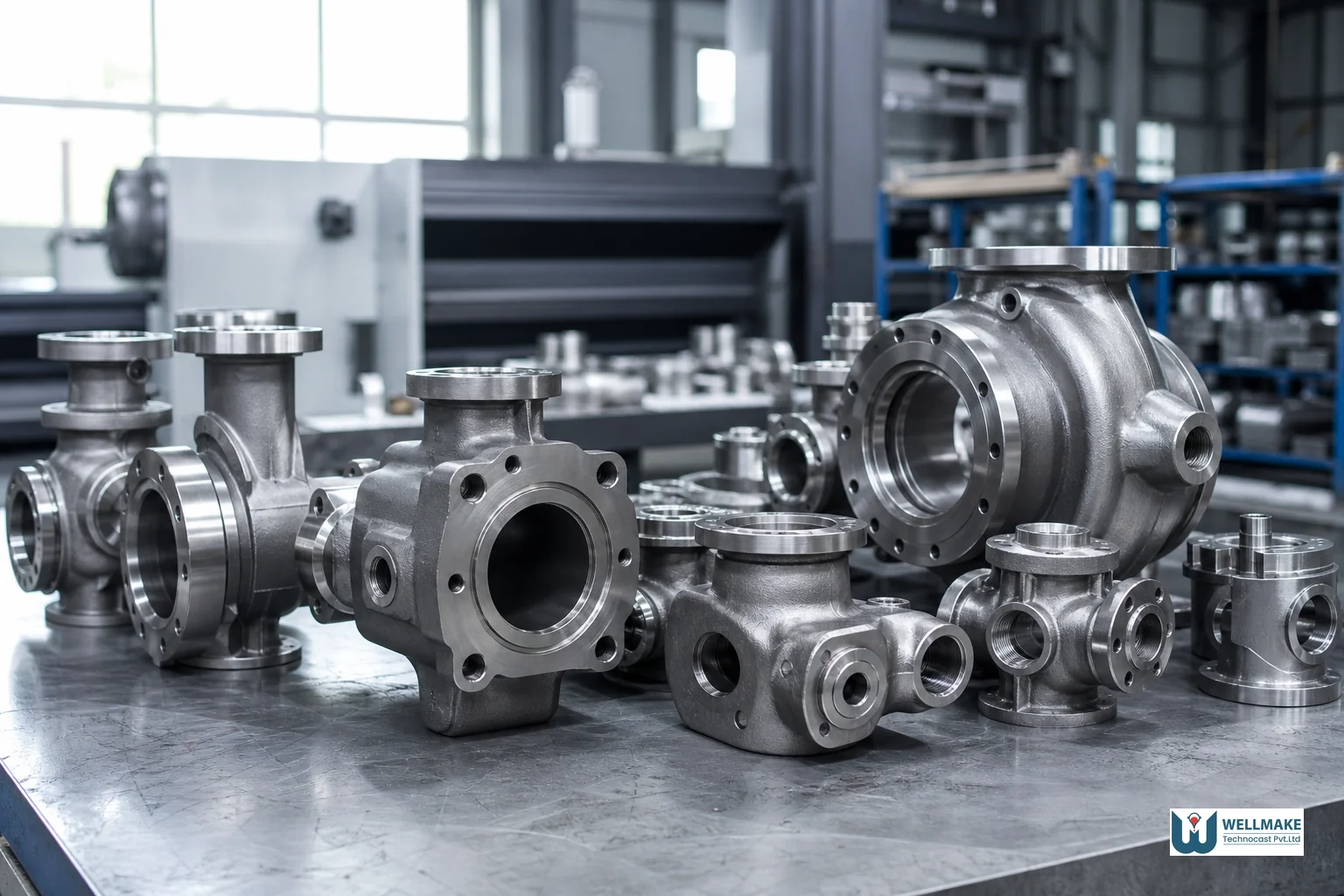
Oil & gas components face pressure, corrosive fluids, and often offshore or sour-service environments. Duplex and super duplex stainless steel dominate valve body and pump housing specifications here, with carbon steel used for less demanding, non-corrosive line sections. The American Petroleum Institute and ASTM standards govern much of the material qualification in this sector, so certified chemical composition and mechanical testing are non-negotiable.
Automotive
Automotive parts split between structural strength and weight reduction. Carbon steel and alloy steel cover brackets, mounts, and drivetrain components where strength and cost matter most. Aluminium is increasingly specified for parts where reducing vehicle weight improves fuel economy or supports electric vehicle range targets.
Pump & Valve
Pump and valve manufacturers need materials that resist erosion, cavitation, and corrosion from the fluids they handle. Stainless steel is the default choice, with bronze and brass used for lower-pressure water applications. Sourcing teams in markets like Sweden and Italy increasingly ask suppliers about corrosion-resistant grade equivalence when switching from a local foundry, a topic we cover in Investment Casting for Pump & Valve Makers in Sweden.
Railways, Defence & Mining
These sectors demand components that survive heavy mechanical loads, vibration, and abrasive environments over long service life. Alloy steels with added wear resistance, along with select stainless grades for corrosion-prone applications, are the standard here. Certification traceability matters more in defence and railways than almost anywhere else, since components often need to meet strict regulatory and safety documentation requirements.
How to Specify the Right Metal Grade When Sourcing a Foundry
Once you understand the alloy families, the next step is translating that knowledge into a clear specification your foundry can quote against. A vague request like "stainless steel valve body" leaves too much room for interpretation. Instead, procurement teams should be ready to answer or ask the following.
- What standard governs the part? Reference recognized specifications such as ASTM A216 (carbon steel), ASTM A351 (stainless steel), or ASTM A744 (corrosion-resistant castings) rather than generic material names.
- What operating environment will the part face? Temperature range, exposure to chemicals or saltwater, and pressure rating all narrow down the right grade.
- What mechanical properties are required? Tensile strength, yield strength, elongation, and hardness should be specified numerically, not left to assumption.
- Can the foundry verify chemical composition? A foundry with an in-house spectrometer can confirm the exact alloy composition of every heat, rather than relying on a mill certificate alone.
- Is mechanical testing available on-site? Tensile testing (UTM), hardness testing, and impact testing confirm that the cast material meets the mechanical properties specified, not just the chemistry.
A foundry that can answer all five points with documented, traceable data is one you can specify against with confidence. This is also where the difference between an experienced precision foundry and a low-cost general shop becomes obvious. For a deeper look at how casting quality is verified before an order ships, see our guide on how to choose the right investment casting foundry.
Common Mistakes Buyers Make When Choosing Casting Materials
Even experienced procurement teams run into avoidable problems when specifying casting materials. A few patterns show up repeatedly.
- Choosing on price alone. A quote for "304 stainless steel" from one supplier and "similar grade stainless" from another are not the same commitment. Always confirm the exact grade and standard, not just the metal family name.
- Ignoring geometry compatibility. Some alloys behave differently in thin-wall sections or complex internal passages. A foundry experienced with the full investment casting process can tell you early whether your chosen alloy will fill a complex mold cleanly or whether design changes are needed.
- Overlooking machinability. A material that's ideal for corrosion resistance may add significant machining time and tool wear. Factor this into total landed cost, not just the raw casting price. Our article on what affects investment casting cost per kg breaks down how material and machining costs interact.
- Skipping certification checks. For regulated industries like defence, aerospace, and oil & gas, missing or unverifiable material certificates can delay or void a project entirely. Always confirm testing capability before placing a first order.
Material selection isn't a checkbox on a drawing, it's the decision that determines whether a component survives its intended service life. Specify the standard, verify the testing, and confirm the grade before tooling begins.
Frequently Asked Questions
Can investment casting be used for both ferrous and non-ferrous metals?
Yes. Investment casting is one of the few processes flexible enough to handle both ferrous alloys, including carbon steel, alloy steel, and stainless steel, as well as non-ferrous metals like aluminium, brass, bronze, copper, and nickel-based superalloys. This flexibility is one reason the process is used across such a wide range of industries.
What is the strongest material commonly used in investment casting?
Alloy steels and martensitic stainless steels typically offer the highest strength and hardness among commonly cast grades, making them suitable for high-load applications in mining, railways, and defence. Nickel-based superalloys offer the best strength retention at extreme temperatures for aerospace and turbine applications.
Is aluminium investment casting cost-effective?
Aluminium castings are generally lighter and often less expensive per part than steel, particularly when weight reduction is a design goal. However, total cost depends on part complexity, wall thickness, and finishing requirements, so it's worth comparing quotes against your specific geometry rather than assuming aluminium is always cheaper.
Which stainless steel grade offers the best corrosion resistance?
Duplex and super duplex stainless steel grades generally offer the best resistance to chloride-induced corrosion and stress cracking, making them the preferred choice for offshore oil & gas and marine applications. For less aggressive environments, 316 stainless steel provides strong general corrosion resistance at a lower cost than duplex grades.
How do I confirm a foundry can produce the material I need?
Ask for evidence of in-house testing equipment, such as a spectrometer for chemical composition and a hardness or tensile tester for mechanical properties, along with material certificates traceable to each production batch. Foundries with ISO 9001 certification typically have documented quality processes covering exactly this kind of verification.
Specify with Confidence, Source with Certainty
Choosing the right alloy is only half the job. The other half is working with a foundry that can cast it accurately, verify it thoroughly, and deliver it on schedule. Wellmake Technocast produces both ferrous and non-ferrous investment castings, from carbon and stainless steel to aluminium and brass, backed by in-house spectrometer, hardness, and impact testing to confirm every batch meets its specified grade.
If you're planning a new component and want to compare material options against your application's strength and corrosion requirements, you can explore our product range to see the industries and component types we cast regularly. For a specific project, whether it's a pump housing, valve body, or structural bracket, our team can help you match the right metal grade to your operating conditions. Get in touch with our engineering team to discuss your drawing, or contact us today to request a quote backed by verifiable material testing and traceable certification.