
Investment Casting vs Machining: Which Costs Less?
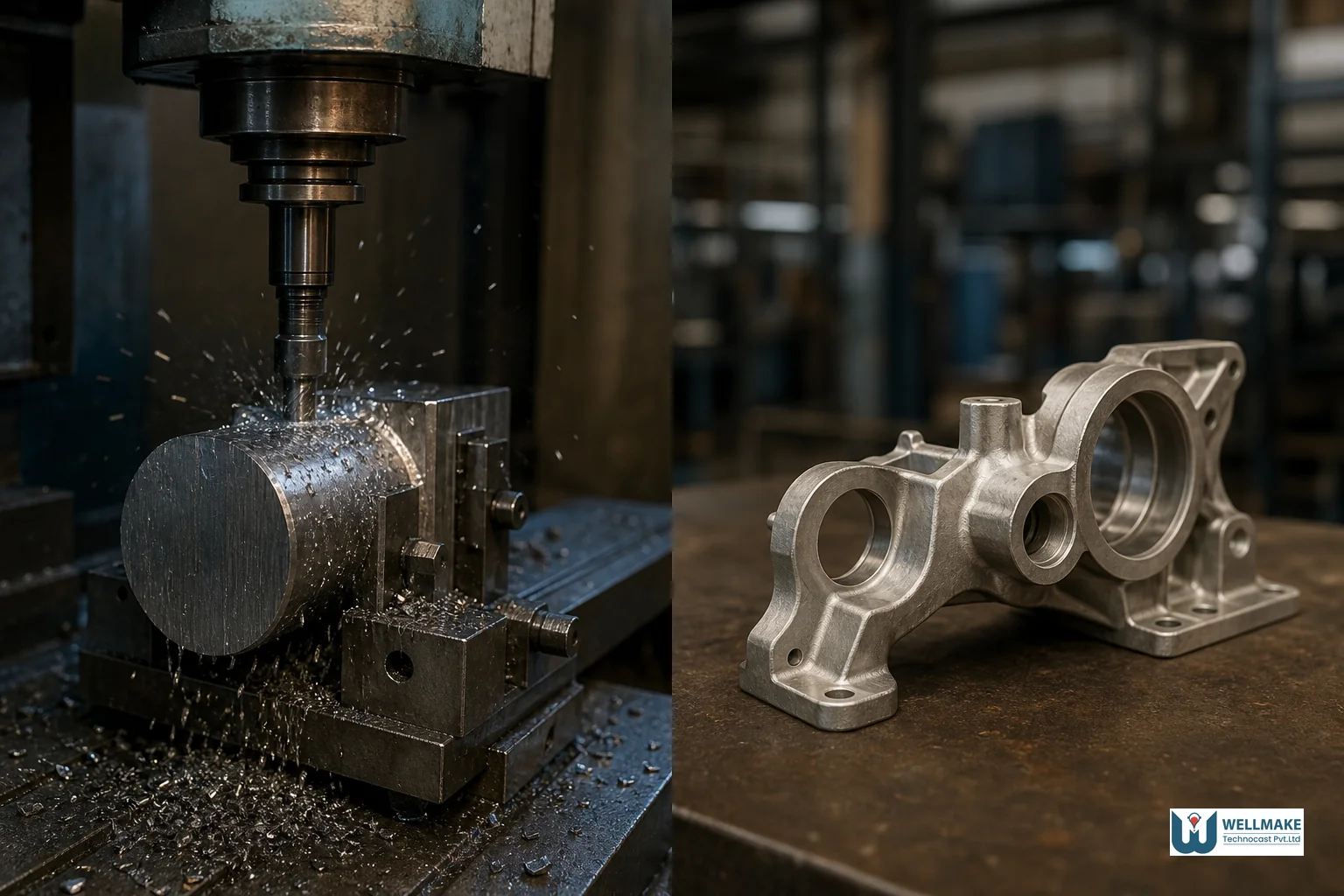
A procurement director at a valve manufacturer once ran the same part through two quoting processes at once: one from a CNC machining shop working from solid bar stock, and one from an investment casting foundry. The machined quote came back 60% higher per piece at a production volume of 500 units. The casting quote also required a wax tooling investment upfront. Which one actually saved money? The answer depended entirely on volume, geometry, and what happened after the first year of production, not just the number on the first invoice.
This is the core tension behind any investment casting vs machining cost comparison: the cheapest quote on paper isn't always the cheapest part over the life of a program. OEMs and engineering buyers who only compare per-unit pricing at a single volume tier often make sourcing decisions that cost them far more once tooling amortization, scrap rates, and secondary machining are factored in. This guide breaks down exactly where the money goes in both processes, so you can build your own comparison instead of relying on a single quote line.
Why Procurement Teams Keep Asking This Question
Metal components can reach their final shape through very different routes. CNC machining starts with a solid block, bar, or billet and removes material until the part emerges. Investment casting starts with a wax pattern, builds a ceramic shell around it, and pours molten metal directly into a shape that is already close to the finished part, often called near-net-shape production.
Those two starting points create two completely different cost structures. Machining costs scale with how much metal you cut away and how long the machine runs. Casting costs scale with tooling investment, shell-building labor, and melt volume, with far less material removed afterward. Buyers who don't separate these cost drivers end up comparing apples to oranges, usually to their disadvantage.
Through the rest of this comparison, we'll walk through material waste, tooling costs, per-unit pricing across volume tiers, and total cost of ownership, the same framework Wellmake Technocast uses when helping OEMs in Germany, Sweden, France, and North America decide between local machining shops and precision casting suppliers.
How Machining From Billet or Bar Stock Actually Costs Money
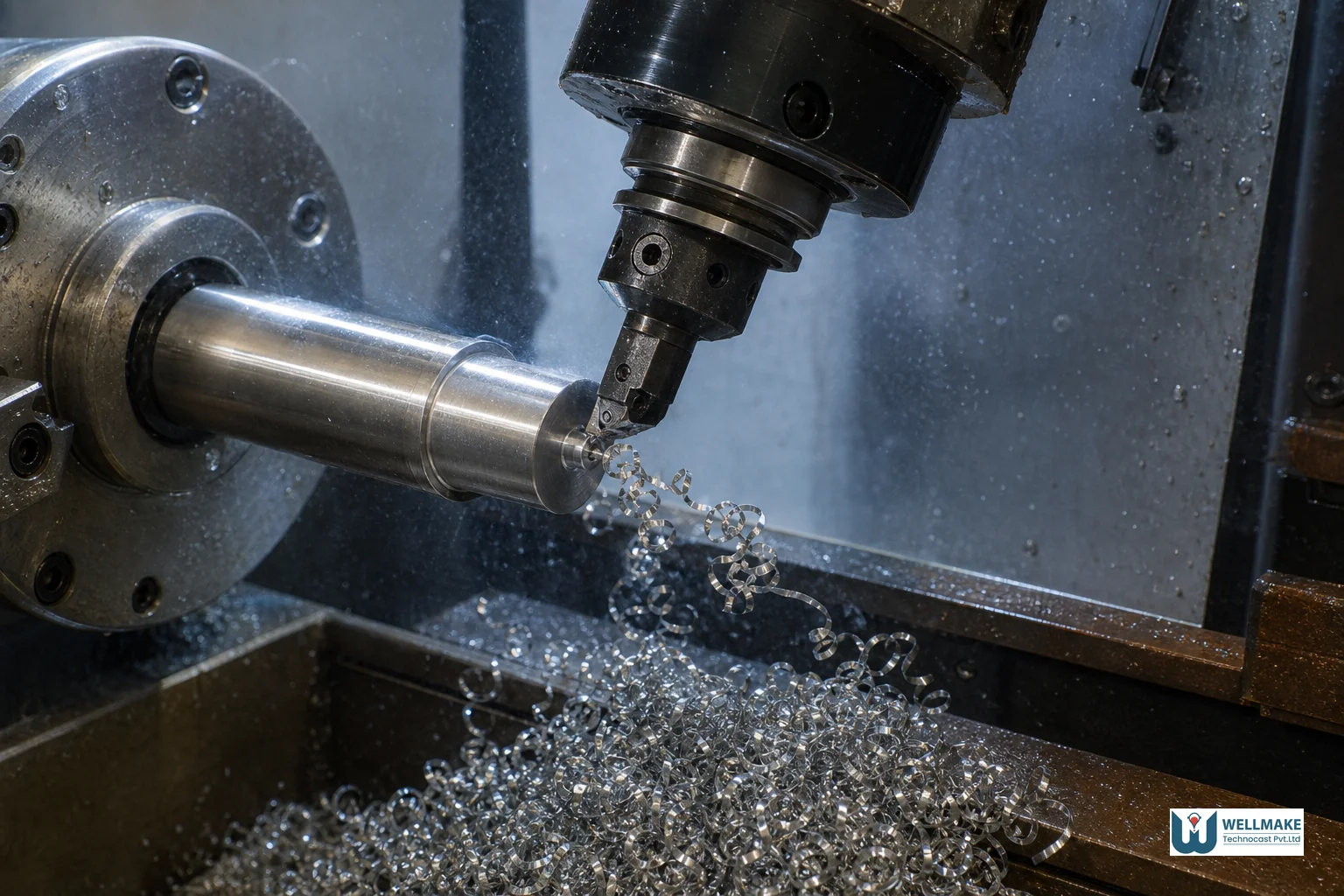
When a part is machined from solid stock, the shop first has to buy enough raw material to contain the entire finished shape, plus extra for clamping and tool clearance. For a complex part like a valve body or a pump housing, that often means starting with a block many times heavier than the finished component.
Engineers call this the buy-to-fly ratio: the weight of raw material purchased divided by the weight of the final part. In aerospace and complex industrial components, buy-to-fly ratios of 10:1 or higher aren't unusual. Every kilogram above 1:1 is metal you paid for, machined away, and now have to sell as scrap at a fraction of the purchase price.
Machining costs stack up from several places:
- Raw material cost — priced by weight before any cutting starts, so a high buy-to-fly ratio inflates material spend fast, especially with nickel alloys, duplex stainless, or titanium.
- Machine time — multi-axis mills and lathes bill by the hour, and complex geometries with deep pockets or internal passages take far longer to rough out and finish.
- Tool wear, cutting tough alloys accelerates tool wear, and replacement inserts add up across a production run.
- Programming and fixturing, every new geometry needs CNC programming time and custom fixtures, a cost that repeats whenever the design changes.
- Scrap value recovery, the metal removed as chips typically sells back as scrap at a steep discount versus the original purchase price.
Machining still makes sense in specific situations: low-volume prototypes, simple prismatic shapes that come close to standard stock sizes, or parts where extremely tight tolerances rule out any other process. But for medium-to-high volume production of complex shapes, the buy-to-fly penalty compounds with every part you make.
How Investment Casting Changes the Cost Structure
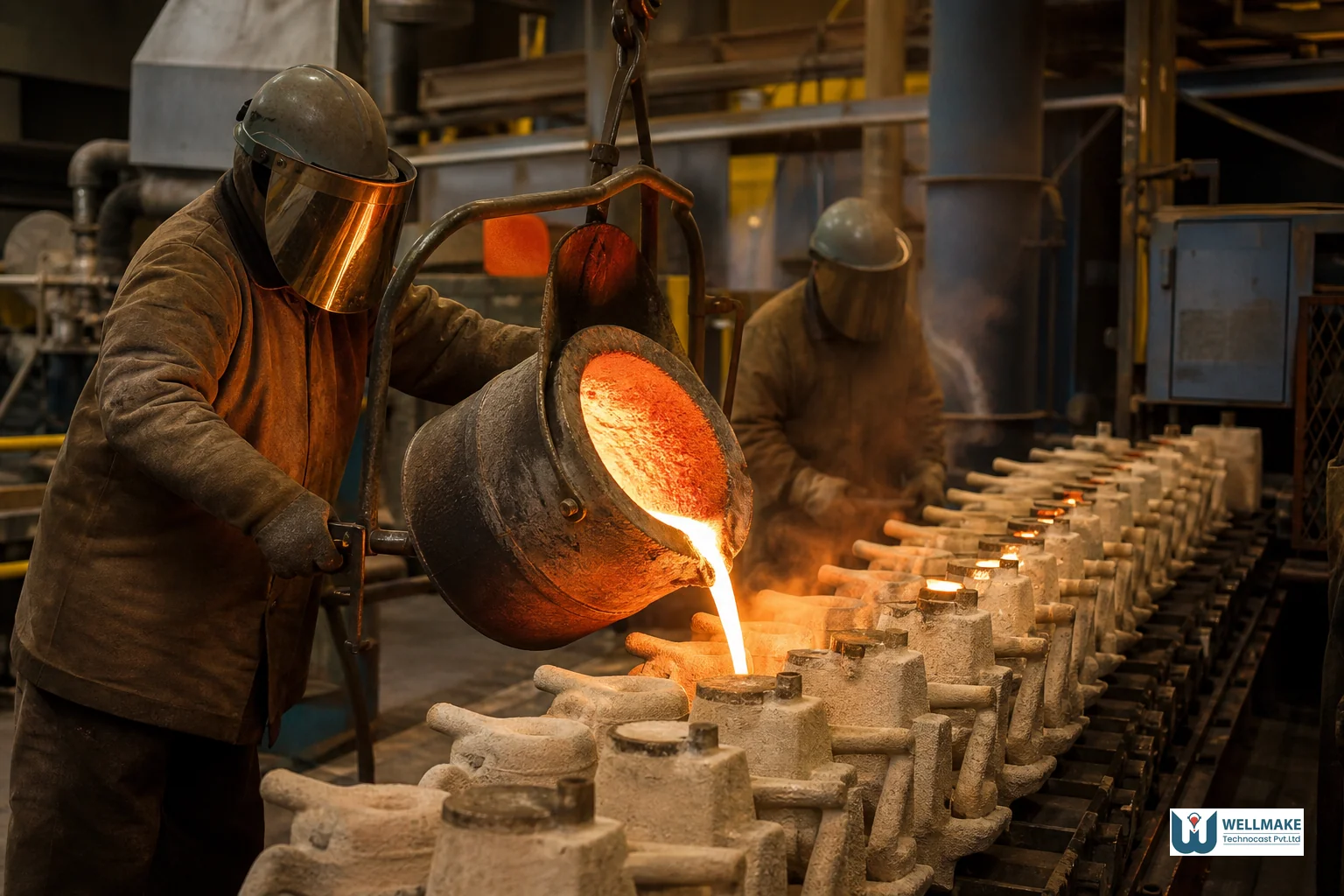
Investment casting flips the starting point. Instead of buying a solid block and cutting away most of it, the foundry builds a wax pattern shaped almost exactly like the finished part, dips it in ceramic slurry to build a shell, then melts out the wax and pours metal directly into the cavity. The result is a component that already carries most of its final geometry, including complex internal passages, thin walls, and curved surfaces that would be difficult or impossible to machine from solid stock.
Our step-by-step breakdown of the investment casting process covers the full eight-stage sequence in detail, but the cost-relevant point is this: because the shape is already close to final, the amount of metal purchased per part drops dramatically, and the machining that follows is limited to finish surfaces, bores, and mating faces rather than the entire component.
Casting does carry its own upfront cost that machining largely avoids: tooling. A metal die used to injection-mold the wax patterns has to be built before production starts, and that cost is amortized across the run. For low quantities, this tooling investment can outweigh the material savings. For medium and high volumes, it gets absorbed quickly and the per-unit savings from reduced material waste and reduced machining time take over. We've broken this down further in our guide to investment casting tooling cost, which is worth reviewing alongside this comparison. (If that specific article isn't available, what affects investment casting cost per kg covers the same cost drivers in detail.)
Casting also opens up part consolidation. A weldment or bolted assembly made of five machined pieces can often be redesigned as a single cast component, eliminating separate machining setups, fasteners, and assembly labor altogether.
Investment Casting vs Machining Cost Comparison: Line-by-Line Breakdown
Here's how the two processes stack up across the cost categories that matter most to procurement teams.
Material Utilization
Machining from bar or billet typically uses 20% to 50% of the purchased material in the finished part, with the rest sold as scrap. Investment casting routinely achieves 90% to 95% material utilization, because the near-net-shape pour requires far less excess metal. For nickel alloys, duplex stainless steel, and other expensive materials common in pump and valve manufacturing, this difference alone can decide the sourcing outcome.
Tooling and Upfront Investment
Machining requires fixtures and CNC programs, generally a smaller upfront cost. Casting requires a wax injection die, a larger one-time cost that must be amortized over the production run. Below a certain volume, usually a few hundred pieces depending on part size and complexity, this tooling cost can make machining look cheaper on paper.
Per-Unit Cost at Different Volumes
- Low volume (1, 50 units): Machining usually wins. No tooling lead time, and the per-part material waste penalty hasn't yet outweighed the absence of casting tooling cost.
- Medium volume (100, 2,000 units): This is where investment casting typically overtakes machining on total program cost. Tooling is amortized across enough parts that the material and cycle-time savings dominate.
- High volume (2,000+ units): Casting's advantage widens further. Tooling cost per part becomes negligible, and the reduced machining time on each finished casting (only finish operations, not full-part removal) keeps labor costs low and consistent.
Labor and Secondary Operations
Fully machined parts require complete machining cycles on every single unit. Cast parts generally need only light finish machining on critical surfaces, since the ceramic shell process already delivers tolerances and surface finishes that reduce the machining burden. Our guide on what affects investment casting cost per kg goes deeper into how alloy choice, wall thickness, and finish requirements shift this balance.
Lead Time and the Cost of Delay
Machining shops can often start cutting parts within days, since no tooling is required. Casting requires wax die fabrication before the first article can be poured, adding lead time upfront. Once tooling exists, though, casting production runs are typically faster per part than full-part machining cycles, and repeat orders can be turned around quickly since the tooling is already on the shelf.
Total Cost of Ownership: Beyond the Per-Piece Price
A per-unit quote only tells part of the story. Total cost of ownership includes everything that happens after the part leaves the supplier's dock.
Scrap Rates and Rework
Machined parts scrapped due to a programming error or tool failure lose their full material cost plus all machine time already invested. Cast parts that fail inspection are typically caught before final machining, limiting the sunk cost. Working with a foundry that runs in-house quality control, spectrometer testing, hardness testing, and dimensional inspection, reduces the chance that a defect reaches your production line at all.
Design Flexibility and Part Consolidation
Investment casting allows internal channels, thin walls, and organic shapes that are difficult or impossible to machine from solid stock without multiple setups. When a multi-piece welded or bolted assembly gets redesigned as a single casting, you remove not just machining cost but also welding labor, fastener inventory, and assembly-line time. This is one of the most overlooked savings in any investment casting vs machining cost comparison, because it never shows up on a per-unit quote.
Supply Chain Risk and Single-Source Sourcing
Buyers who source raw castings from one supplier and finish machining from another carry two sets of lead times, two quality systems, and two points of failure. A foundry capable of delivering both un-machined and fully machined, line-ready components removes that handoff entirely. This single-source model is one reason OEMs across Northern Europe and North America have shifted sourcing toward foundries that combine casting and finish machining under one roof.
Sustainability and Material Recycling
Because investment casting uses 90%+ of purchased material, it generates far less scrap that needs recycling or disposal. Foundries that run on renewable energy and closed-loop wax and ceramic recycling, as part of ISO 14001-aligned environmental management, extend that efficiency further, which matters increasingly to OEMs with their own sustainability commitments.
When Machining Still Wins
Investment casting isn't the right answer for every part. Machining remains the better economic choice when:
- Volumes are very low, a handful of prototypes or spare parts rarely justify tooling investment.
- Geometry is simple, flat plates, simple shafts, or parts close to standard stock shapes don't benefit much from near-net-shape forming.
- Tolerances exceed casting capability, some ultra-tight tolerance features still need final machining regardless of process, and if the entire part falls into that category, full machining may be simpler than casting plus finishing.
- The material isn't suited to casting, certain wrought-only alloys or composite materials require machining from stock.
In these cases, a hybrid approach rarely applies, and a straightforward machining quote is the right call.
When Investment Casting Delivers Clear Cost Advantages
On the other side, investment casting tends to win the cost comparison decisively when:
- Production volume is medium to high, allowing tooling cost to amortize across enough units.
- Geometry is complex, with curved surfaces, thin walls, or internal passages that would require multiple machining setups.
- Multiple parts can be consolidated into a single cast component, eliminating assembly steps entirely.
- The application demands high-value alloys, stainless steels, nickel-based superalloys, or duplex grades where material waste from machining gets expensive fast. This applies heavily across pump and valve, oil and gas, mining, and aerospace components.
- Both machined and un-machined parts are needed from a single supplier, reducing coordination overhead.
Materials commonly used in cost-efficient investment casting include carbon and alloy steels, stainless steels (300 and 400 series), duplex and super-duplex stainless, and non-ferrous alloys like bronze and aluminum, covering the majority of components needed across automotive, pump and valve, oil and gas, railways, defence, and mining sectors.
How to Build Your Own Cost Comparison
Rather than relying on a single quote from each process, build a structured comparison using these steps:
- Estimate your annual volume across the expected life of the part or program, not just the first order.
- Calculate the buy-to-fly ratio for the machined version by comparing raw stock weight to finished part weight.
- Request a tooling cost breakdown from any casting supplier, including wax die design, expected tool life, and amortization assumptions across your projected volume. Our tooling cost guide outlines what a transparent quote should include. (If unavailable, review what affects investment casting cost per kg for the same detail.)
- Factor in secondary machining required after casting, since most cast parts still need finish operations on critical features.
- Compare lead times realistically, including tooling fabrication time for casting versus faster machining starts, especially if your program has a hard launch date.
- Check tolerance and surface finish requirements against what each process can deliver reliably without excessive rework.
- Qualify the supplier properly, whether local or overseas, before committing volume. Our guide on how to choose the right investment casting foundry covers the certifications, quality systems, and audit steps worth checking before you sign a contract.
If you're weighing options across several regions, it's also worth understanding how sourcing from an established Indian foundry compares with a local shop, particularly on cost, lead time, and quality consistency, before making a final decision.
Frequently Asked Questions
Is investment casting cheaper than CNC machining?
For medium and high production volumes with complex geometry, investment casting is usually cheaper once tooling is amortized, mainly due to far lower material waste and reduced machining time per part. For very low volumes or simple shapes, machining from stock is often more economical since it avoids tooling investment entirely.
At what volume does investment casting become cost-effective?
It varies by part size, complexity, and alloy, but many programs see casting overtake machining somewhere between 100 and 500 units, once the wax tooling cost is spread across enough parts. Larger or simpler parts may cross that line at higher volumes; smaller, complex geometries can cross it sooner.
Do investment cast parts still need machining?
Most cast components need some finish machining, typically on bores, flanges, mounting faces, or threaded features, but this is a fraction of the machining required to produce the same part entirely from solid stock. Many foundries, including Wellmake, offer both un-machined and fully machined, line-ready parts from the same production run.
What materials work best for cost-efficient investment casting?
Carbon and alloy steels, stainless steels, duplex stainless, and non-ferrous alloys like bronze and aluminum all cast well and are widely used across pump and valve, oil and gas, automotive, and mining applications. Materials with high per-kilogram cost, like nickel alloys and duplex stainless, show the largest savings versus machining because so much less metal is wasted as scrap.
How does investment casting compare to die casting on cost?
Die casting can offer lower per-unit costs at very high volumes for non-ferrous alloys like aluminum and zinc, but investment casting supports a much wider range of ferrous and non-ferrous alloys and tighter tolerances on complex shapes. The right choice depends on alloy requirements, volume, and geometry, and is worth a dedicated comparison against your specific part.
Making the Right Sourcing Decision
The investment casting vs machining cost comparison rarely has a universal answer. It depends on volume, geometry, alloy, tolerance requirements, and how much you value single-source reliability over the life of a program. What's consistent across industries, from pump and valve manufacturing to oil and gas, mining, and railways, is that material waste and secondary machining are the two biggest hidden costs procurement teams underestimate when comparing quotes.
Wellmake Technocast has spent close to two decades helping OEMs and engineering companies model this exact trade-off, delivering both un-machined and fully machined precision castings in ferrous and non-ferrous metals from a single ISO 9001, ISO 14001, and ISO 45001 certified facility. If you're evaluating a part currently produced by machining and want to know whether near-net-shape casting could cut your material waste and per-unit cost, explore our product range to see the industries and component types we cast every month. For a specific part comparison, get in touch with our engineering team and we'll help you build the cost breakdown against your actual drawing, volume, and alloy, not a generic estimate. The sooner you run the numbers, the sooner you'll know whether your next production order belongs on a mill or in a ceramic shell.