
Investment Casting vs Die Casting: Which Costs Less?
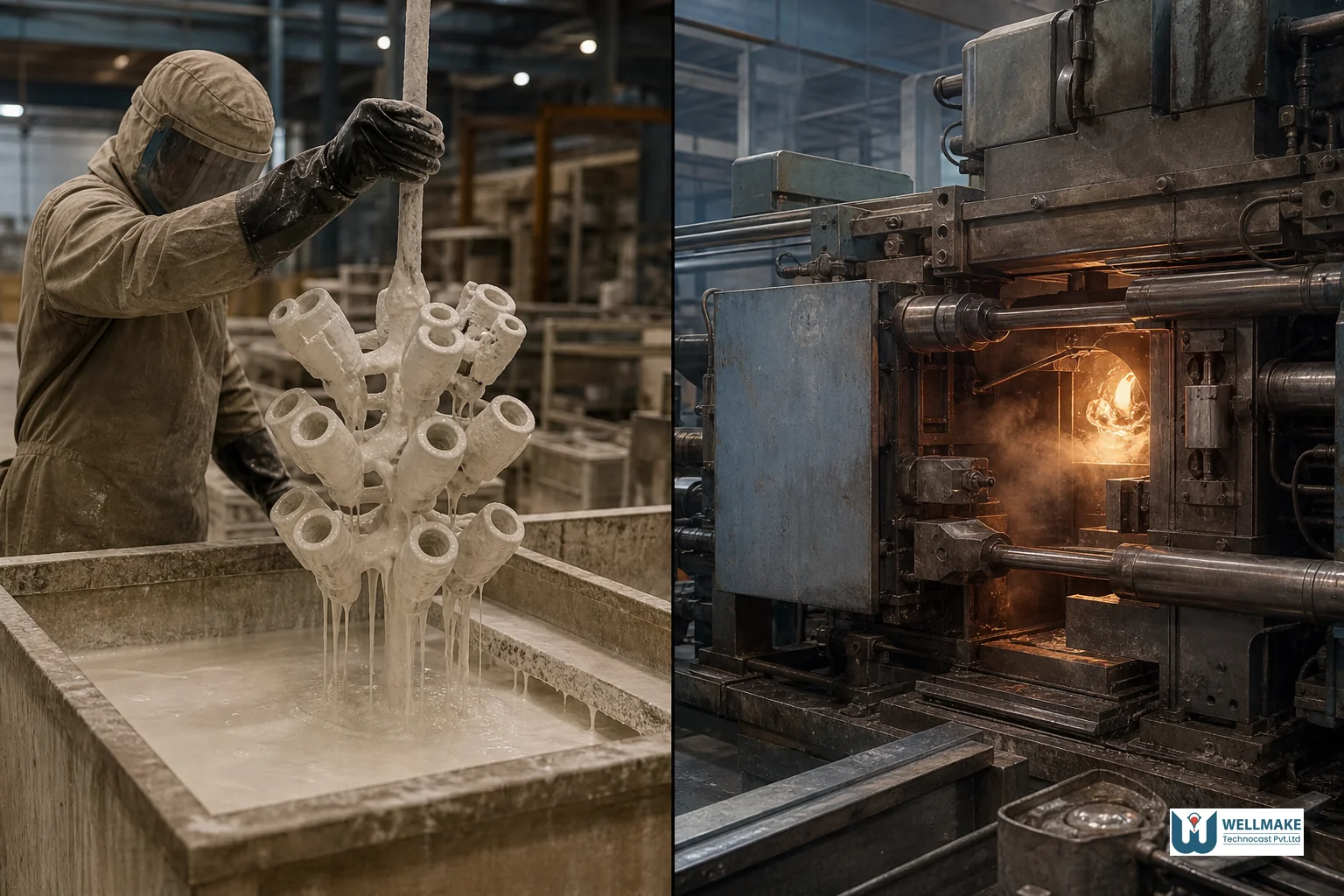
A procurement engineer at a valve OEM once ran the same drawing through two supplier networks in parallel: a die casting shop quoting off a hardened steel die, and an investment casting foundry quoting off a 3D-printed wax pattern. The die casting number looked very attractive at 50,000 units. At 2,000 units, it was nearly double the investment casting price. Neither quote was wrong. They were answering different questions.
That is the trap most industrial buyers fall into when they search for an investment casting vs die casting cost comparison. There is no single cheaper process. The right answer depends on your volume, your alloy, your tolerance callouts, and how much secondary machining your part needs after it leaves the mold. This guide breaks down every cost driver so your procurement team can build an accurate total-cost picture instead of comparing two piece prices in isolation.
1. How Investment Casting and Die Casting Actually Work
Investment casting, also called lost-wax casting, starts with a wax replica of the part. That wax pattern gets dipped repeatedly in ceramic slurry to build a hard shell. The wax is melted out, molten metal is poured into the resulting cavity, and the ceramic shell is broken away once the metal solidifies. You can read a full walkthrough in our guide on how investment casting works step-by-step.
Die casting works differently. Molten metal, almost always a low-melting-point alloy like aluminum, zinc, or magnesium, is forced under high pressure into a permanent hardened steel die. The die opens, the part ejects, and the cycle repeats in seconds rather than hours. That speed is exactly why die casting looks so attractive at high volume, and exactly why its economics change so sharply once volume, complexity, or alloy requirements shift.
This single difference in tooling material and process pressure is the root cause of nearly every cost gap between the two methods. Everything else in this comparison, tooling spend, per-unit price, alloy options, machining needs, traces back to it.
2. Tooling Costs: The First Big Divide
Die casting dies are machined from hardened tool steel because they must survive tens of thousands of shots at high pressure and temperature without deforming. Building that die requires precision CNC machining, heat treatment, and testing before a single production part is poured. Depending on part size and complexity, that tooling investment can run into tens of thousands of dollars, and multi-cavity dies for higher output push the number higher still.
Investment casting tooling is far less capital-intensive for low to mid volumes. Many programs start with an aluminum injection mold for the wax pattern, or even a 3D-printed pattern for prototype and low-volume runs that skips hard tooling entirely. Our detailed investment casting tooling cost breakdown walks through exactly how that pricing is structured, including when it makes sense to move from a soft tool to a production aluminum die.
Here is the practical implication for procurement: if your annual volume is under roughly 10,000 to 20,000 pieces, the die casting tooling bill alone can wipe out any per-unit savings you'd otherwise gain from the faster cycle time. That threshold shifts depending on part size and alloy, but it is the first number your team should model before comparing piece prices.
3. Per-Unit Piece Price Comparison by Volume
Once tooling is amortized, die casting typically wins on raw piece price at high volume because cycle times are measured in seconds and labor content per part is low. Investment casting cycle times are measured in hours to days because of the shell-building and dewaxing steps, so labor and energy content per part stays higher even at scale. The table below shows how that plays out across typical volume tiers for a mid-complexity part in the 0.5 to 2 kg range.
| Order Volume | Investment Casting: Typical Cost Behavior | Die Casting: Typical Cost Behavior | Generally More Cost-Effective |
|---|---|---|---|
| 50-500 units (prototype/pilot run) | Low tooling cost, moderate piece price, no die amortization needed | Tooling cost often exceeds total part value; rarely justified | Investment Casting |
| 500-5,000 units | Moderate tooling, steady piece price, good for complex geometry | Tooling cost still a heavy per-unit burden | Investment Casting (usually) |
| 5,000-20,000 units | Piece price stable, tooling largely amortized | Tooling amortization improving; piece price dropping fast | Depends on alloy and complexity |
| 20,000-100,000 units | Piece price plateaus; limited by cycle time | Piece price often lower due to seconds-long cycle time | Die Casting (for aluminum/zinc parts) |
| 100,000+ units | Cycle time becomes the limiting economic factor | Strong economies of scale; tooling fully amortized | Die Casting (if alloy allows) |
Note the qualifier in the last two rows: die casting only wins when the alloy specification allows it in the first place. That caveat matters more than most cost spreadsheets account for, and it is the subject of the next section.
4. Material Waste and Alloy Flexibility
Investment casting produces near-net-shape parts with minimal flash or runner waste relative to part weight, and the process supports an unusually wide alloy range: carbon steel, stainless steel, duplex stainless, nickel-based superalloys, and various non-ferrous metals. That range is why the materials used in investment casting extend well beyond what most buyers initially expect.
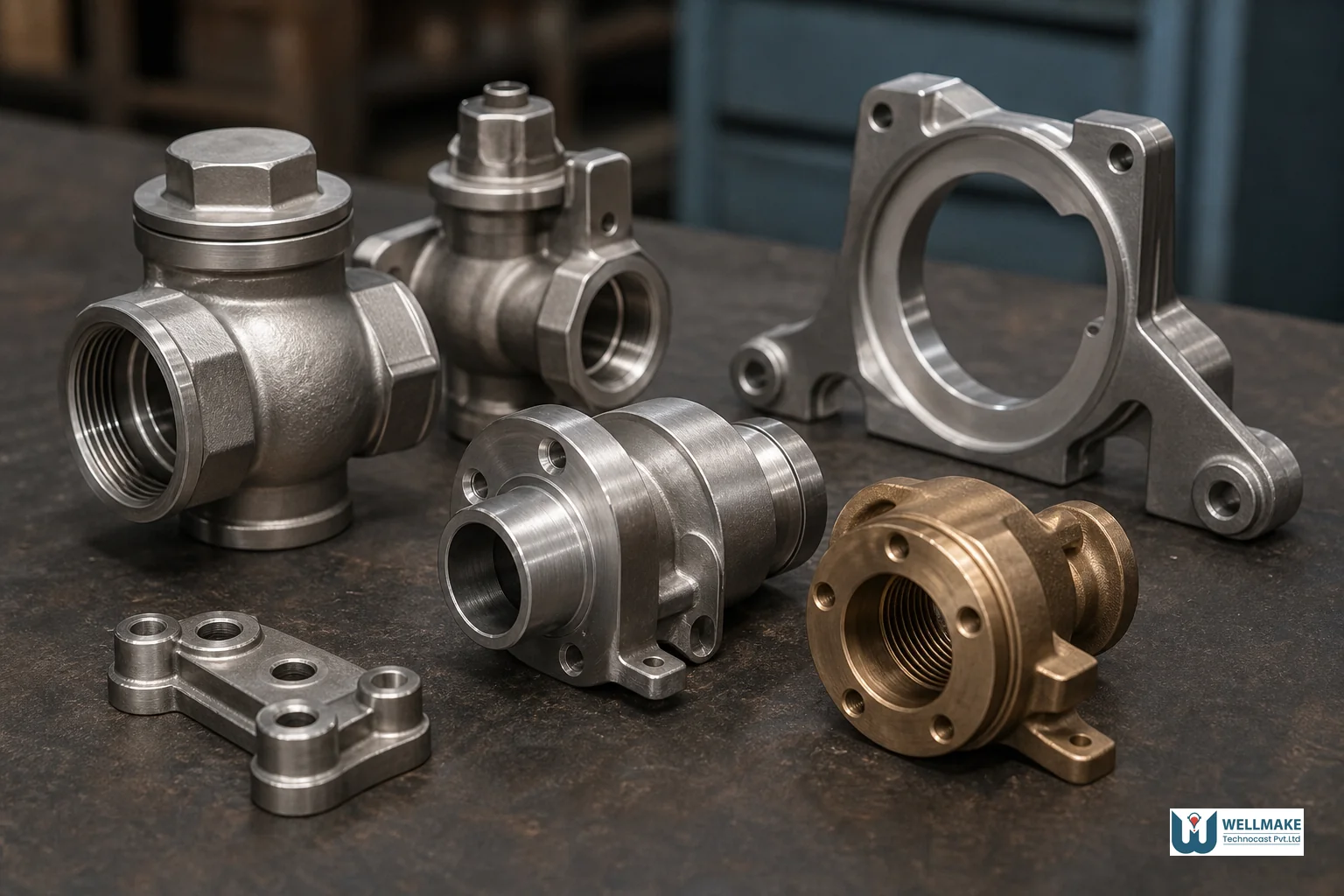
Die casting, by contrast, is fundamentally constrained to alloys with lower melting points and good fluidity under pressure, primarily aluminum, zinc, and magnesium. It cannot cast steel or stainless steel because the pressures and temperatures involved would destroy standard steel dies almost immediately. That single limitation rules die casting out entirely for a large share of the parts Wellmake Technocast produces for pump and valve, oil and gas, and railways and defence customers, where duplex stainless steel, carbon steel, and corrosion-resistant alloys are the specification, not an option.
Material waste also compounds the cost gap. Die casting generates flash, overflow wells, and runner systems that often account for a meaningful share of shot weight, all of which gets trimmed and typically remelted at a yield penalty. Investment casting's gating system is more efficient for complex geometries because the ceramic shell can route metal precisely to where it is needed, reducing scrap relative to finished part weight, particularly on parts with internal passages or thin walls that die casting would struggle to fill cleanly at all.
5. Secondary Machining and Finishing Costs
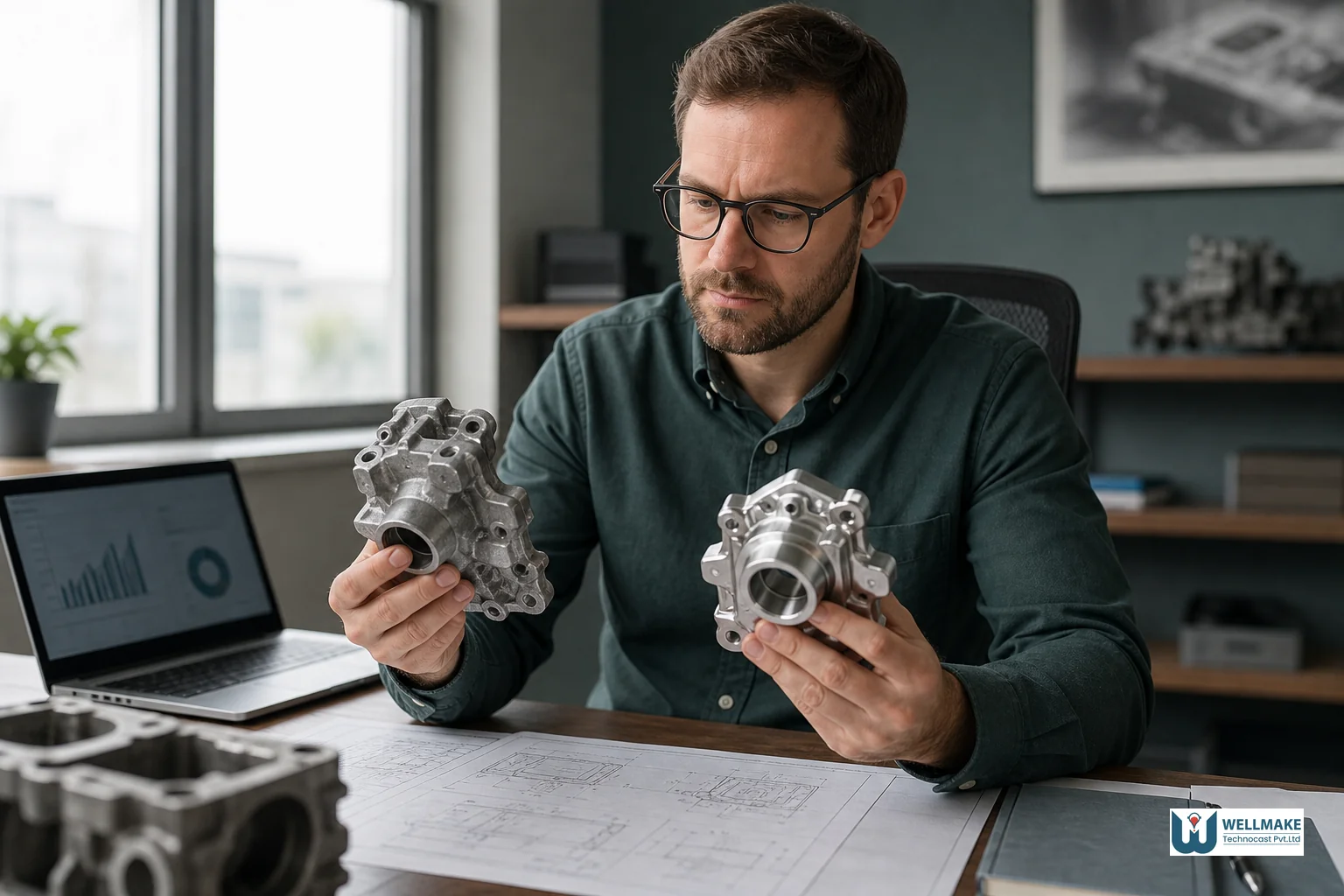
Piece price on a quote sheet rarely tells the full story. Die cast parts frequently need porosity sealing (impregnation) before they can hold pressure in a pump or valve application, along with trimming of flash and runners, and machining of critical sealing faces or bore diameters that the die alone cannot hold to tight tolerance. Each of those steps adds cost and lead time that doesn't show up in the base unit price.
Investment casting starts closer to final geometry, so secondary machining is typically limited to critical features like sealing faces, threaded ports, or precision bores, rather than the entire part. That is a major reason procurement teams comparing investment casting against pure CNC machining often find casting the more economical route once material removal and cycle time are factored in, and the same logic applies when comparing against die casting for parts that need pressure-tight, defect-free surfaces.
Ask any supplier quoting die cast parts for pressure-retaining service (valve bodies, pump housings) whether porosity is a known risk for your specific geometry. It often is, and the fix (impregnation, or scrapping and repouring) is a cost that belongs in your comparison, not a surprise that shows up after first article inspection.
6. Minimum Order Quantities and Lead Time Impact on Total Cost
Because die casting tooling is expensive to build and qualify, most die casting shops set minimum order quantities high enough to make that investment worthwhile, often in the thousands of units per release. That works fine for automotive-scale production. It works poorly for spare parts programs, defence sustainment orders, or new product introductions where you need a few hundred units to validate a design before committing to volume.
Investment casting foundries typically support much lower MOQs because tooling is cheaper and, for early runs, sometimes unnecessary altogether. Our breakdown of how MOQ decisions affect total casting cost covers this in more depth, but the short version for procurement is this: if your annual requirement is under a few thousand pieces, or arrives in unpredictable batches, die casting's MOQ structure will likely force you to either overbuy inventory or accept a poor per-unit price on small releases. Lead time follows a similar pattern. Investment casting typically runs several weeks from pattern approval to shipped parts, a timeline covered in detail in our lead-time guide, while die casting can be faster per cycle but slower overall once tooling build and qualification are included in a new program.
7. Investment Casting vs Die Casting: Side-by-Side Cost Comparison Table
Pulling every factor together into one reference table makes the trade-off easier to present internally to finance and engineering stakeholders.
| Cost Factor | Investment Casting | Die Casting |
|---|---|---|
| Tooling investment | Low to moderate (soft tool or aluminum mold) | High (hardened steel die) |
| Typical MOQ | Low; suited to hundreds to low thousands | High; usually thousands of units minimum |
| Per-unit cost at low volume | Competitive | Poor (tooling not amortized) |
| Per-unit cost at high volume | Stable but plateaus | Very competitive |
| Alloy range | Ferrous and non-ferrous, including steel, stainless, superalloys | Primarily aluminum, zinc, magnesium |
| Geometry complexity | Excellent; handles thin walls, internal passages | Good, but limited by die pull requirements |
| Material waste | Lower relative to part weight | Higher due to flash and runners |
| Secondary machining need | Limited to critical features | Often more extensive, plus possible porosity sealing |
| Typical lead time (new program) | Several weeks | Longer overall due to tooling build and qualification |
| Best-fit production volume | Prototype through mid-volume (roughly under 20,000/yr) | Mid to high volume (roughly 20,000+/yr), alloy permitting |
8. When Switching to Investment Casting Saves Money Long-Term
Three situations consistently favor a switch from die casting to investment casting, even when the initial piece price comparison looks close.
- The alloy specification rules die casting out. If your engineering team specifies stainless steel, duplex stainless, or a nickel-based alloy for corrosion resistance or strength, die casting is not an option regardless of volume. This is the norm across oil and gas valve components, pump housings, and railways and defence hardware.
- Part complexity would require multi-piece die casting tooling or heavy secondary machining. Thin walls, internal cooling passages, and undercuts that would need slides or complex core pulls in a die casting tool are often producible directly in investment casting without added tooling complexity.
- Volume is moderate, seasonal, or uncertain. Defence sustainment programs, aftermarket spares, and new product launches rarely have the volume certainty that justifies die casting tooling. Locking into that tooling commitment before demand is proven adds financial risk that a lower-tooling-cost process avoids.
Wellmake Technocast works across exactly these scenarios, producing ferrous and non-ferrous cast components from a few grams up to 180 kg for automotive, pump and valve, oil and gas, mining, and railways and defence customers who need an alloy range and geometry freedom that die casting cannot match.
How to Evaluate Which Process Fits Your Program
Before requesting quotes, walk your part through a short internal checklist:
- Confirm the alloy requirement first. If it is ferrous or a high-strength non-ferrous alloy, die casting is likely off the table already.
- Forecast realistic annual volume, not best-case volume, and compare it against the tooling amortization thresholds outlined above.
- Map part geometry against die-pull limitations. Undercuts, internal passages, and thin variable wall sections often favor casting over die casting tooling complexity.
- Add secondary operations into the total cost
- Audit the supplier regardless of which process you choose. Our guides on qualifying an overseas investment casting supplier and choosing the right investment casting foundry outline the quality checks worth running before you commit tooling budget to any partner.
Many procurement teams find it worthwhile to request quotes from both process types side by side for a new part, particularly when volume sits in the ambiguous 10,000 to 20,000 unit range. A side-by-side quote, evaluated against this full cost checklist rather than piece price alone, is the most reliable way to make the call.
Frequently Asked Questions
Is investment casting always more expensive than die casting?
No. Investment casting is often less expensive at low to mid production volumes because it avoids the high hardened-steel tooling investment die casting requires. Die casting tends to become more cost-effective at high volumes, provided the part's alloy specification is compatible with the process.
Can die casting achieve the same tolerances as investment casting?
Die casting can hold tight tolerances on many features, but investment casting generally offers better dimensional consistency on complex geometries and thin-walled sections without the die-pull constraints that limit die casting tool design. See our detailed guide on tolerances achievable with investment casting for specifics.
What is the typical MOQ difference between the two processes?
Die casting MOQs are usually set high enough to amortize expensive steel tooling, often in the thousands of units. Investment casting foundries typically accommodate lower MOQs, which is why the process is favored for prototypes, spares, and mid-volume industrial programs.
Does investment casting work for aluminum parts too?
Yes. Investment casting is not limited to ferrous alloys; it also handles aluminum and other non-ferrous metals. The key advantage over die casting shows up when a part also needs complex internal geometry, low volume flexibility, or a future path to a higher-strength alloy without retooling.
How do I know if my part is better suited to investment casting or die casting?
Start with alloy compatibility, then compare projected annual volume against the tooling amortization thresholds, then check whether your geometry includes features that would complicate die casting tool design. Requesting parallel quotes for both processes, evaluated against total landed cost rather than piece price alone, gives the clearest answer for your specific part.
Choosing between investment casting and die casting is ultimately a total-cost decision, not a single-line-item comparison. Tooling investment, alloy compatibility, secondary machining, MOQ, and lead time all shift the balance depending on your part's complexity and your production volume. If your program involves ferrous or high-strength alloys, moderate or uncertain volumes, or complex geometry that would strain die casting tooling, investment casting is worth a serious look before you commit budget to a hardened steel die.
Wellmake Technocast has been manufacturing precision investment cast components, both un-machined and fully machined, for industrial manufacturers across automotive, pump and valve, oil and gas, mining, and railways and defence sectors since 2005. You can explore our product range across ferrous and non-ferrous alloys to see which categories match your specification, or get in touch with our engineering team to discuss whether investment casting is the more cost-effective fit for your next production run. For a detailed quote comparison or supplier qualification support, contact us today and bring your drawing, volume forecast, and alloy specification to the conversation.