
Red Flags to Avoid When Sourcing From a Foundry
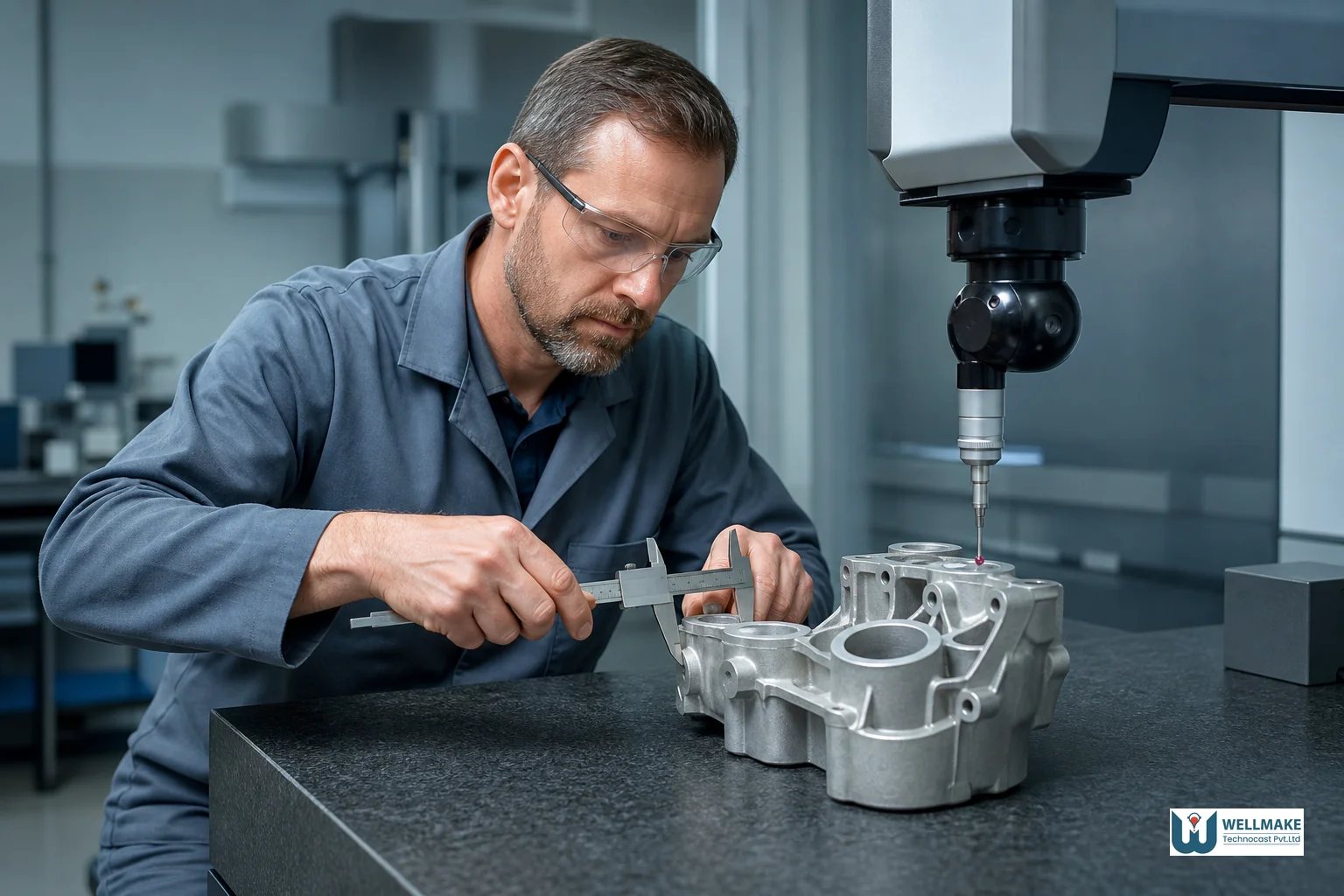
A purchasing director at a European pump manufacturer once approved a supplier based on a flawless sample part and a friendly sales call. Six months later, the third production batch arrived with a 0.3mm bore shift that no one caught until final assembly. The line stopped for eleven days. The root cause wasn't bad luck. It was a series of warning signs that were visible during vetting and got waved through anyway.
This is the pattern behind most sourcing failures in investment casting. The red flags when sourcing castings from overseas foundry partners are rarely hidden. They show up in the quoting process, the sample inspection, and the way a foundry answers (or avoids) technical questions. The problem is that most procurement teams don't know which signals actually predict production trouble and which are just cultural or communication differences that don't matter.
This guide walks through the specific warning signs that matter most for OEMs, engineering firms, and defence or railway buyers sourcing precision castings internationally. Each red flag is mapped to the real operational risk it creates, along with the questions you should ask before a purchase order becomes a signed contract.
Why Overseas Casting Sourcing Goes Wrong Before the First Shipment Arrives
Most casting failures don't start on the foundry floor. They start during supplier selection, when a buyer accepts a claim without verifying it. A polished RFQ response, a well-photographed sample, or a quick turnaround on price can mask gaps in quality systems, traceability, or process discipline that only surface once volume production begins.
The financial exposure is significant. A rejected batch doesn't just cost the price of the parts. It costs machining time already invested, assembly line downtime, expedited freight to cover the gap, and in regulated sectors like aerospace or defence, potential compliance findings. The overseas foundry vetting process is where this risk gets priced in or priced out.
The categories below cover the most common and costly red flags: certification gaps, tolerance drift, traceability failures, communication breakdowns, process control weaknesses, and unclear capacity commitments. Each section includes what to ask and what a dependable, well-run investment casting foundry should be able to show you without hesitation.
Red Flag 1: Missing or Unverifiable Quality Certifications
Certifications are the fastest screening tool a buyer has, and they're also the easiest thing for a weak supplier to overstate. A foundry that lists "ISO 9001 certified" on its website but can't produce a current certificate with a valid certification body and scope statement is telling you something important about how it operates.
At minimum, an industrial casting supplier should hold ISO 9001 for quality management, and increasingly, buyers should expect ISO 14001 for environmental management and ISO 45001 for occupational health and safety. Together, these three certifications signal a foundry that treats quality, sustainability, and worker safety as structured systems rather than one-off inspections. For sectors like aerospace, railways, or defence, you may also need sector-specific approvals or customer-specific PPAP-style documentation.
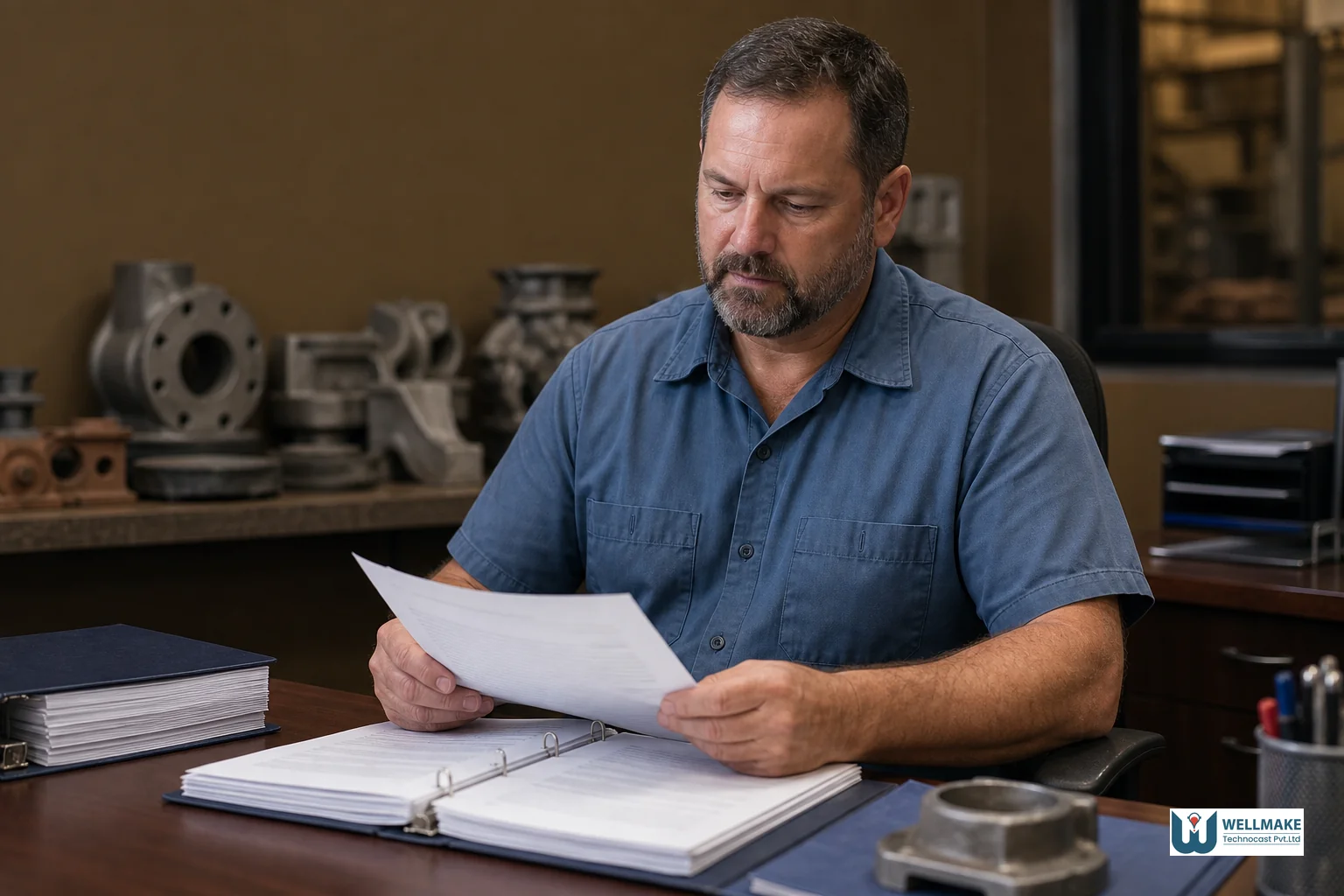
Don't take a certificate at face value. Ask for the certification number and issuing body, then verify it independently through the certification body's public registry. A legitimate foundry will send this without pushback. A foundry that stalls, sends a scanned image with no verifiable registration number, or claims certification is "in process" for more than a few months is a red flag worth taking seriously.
- Ask for: current ISO certificates with certification body name, scope, and expiry date
- Verify: registration number through the issuing body's database
- Watch for: certificates that list a different legal entity name than the one on your contract
- Confirm: whether sector-specific quality clauses (aerospace, defence, rail) are covered under the same management system
Wellmake Technocast holds ISO 9001, ISO 14001, and ISO 45001 certification, which is why customers can request documentation directly rather than relying on marketing claims. If certification transparency is a gap you've hit with a current supplier, it's worth comparing that experience against a foundry built around verifiable quality systems from the ground up.
Red Flag 2: Inconsistent Tolerances Between Samples and Production Runs
A first article sample is not proof of capability. It's proof that a foundry can make one good part under close attention. The real test is whether the hundredth part in a production run holds the same dimensional tolerances and surface finish as the sample that won the business.
Tolerance drift across a production run usually traces back to inconsistent wax pattern control, shell build variation, or pouring temperature inconsistency between shifts. A foundry without strong statistical process control (SPC) practices may not even notice the drift until a customer complains. That's the risk you're accepting if you don't ask about it upfront.
Ask specifically what in-house metrology equipment the foundry uses to verify parts before shipment. A credible answer includes tools like a spectrometer for chemical composition, a universal testing machine (UTM) for mechanical properties, a hardness tester, and an impact testing machine for toughness verification. If a supplier outsources all mechanical testing to a third-party lab with no in-house checks between batches, expect longer feedback loops and higher risk of shipping out-of-spec parts before anyone catches it.
- Ask: "What is your process capability index (Cpk) for critical dimensions on this part family?"
- Ask: "Do you run first-article inspection reports for every new tool, and can we see a sample report?"
- Ask: "What in-house testing equipment do you use for chemical and mechanical verification?"
- Watch for: reluctance to share inspection data or dimensional reports from actual production lots, not just the sample
For buyers weighing precision requirements against cost, it also helps to understand baseline expectations for tolerances and surface finish standards in investment casting before you evaluate a specific supplier's claims.
Red Flag 3: No Material Traceability or Batch Documentation
Traceability means you can connect a finished cast component back to the exact heat number, raw material batch, and process records used to produce it. For pump and valve manufacturers, oil and gas operators, and especially railways and defence buyers, this isn't a nice-to-have. It's often a contractual and regulatory requirement.
A foundry that can't provide mill test certificates for raw material, heat numbers stamped or recorded per batch, and process traveler documentation showing shell build and pour records is exposing you to a real risk: you won't be able to prove what alloy or process actually went into a failed part if something goes wrong in the field. That's a serious liability in safety-critical applications.
If a supplier can't answer "which heat number was used for this specific shipment" within a day, assume traceability is informal at best and nonexistent at worst.
This risk compounds when foundries substitute alloys without notice to hit a price target, a practice that's difficult to detect without traceability documentation and spectrometer verification at receipt. Ask your prospective supplier to walk you through their document package for a typical shipment before you commit to volume.
- Require: mill certificates for raw material with chemical composition data
- Require: heat number traceability linking finished parts to raw material batches
- Require: process travelers or batch records showing key process steps and inspection sign-offs
- Watch for: foundries that treat traceability documentation as an optional add-on rather than standard practice
Red Flag 4: Poor or Delayed Communication During Vetting
How a foundry communicates during the RFQ stage is the best available preview of how it will communicate once you're mid-production and something needs attention. If getting a straight answer to a technical question takes multiple follow-ups, or if answers are vague and non-specific, that pattern rarely improves after the contract is signed.
Watch specifically for foundries that answer technical questions with generic marketing language instead of engineering specifics. If you ask about achievable wall thickness on a complex geometry and get a brochure response instead of a real answer grounded in their tooling and process experience, that's a sign the technical team isn't involved early enough, or doesn't exist in the form you need.
Time zone gaps and language differences are manageable with the right structure. What isn't manageable is a foundry with no dedicated account or technical contact, where every question routes through a general sales inbox and gets a different response depending on who reads it first. A single point of contact who understands your part, your tolerances, and your production schedule is a basic requirement, not a premium service.
- Time RFQ response speed: a detailed technical quote in under a week is a good sign; radio silence for weeks is not
- Ask direct engineering questions and evaluate whether the answer is specific to your part or generic
- Confirm a named technical contact who will remain your point of contact through production, not just sales
- Watch for: inconsistent answers to the same question asked twice, weeks apart
If you're currently deciding between an overseas partner and staying local, it's worth reviewing how communication and cost actually compare, for example in analyses of sourcing from Germany versus an overseas foundry, before assuming distance alone is the deciding factor.
Red Flag 5: Unclear Process Control and Lack of Single-Source Capability
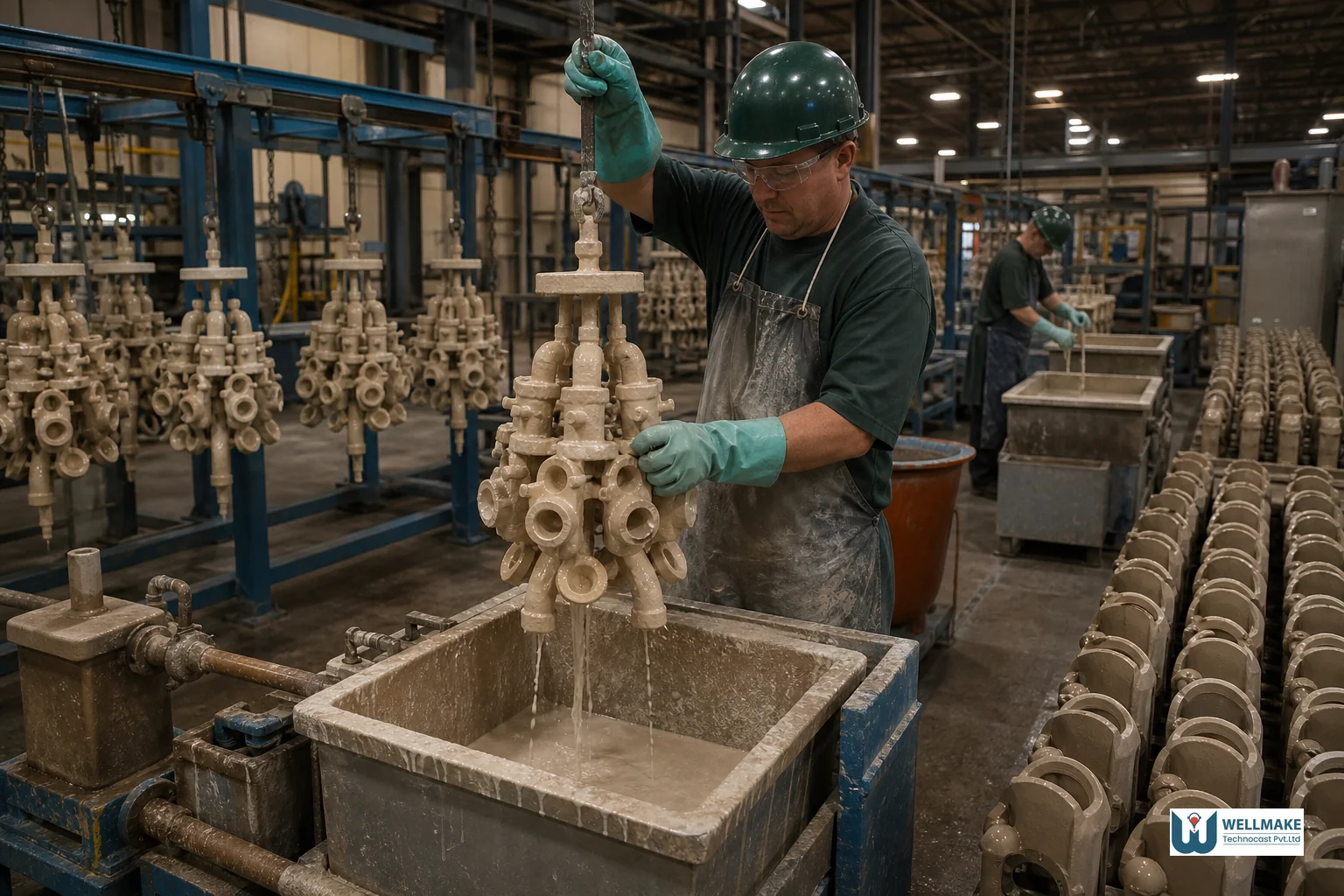
Investment casting is an eight-step process, from wax pattern injection through ceramic shell building, dewaxing, pouring, and finishing. A foundry that can't clearly explain its own process control at each stage, or that quietly outsources shell building, heat treatment, or machining to unnamed third parties without oversight, introduces quality variables you can't audit.
This matters even more if you need both cast and machined components from a single source. Buyers who source castings from one supplier and send them elsewhere for machining absorb extra freight cost, longer lead times, and a coordination gap where neither party is fully accountable for the finished part. A foundry with in-house machining capability, working from the same drawing and the same quality system, removes that gap entirely.
Capacity mismatch is another version of this red flag. Some foundries market broad capability but actually operate a narrow production range. Ask directly what component weight range and monthly tonnage the foundry can support, and whether your order volume fits comfortably within their normal operating capacity or would stretch it. A foundry running near its ceiling on every order has less room to recover from a bad batch.
- Ask: "Which process steps do you perform in-house, and which are outsourced?"
- Ask: "What is your monthly production capacity, and where does our order volume fall within that?"
- Ask: "Can you deliver finish-machined, line-ready components, or only raw castings?"
- Confirm: component size range the foundry regularly produces, from small precision parts to large components
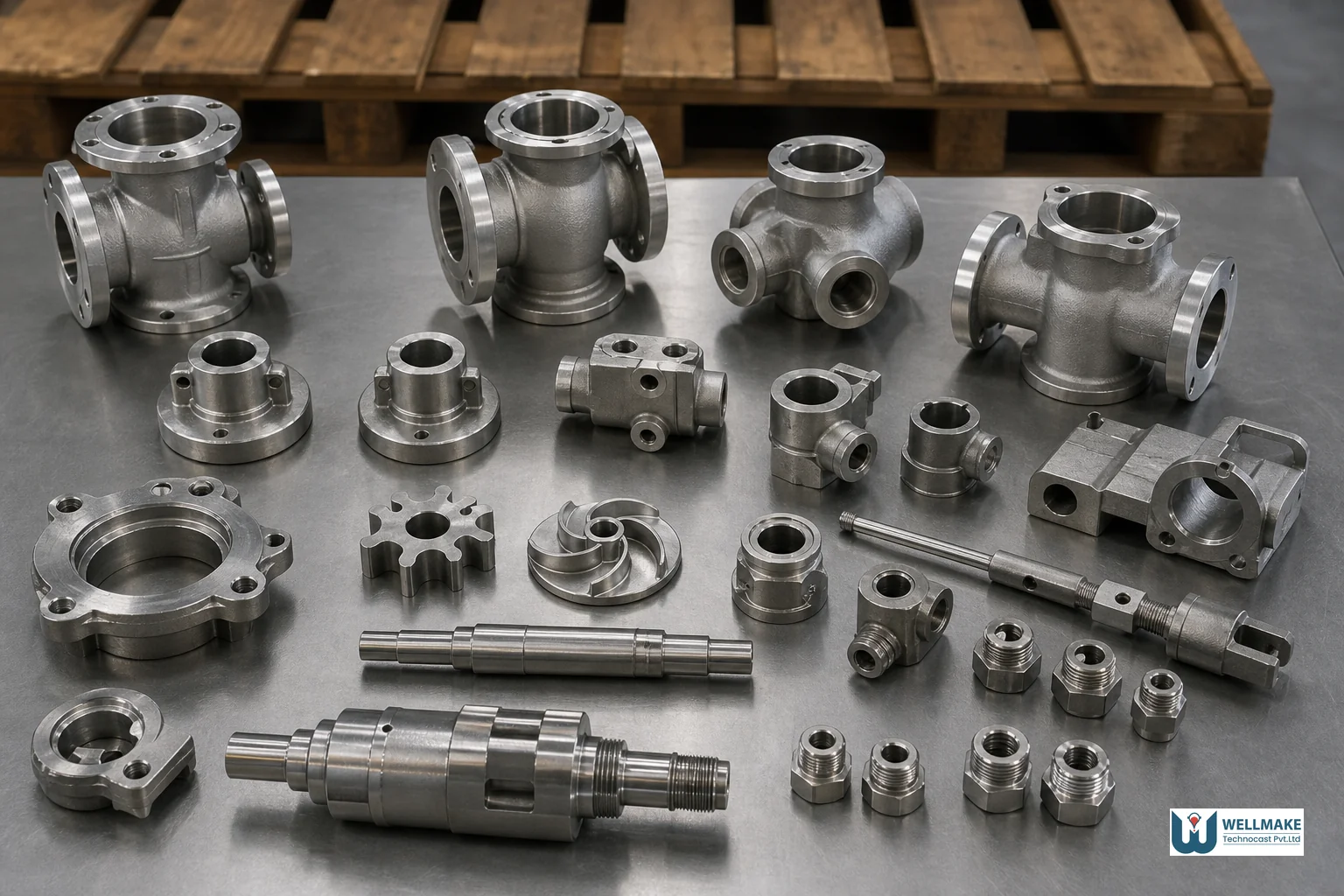
Wellmake Technocast runs an in-house 8-step investment casting process with 70 MT monthly capacity, producing components from a few grams up to 180 kilograms, and offers both un-machined and fully machined parts from a single facility. You can review the full component range on the products page to see whether your part family fits within that capability before you request a quote.
Red Flag 6: No Clear Answers on Lead Times, MOQs, or Capacity Planning
Vague delivery promises are one of the most common ways new supplier relationships go wrong. A foundry that gives a broad lead time range without connecting it to tooling status, batch size, or current shop load is either guessing or managing your expectations loosely. Either way, you're the one who absorbs the schedule risk.
Ask how lead time changes with order volume, and whether minimum order quantities are tied to tooling amortization or just an arbitrary threshold. This matters directly for cost planning, since tooling cost and per-kg pricing are closely linked, and a supplier that can't explain that relationship clearly may not have full visibility into their own cost structure either.
Also probe for hidden costs tied to rework or tooling revisions. A supplier who quotes an attractively low tooling price but has a track record of multiple paid tooling revisions before a die is production-ready is not actually the lower-cost option once you account for delays and rework charges.
- Ask: "What is your standard lead time for tooling, first article, and production batches, separately?"
- Ask: "How does MOQ change our per-piece and tooling cost?"
- Ask: "What is your on-time delivery rate over the last 12 months?"
- Watch for: reluctance to commit lead times in writing, or lead times that seem identical regardless of part complexity
A Practical Pre-Contract Checklist for Vetting an Overseas Foundry
Before signing a supply agreement, work through this checklist with your prospective foundry. Treat vague or missing answers as data, not just inconvenience.
- Verified ISO 9001, ISO 14001, and ISO 45001 (or equivalent) certificates with checkable registration numbers
- First-article inspection report and dimensional data from an actual production lot, not just the sample
- In-house testing equipment list: spectrometer, UTM, hardness tester, impact tester, or third-party lab partnerships with turnaround times
- Sample mill certificate and heat-number traceability documentation for a comparable past order
- Named technical point of contact with direct engineering knowledge of your part
- Clear breakdown of in-house versus outsourced process steps, including machining
- Monthly production capacity and where your order volume sits within it
- Written lead times for tooling, first article, and production batches
- MOQ policy and how it affects tooling and per-piece pricing
- On-time delivery track record and references from comparable industrial buyers
Structure your first order as a trial run with a defined first-article approval step before committing to full production volume. This gives both sides a documented checkpoint to confirm tolerances, surface finish, and paperwork match expectations before larger quantities are at risk. For a deeper look at qualification methodology, see our guide on how to choose the right investment casting foundry.
What a Reliable, ISO-Certified Single-Source Foundry Looks Like
Every red flag above has a positive counterpart, and that counterpart is what you should hold out for during supplier selection. Instead of unverifiable certificates, look for a foundry that shares current ISO 9001, ISO 14001, and ISO 45001 documentation without prompting. Instead of tolerance drift, look for documented SPC data and in-house testing equipment covering chemical and mechanical verification on every batch.
Instead of missing traceability, look for a supplier who can produce heat numbers and mill certificates for any shipment on request. Instead of vague communication, look for a named technical contact who answers engineering questions with specifics. Instead of outsourced, disconnected process steps, look for single-source capability spanning casting through machining under one quality system.
Wellmake Technocast was built around these standards from its founding in 2005: triple ISO certification, in-house metrology across spectrometer, UTM, hardness, and impact testing, full material traceability, and an 8-step process covering both casting and machining under one roof in Rajkot, Gujarat. The foundry supports Automotive, Aerospace, Pump & Valve, Oil & Gas, Mining, Railways & Defence, and Fire Safety sectors, with sustainable manufacturing practices including renewable energy use and waste recycling built into the production system rather than added as an afterthought.
For OEMs and engineering firms comparing overseas sourcing against local supply, it's also worth reviewing sector-specific considerations, such as requirements for pump and valve component sourcing or the tolerance and geometry demands common in railways and defence procurement, since certification and traceability requirements often shift by sector even within the same foundry relationship.
Frequently Asked Questions
What certifications should an overseas investment casting foundry have?
At a baseline, look for ISO 9001 for quality management. ISO 14001 (environmental management) and ISO 45001 (occupational health and safety) indicate a more mature, structured operation. Sector-specific requirements may apply for aerospace, defence, or railway components, so confirm what documentation the foundry can provide against your specific industry standard.
How do I check if a foundry's ISO certificate is genuine?
Ask for the certification number and the name of the accredited certification body, then verify the registration directly through that body's public database. You can also cross-check the certifying body's accreditation status through resources like the International Accreditation Forum. A legitimate foundry will not hesitate to provide this information.
What is material traceability and why does it matter?
Traceability links a finished cast component back to its raw material heat number, chemical composition, and the process records used during manufacturing. It matters most in regulated or safety-critical sectors like aerospace, defence, and pump and valve applications, where you may need to prove exactly what material and process produced a specific part years after delivery.
How long should first-article approval take?
Timelines vary by part complexity and tooling status, but a foundry should be able to give you a specific first-article inspection timeline in writing, tied to your actual drawing, rather than a generic industry-average answer. Ask for a sample first-article inspection report from a comparable past project to understand the level of detail you should expect.
Is it safe to source castings from India for defence or aerospace parts?
Yes, when the foundry has the right certifications, in-house testing capability, and traceability documentation in place. India has become a significant global source for precision investment castings across regulated sectors, and buyers who apply the same vetting rigor they'd use anywhere else, verified certifications, documented process control, and clear traceability, can source safety-critical components reliably. According to the Invest India government investment portal, the country's foundry and precision manufacturing sector has continued expanding its export base to aerospace, defence, and industrial customers worldwide.
Choosing a Foundry Partner You Won't Need to Re-Vet Every Order
Red flags during vetting are not minor details to work around. They are early data about how a supplier will perform once your production volume, your schedule, and your reputation are on the line. Certification gaps, tolerance drift, missing traceability, weak communication, unclear process control, and vague delivery commitments each point to a specific operational risk that gets more expensive to fix after the contract is signed than before it.
The alternative is a foundry that treats these standards as baseline practice rather than a sales pitch. If you're currently vetting suppliers and want to compare your checklist against a triple ISO-certified, single-source foundry with full in-house testing and traceability, get in touch with our engineering team to walk through your part requirements directly. You can also explore our product range across automotive, pump and valve, oil and gas, railways, defence, and fire safety components to see where your next casting project fits. Don't wait for a rejected batch to find out which red flags mattered. Contact us today to start a first-article trial built on verified quality, not just a sample part.