
Best Investment Casting Foundry for Sweden's Defence Sector
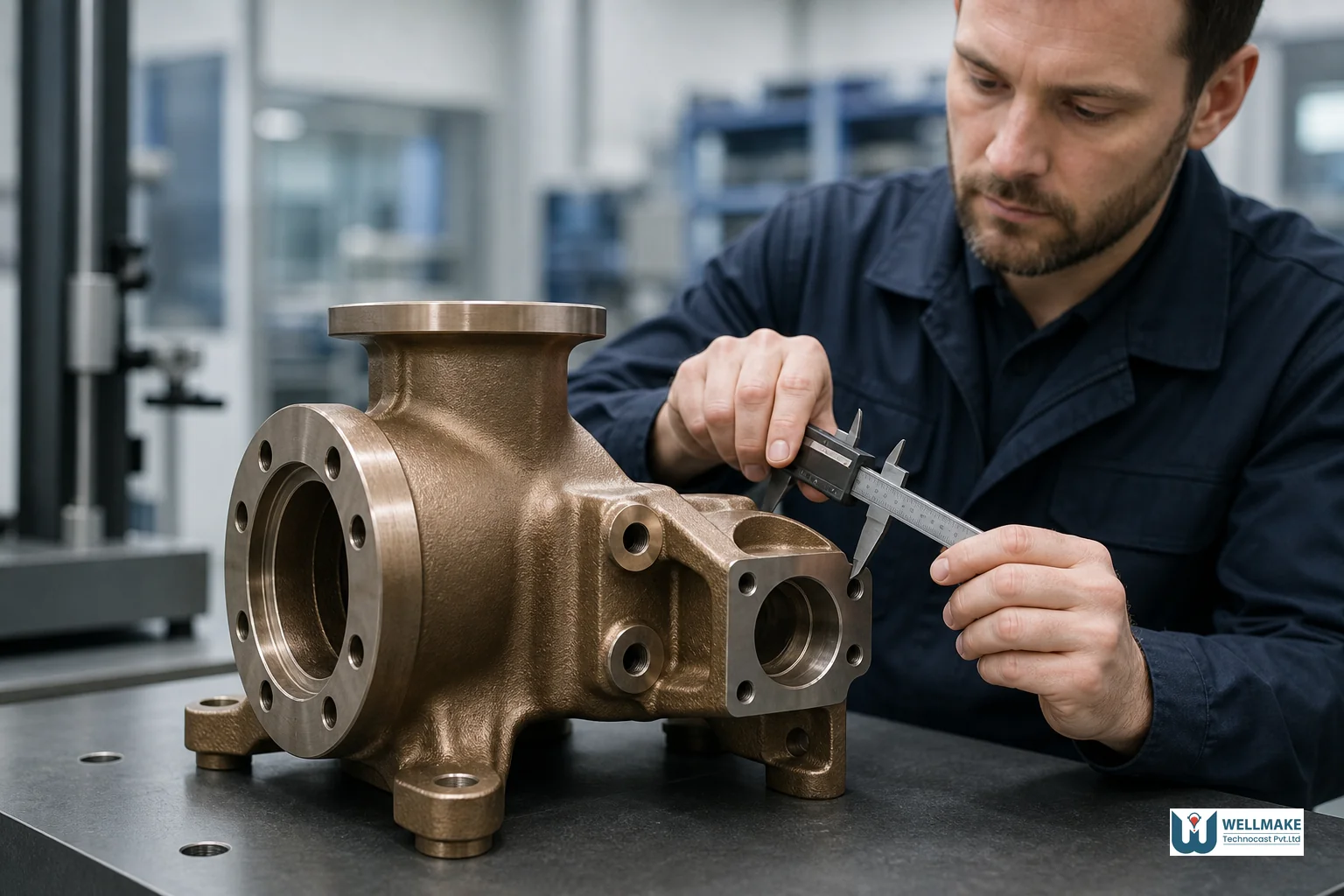
A bogie suspension bracket destined for a Swedish rail depot does not fail quietly. If the casting behind it has a hidden porosity pocket or a heat-lot record that cannot be traced, the part gets pulled, the audit trail gets questioned, and the whole supply chain gets re-qualified under pressure. That is exactly why procurement teams at FMV-linked contractors and Trafikverket suppliers are now widening their search for an investment casting foundry Sweden for defence components programs can rely on, often looking past domestic shop capacity toward ISO-certified overseas partners who can document every step.
Key Takeaways
- Certification baseline: Defence and rail buyers should require ISO 9001, ISO 14001, and ISO 45001 as a minimum, plus EN 10204 3.1 material certificates on every batch.
- Tolerance reality: Investment casting reliably holds CT4-CT6 tolerance grades (roughly ±0.1mm to ±0.3mm depending on section size), with machining added for critical bores and mating faces.
- Lead time gap: New tooling programs typically run 10-16 weeks; repeat orders on existing tooling drop to 3-6 weeks, whether sourced domestically or from a qualified overseas foundry.
- Cost differential: ISO-certified Indian foundries commonly quote 25-40% below Western European casting shops on comparable ferrous and non-ferrous defence parts, even after freight and duty.
- Single-source advantage: A foundry that delivers both un-machined castings and line-ready machined components removes one full supplier handoff from the defence procurement chain.
At a Glance: Swedish Defence Casting Sourcing Snapshot
| Sourcing Factor | Typical Swedish Domestic Foundry | ISO-Certified Overseas Foundry (e.g. India) |
|---|---|---|
| Certifications available | Varies; fewer shops hold all three ISO standards | ISO 9001, 14001, 45001 common at established exporters |
| Material traceability | Good, but capacity-limited | Full heat-lot traceability with EN 10204 3.1 certs |
| Standard tolerance grade | CT4-CT5 | CT4-CT6 with in-house machining option |
| New tooling lead time | 10-18 weeks | 10-16 weeks |
| Repeat order lead time | 4-8 weeks | 3-6 weeks |
| Cost per kg (comparable alloy) | Baseline | 25-40% lower, landed cost |
| Monthly capacity ceiling | Often under 30 MT at smaller shops | 70 MT at larger exporters like Wellmake Technocast |
| Machined + cast single source | Sometimes requires second supplier | Available as one program |
Why Defence and Railway Components Demand a Different Sourcing Standard
Commercial castings and defence-grade castings are not judged the same way. A decorative bracket that comes in 0.2mm out of tolerance gets reworked or scrapped without much drama. A rail brake caliper housing or a defence vehicle mounting bracket that drifts by the same amount can fail a fit check on an assembly line that has no slack in its schedule, or worse, fail in service.
Swedish rail operators answer to Trafikverket safety frameworks, and defence contractors work within FMV's procurement and quality expectations, both of which push documentation requirements further than most commercial buyers ever see. Every casting needs a clear chain from raw alloy to finished part: which heat lot the metal came from, what the chemical composition was, how it was heat treated, and what mechanical tests it passed before shipment.
This is also where geometry gets harder. Rail and defence parts often combine thin walls, internal channels, and mounting features that must line up with mating components from a different supplier entirely. Understanding how the investment casting process actually builds these shapes helps a buyer ask sharper questions before signing off on a supplier.
Certifications a Swedish Procurement Team Should Require
Certifications are not a formality to check off during vendor onboarding. They are the paper trail that lets a Swedish quality manager defend a sourcing decision two years later if a part is questioned.
- ISO 9001 (Quality Management): Confirms the foundry runs a documented, repeatable process rather than relying on one experienced supervisor's judgment call.
- ISO 14001 (Environmental Management): Increasingly relevant for Swedish public procurement, which weighs environmental performance in supplier scoring under EU sustainability directives.
- ISO 45001 (Occupational Health and Safety): A signal that the foundry manages its workforce safety systematically, which correlates with fewer process disruptions and shipment delays.
- EN 10204 3.1 material certificates: Independent-witnessed material test reports tied to the specific heat lot used for your parts, not a generic datasheet.
- NDT capability: Radiographic inspection, dye penetrant testing, and ultrasonic testing should be available in-house or through a qualified subcontractor, with reports issued per batch.
A foundry holding all three ISO certifications at once is still uncommon among smaller regional casting shops, which is part of why triple-certified exporters have become a serious option for European defence buyers. Wellmake Technocast holds ISO 9001, ISO 14001, and ISO 45001 simultaneously, backed by in-house spectrometer, universal testing machine, hardness tester, and impact testing equipment that generate the test data a Swedish quality file needs.
Material Traceability: The Non-Negotiable for Defence Components
Traceability sounds like paperwork until the day it isn't. If a batch of stainless steel valve bodies for a naval application shows unexpected hardness variation six months after delivery, the first question from any Swedish quality department is: which heat lot, and what was its composition?
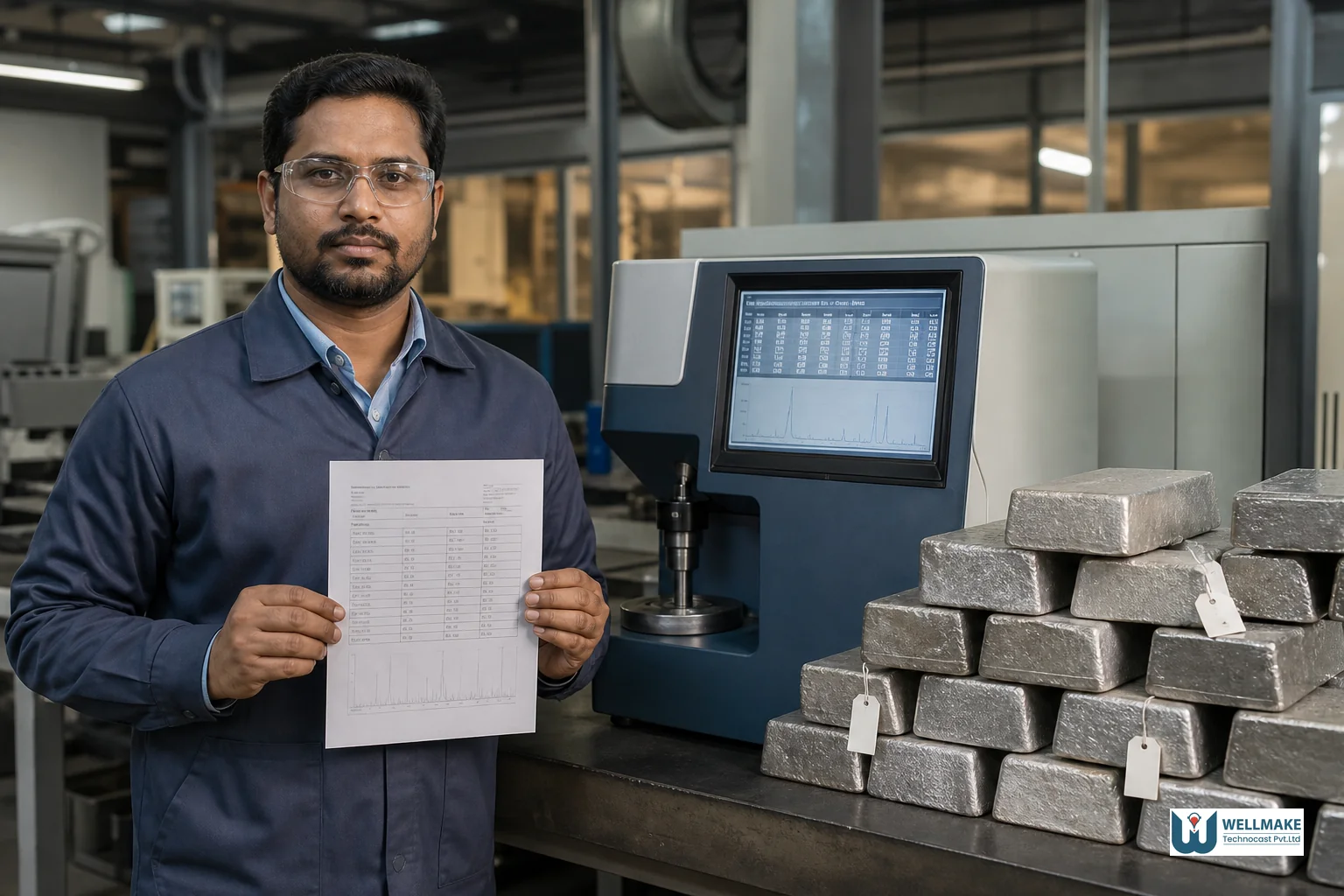
A foundry set up for defence and rail work should be able to answer that question in hours, not weeks. That means every heat of metal gets a unique lot number the moment it's poured, spectrometer readings are logged against that lot, and the number follows the casting through shell building, pouring, heat treatment, and final inspection. When the part ships, the lot number appears on the material certificate that travels with it.
This level of discipline separates a foundry built for automotive volume from one built for defence and railway reliability. It is also one of the first things a Swedish buyer should verify during supplier qualification, alongside the process questions covered in how to qualify an overseas investment casting supplier before committing to a first production order.
Tolerances and Surface Finish Standards for Defence-Grade Castings
Investment casting earns its place in defence and rail supply chains because it holds tighter tolerances than sand casting straight out of the shell, without the material waste of machining a part from solid bar stock. Most ferrous and non-ferrous investment castings fall into the CT4 to CT6 tolerance grade range under ISO 8062, which translates to roughly ±0.1mm to ±0.3mm depending on the dimension and section thickness.
Surface finish typically comes out between 1.6 and 3.2 micrometers Ra directly from the ceramic shell, smooth enough for many rail and defence components without further work. Where a bore, seal face, or bolted mounting surface needs tighter control, a single-source foundry that also machines the part in-house avoids a second supplier handoff and a second set of tolerance stack-up risks. That combination of near-net-shape casting plus in-house finishing machining is precisely what makes a foundry viable for line-ready defence components rather than rough castings that still need outside processing.
Buyers weighing whether casting or another process fits a specific part geometry may find it useful to compare investment casting against machining from billet on a cost and lead time basis before finalizing a design.
Investment Casting Foundry Sweden for Defence Components vs Domestic Sourcing: Cost and Lead Time Comparison
Sweden's domestic foundry base for defence-grade castings has been shrinking for the same reasons seen across much of Western Europe: energy costs, labor costs, and a wave of retirements among specialist casting engineers. Where a regional shop still exists, order backlogs often run long, and small-batch defence orders don't always get priority scheduling against larger commercial contracts.
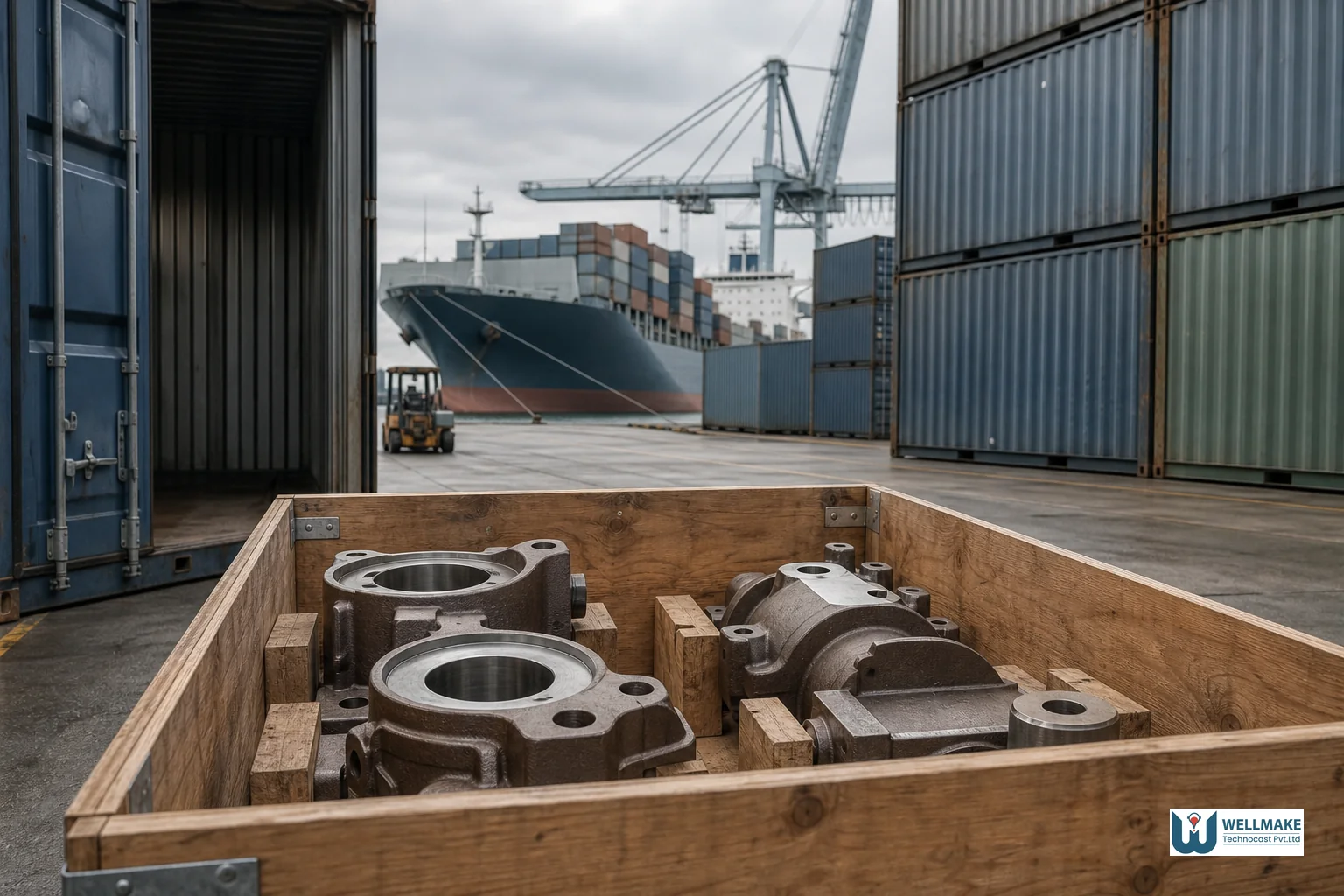
An ISO-certified foundry in India, by contrast, can often quote 25-40% lower per-kilogram pricing on comparable ferrous and non-ferrous alloys, even after adding sea freight, duty, and Incoterms handling to the landed cost. New tooling programs run a similar 10-16 week window whether sourced in Sweden or overseas, since tooling fabrication time is largely alloy- and geometry-driven rather than location-driven. The real difference shows up on repeat orders, where an overseas foundry with strong process discipline can turn a batch in 3-6 weeks using existing tooling, competitive with or faster than a capacity-constrained domestic shop.
Buyers evaluating this trade-off for a neighboring market can see a similar breakdown in India vs local foundry cost comparisons for Australia, where the same domestic capacity pressures and cost gaps show up in a different region. Swedish pump and valve manufacturers weighing a similar decision may also want to review investment casting sourcing options for Sweden's pump and valve sector, since many of the same qualification steps apply.
What Drives the Cost Gap
- Labor and energy costs: Furnace operation and skilled labor cost meaningfully less in India than in Sweden or wider Western Europe, without necessarily compromising process control at an ISO-certified shop.
- Scale efficiency: A foundry running 70 MT of monthly capacity spreads fixed costs across a larger production base than a small regional shop running a fraction of that volume.
- Tooling cost transfer: Tooling fabrication itself is priced separately from the per-piece casting cost; understanding this breakdown avoids surprises on a first quote, as covered in the full tooling cost breakdown for 2026.
How to Audit an Overseas Foundry Before Placing a Defence Order
No Swedish procurement team should place a first defence-grade order on the strength of a sales call and a sample photo. A proper audit, whether conducted in person or through a structured document and video review, should confirm the following before tooling is cut:
- Certification documents: Request current ISO 9001, ISO 14001, and ISO 45001 certificates directly, and verify them against the issuing body's registry rather than accepting a scanned copy at face value.
- Material test report samples: Ask for redacted EN 10204 3.1 certificates from a comparable past order to see the level of detail actually provided.
- In-house testing equipment list: Confirm spectrometer, universal testing machine, hardness tester, and impact testing capability exist on-site rather than through a third party with longer turnaround.
- First article inspection process: Understand how the foundry documents first article dimensional checks against your drawing before full production begins.
- Sample order first: Run a smaller pilot batch before committing to full production volume, and check it against your own incoming inspection, not just the foundry's outgoing report.
These steps mirror the checklist in how to qualify an overseas investment casting supplier, and it's worth reviewing the warning signs outlined in red flags to avoid when sourcing from a foundry before shortlisting any single vendor. For Swedish rail buyers specifically, the sourcing patterns already established in the UK market, detailed in investment casting for railways and defence parts in the UK, offer a useful reference point since both markets share similar Trafikverket-style and MOD-adjacent documentation demands.
A supplier qualified on paper is not the same as a supplier proven in production. The gap closes only after a real batch has gone through your own incoming inspection.
Why Wellmake Technocast Fits Sweden's Defence and Railway Supply Chains
Wellmake Technocast operates from Rajkot, Gujarat, one of India's established investment casting hubs, with 70 MT of monthly production capacity spanning components from a few grams up to 180 kilograms. That range matters for defence and rail buyers who need both small precision brackets and larger structural castings from the same qualified source.
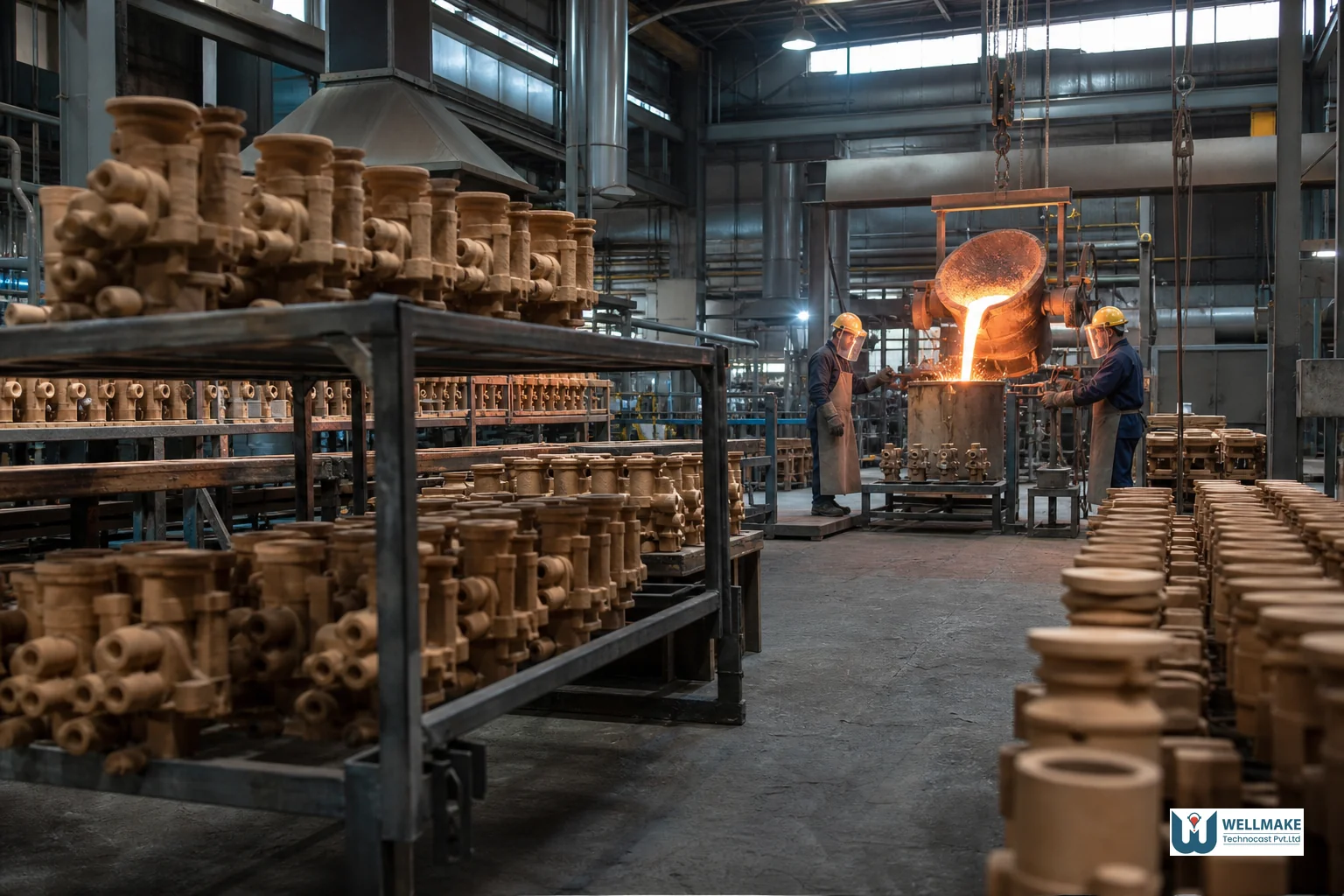
The foundry holds ISO 9001, ISO 14001, and ISO 45001 certification together, an uncommon combination among regional competitors, and runs an 8-step ceramic shell investment casting process supported by in-house spectrometer analysis, universal testing machine (UTM) evaluation, hardness testing, and impact testing. That means material verification and mechanical property confirmation happen on-site, under the same quality system, rather than being outsourced and delayed.
For Swedish buyers specifically, three capabilities stand out:
- Single-source machining: Un-machined and fully machined components come from the same production line, removing a second supplier relationship and a second tolerance stack-up risk for rail brackets, valve bodies, and defence mounting hardware.
- Ferrous and non-ferrous range: Carbon steel, stainless steel, and various non-ferrous alloys are all cast in-house, covering the material spread typical across rail rolling stock and defence vehicle components.
- Sustainability documentation: Renewable energy use and waste recycling practices support the ESG scoring criteria increasingly built into Swedish and wider EU public procurement evaluations.
Buyers still evaluating fundamentals should also review how to choose the right investment casting foundry and what materials are used in investment casting to align material selection with the specific defence or rail application before requesting a formal quote.
Frequently Asked Questions
Can an Indian foundry really meet Swedish defence procurement standards?
Yes, provided the foundry holds recognized certifications (ISO 9001, ISO 14001, ISO 45001), issues EN 10204 3.1 material certificates, and can demonstrate in-house NDT and mechanical testing. Certification alone isn't proof of fit; a documented audit trail and a successful pilot batch are what actually confirm it.
What documentation should ship with every defence casting batch?
At minimum: a material test certificate tied to the specific heat lot, dimensional inspection report against the approved drawing, and any NDT reports (radiographic, dye penetrant, or ultrasonic) relevant to the part's criticality level. Defence-specific programs may add a certificate of conformance referencing the applicable specification.
How long does a new defence casting program take from RFQ to first delivery?
Expect roughly 10-16 weeks for a new part requiring new tooling, covering pattern design, tooling fabrication, first article casting, and inspection. Repeat orders on existing tooling typically ship in 3-6 weeks once the program is established.
Does Wellmake Technocast handle small-batch defence orders?
Yes. With component sizes ranging from a few grams to 180 kilograms and 70 MT of monthly capacity, the foundry accommodates both prototype or pilot batches and larger production runs within the same qualified process, which suits the smaller lot sizes common in defence and rail programs compared to high-volume automotive work.
Moving From Evaluation to a Qualified Supplier Relationship
Swedish defence and railways procurement teams don't need to choose between certification rigor and competitive cost. An ISO 9001, ISO 14001, and ISO 45001 certified foundry with in-house testing, full material traceability, and single-source machining capability can meet the documentation demands of an FMV-linked or Trafikverket-adjacent program while still delivering a meaningful cost advantage over shrinking domestic capacity.
If your team is evaluating an investment casting foundry Sweden for defence components sourcing strategy, start by reviewing Wellmake Technocast's full range of castings across ferrous and non-ferrous alloys at their product catalogue, then request a pilot batch quote through their team to test traceability and tolerance performance against your own drawings. For technical questions about certifications, material options, or lead times specific to your program, get in touch with Wellmake Technocast directly, or contact the team today to start the qualification conversation before your next tooling decision is due.