
How MOQ Affects Your Investment Casting Costs
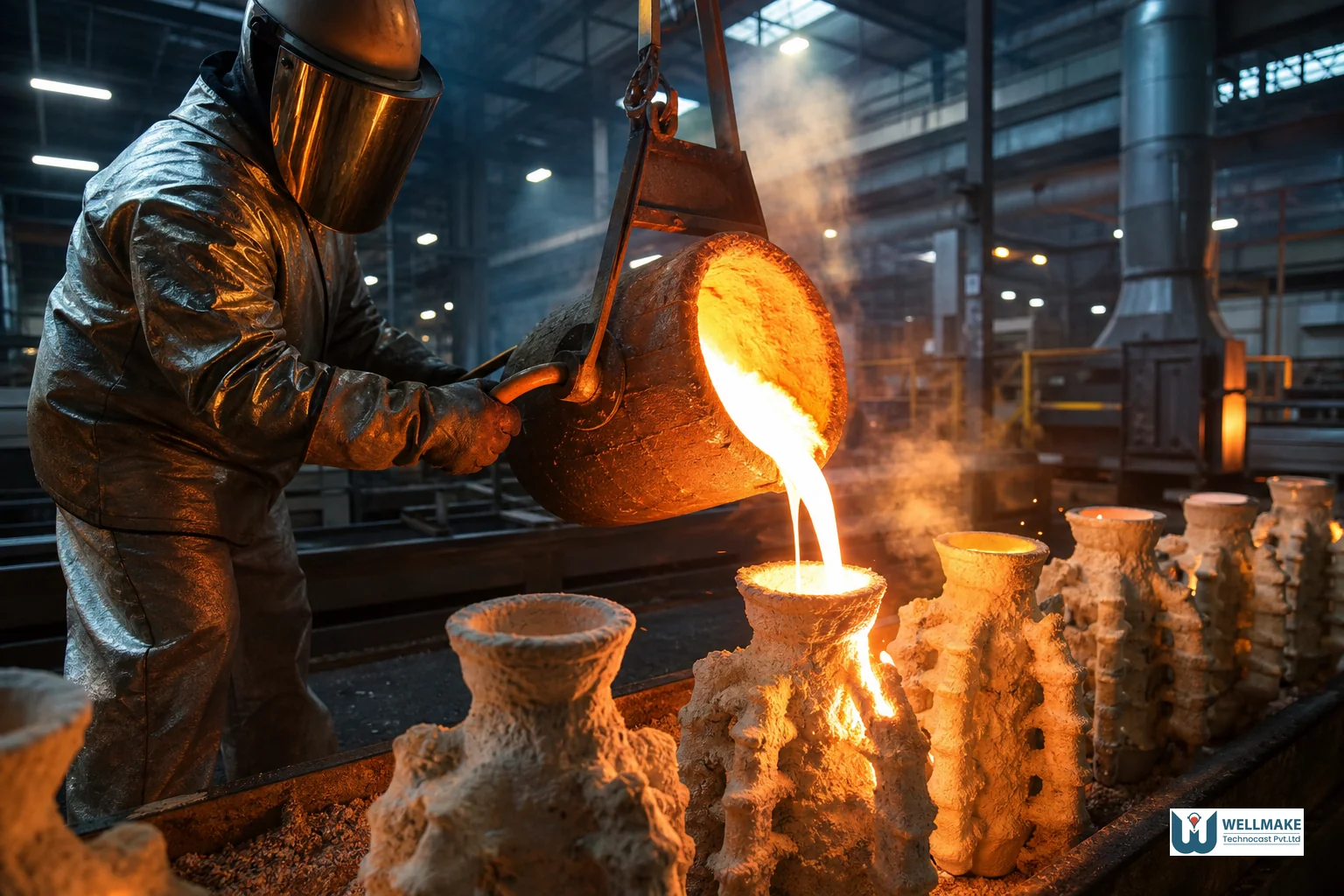
A batch of 50 duplex stainless valve bodies can cost nearly twice as much per piece as the same part ordered in a run of 500, even though the casting itself hasn't changed at all. That gap exists because of investment casting minimum order quantity cost impact: tooling, furnace loads, and shell-building batches all get priced against volume, and small orders absorb costs that larger ones spread thin. Understanding this math is the difference between a procurement plan that scales and one that quietly bleeds margin.
Key Takeaways
- Tooling dominates small-batch pricing: A one-time tooling charge spread over 50 units can add several times more to the per-piece cost than the same tooling spread over 1,000 units.
- Below-MOQ orders carry hidden surcharges: Foundries often add small-batch fees, higher scrap allowances, and expedite premiums when a furnace or shell-building line is running under capacity.
- Optimal volume balances two costs, not one: The lowest cost-per-part isn't always the largest order; carrying cost, storage, and cash tied up in inventory work against pure economies of scale.
- MOQ is negotiable within limits: Family tooling, blanket purchase orders with scheduled releases, and multi-cavity patterns can lower the effective MOQ without forcing you to overbuy.
- Supplier qualification comes before volume commitment: Committing to a higher-volume order with an unaudited foundry multiplies the risk if quality or delivery slips.
MOQ and Investment Casting Cost at a Glance
| Order Volume Tier | Tooling Share per Unit | Typical Cost-per-Part Impact | Typical Lead Time | Best Fit For |
|---|---|---|---|---|
| 1-50 units (prototype/low volume) | Very high | Baseline +40% to +100% | 6-10 weeks | New product validation, spares, trial orders |
| 51-200 units | High | Baseline +15% to +35% | 8-12 weeks | Pilot production, niche or low-run OEM parts |
| 201-500 units | Moderate | Baseline +5% to +15% | 10-14 weeks | Standard OEM production runs |
| 501-2,000 units | Low | Near baseline | 10-16 weeks | Established, forecastable demand |
| 2,000+ units | Minimal | Baseline or better with volume discounts | 12-18 weeks (phased) | High-volume automotive, pump/valve programs |
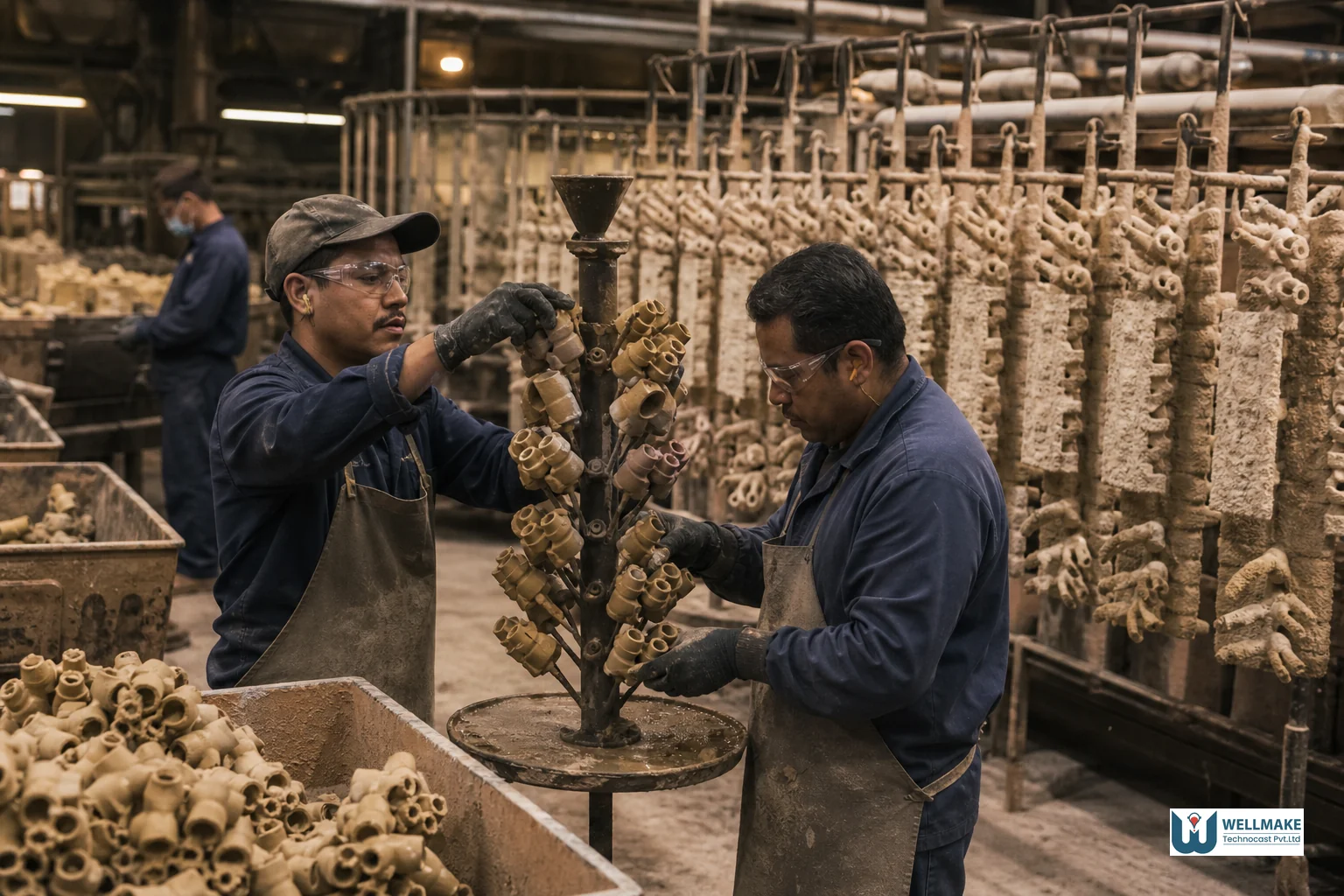
Procurement teams sourcing precision components often treat minimum order quantity as a fixed line item on a quote sheet. It isn't. MOQ is a foundry's way of protecting the economics of a process that depends on batch efficiency at almost every stage, from wax injection to shell dipping to furnace scheduling. Once you understand what's actually driving that number, you can plan orders that reduce cost-per-part instead of accepting whatever a quote sheet hands you.
1. Why Foundries Set a Minimum Order Quantity
Investment casting is a multi-step process, and nearly every step has a natural batch size. Wax patterns are injected using a metal tool that costs the same to build whether you order 20 parts or 2,000. Shell-building involves dipping wax pattern trees into ceramic slurry, and a foundry gets far better material and labor efficiency when a tree carries 20 to 100 parts instead of five. Furnace loads are scheduled by weight and heat cycle, so a partially filled furnace still burns the same energy as a full one.
This is why a foundry like Wellmake Technocast, running a 70 MT monthly capacity across ferrous and non-ferrous alloys, sets MOQ thresholds that reflect real production math rather than arbitrary sales policy. A minimum order lets the foundry batch your parts efficiently alongside other production, which keeps quoted pricing realistic instead of inflated to cover guesswork.
Several cost centers scale directly with your MOQ decision:
- Tooling amortization: The wax injection die is a fixed, one-time cost recovered across the units you order.
- Wax pattern batch efficiency: Injection presses run most efficiently when producing full trees, not scattered single patterns.
- Shell-building labor and material: Ceramic slurry, stucco sand, and drying cycles are priced per tree, not per part.
- Furnace scheduling: Melting and pouring is scheduled around total shell weight, so small orders often wait for a compatible furnace load.
- Finishing and inspection setup: Grinding, shot blasting, and machining setups carry fixed changeover time regardless of batch size.
Readers wanting the mechanical detail behind the casting process itself can review how investment casting works step-by-step, which walks through each stage where batch size affects cost.
2. How Tooling Amortization Drives Per-Unit Price
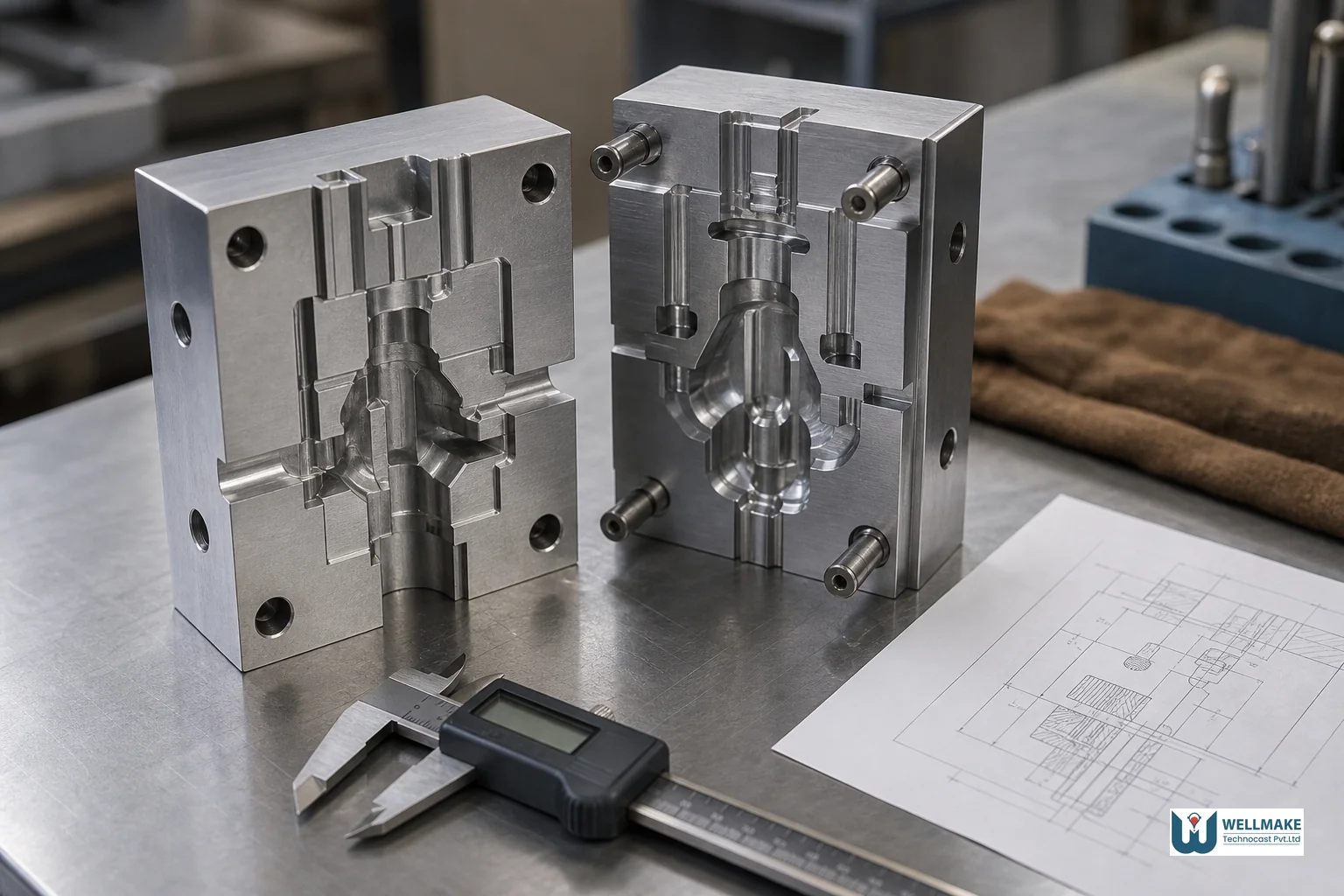
Tooling amortization is the single biggest lever in the MOQ cost equation. A wax injection tool for a mid-complexity part might cost a fixed amount to machine, regardless of whether you order 50 units or 5,000. That cost gets divided across your order quantity and added to the per-piece price.
Consider a simplified example. Assume a tooling cost that, when spread over 50 units, adds a meaningful surcharge to each part. Spread the same tooling cost over 500 units, and the per-unit tooling share drops to roughly a tenth of the low-volume figure. At 2,000 units, the tooling share becomes almost negligible, and the quoted price approaches the foundry's true marginal cost of melting, shell-building, and finishing.
This is why two buyers requesting quotes for an identical part can receive wildly different per-unit prices, purely because one specified a 50-piece MOQ and the other committed to 500. Neither price is "wrong." They reflect different amortization schedules for the same fixed tooling investment.
For a full line-item breakdown of what goes into a tooling quote, including die material, cavity count, and pattern equipment, see our investment casting tooling costs breakdown. Buyers evaluating whether to cast or machine a part from bar stock should also compare total landed cost using our investment casting vs machining cost comparison, since machining often carries no tooling cost but a much higher per-unit material and cycle-time cost at volume.
3. The Hidden Costs of Ordering Below MOQ
Buyers sometimes push a foundry to accept an order below its stated MOQ, assuming they'll simply pay a bit more per piece. The real cost structure is less forgiving than that. Below-MOQ orders often carry several stacked penalties:
- Small-batch surcharges: A flat fee added to cover the changeover and setup time that isn't justified by the order size.
- Higher effective scrap allowance: Casting yield rates improve with tree size; a small tree can mean a higher percentage of parts absorbed into rejects and reruns, and that risk gets priced in.
- Furnace scheduling delays: A foundry may hold your small order until it can be combined with a compatible alloy pour, adding weeks to lead time. Buyers researching typical timelines should also read about how the investment casting process affects delivery schedules for context on where those delays originate.
- Expedite premiums: If you need the small batch fast, you pay to jump the furnace queue, compounding the small-batch penalty.
- Inconsistent finishing quality: Very small runs sometimes get less operator attention on manual finishing steps like grinding and blasting, simply because the batch doesn't justify a dedicated setup.
None of this means small orders are impossible. It means a buyer requesting a below-MOQ run should expect the quote to reflect real cost, not treat it as the foundry being difficult. A reputable foundry will explain these line items rather than hide them in a padded unit price, which is one reason supplier transparency matters as much as the number on the quote. Our guide on how to qualify an overseas investment casting supplier covers the questions to ask before committing to any volume tier.
4. How to Calculate Your Optimal Order Volume
The lowest per-unit casting price is not automatically the right order quantity. A buyer chasing the cheapest possible unit cost by over-ordering can end up with excess inventory sitting in a warehouse, tying up cash and creating obsolescence risk if a part design changes.
A practical way to think about total cost is:
Total Procurement Cost = Tooling Cost (one-time) + (Unit Casting Cost × Order Quantity) + Inventory Holding Cost (storage, insurance, capital tied up) + Obsolescence Risk
Work through this in three steps:
- Forecast realistic 12-24 month demand. Pull actual consumption data if the part is a replacement for an existing design, or use engineering release schedules for new programs. Avoid rounding up "just in case," since that inflates holding cost without lowering true risk.
- Model at least three volume tiers. Request quotes at your minimum practical volume, your forecasted 12-month volume, and a higher tier (for example, 24-month demand in one batch). Compare the per-unit price drop against the extra capital tied up in unused stock.
- Add carrying cost explicitly. A common industrial benchmark is 20-30% of inventory value per year in storage, insurance, and capital cost. If ordering double your near-term need only saves a few percentage points per unit, the carrying cost usually erases that saving within 12 months.
This is where MOQ planning becomes a genuine procurement strategy rather than a one-time negotiation. OEM teams that run this calculation across their full component list, rather than part by part, often discover that some parts are worth over-ordering against future programs while others should stay lean and be reordered more frequently.
5. Strategies to Reduce MOQ Without Overpaying
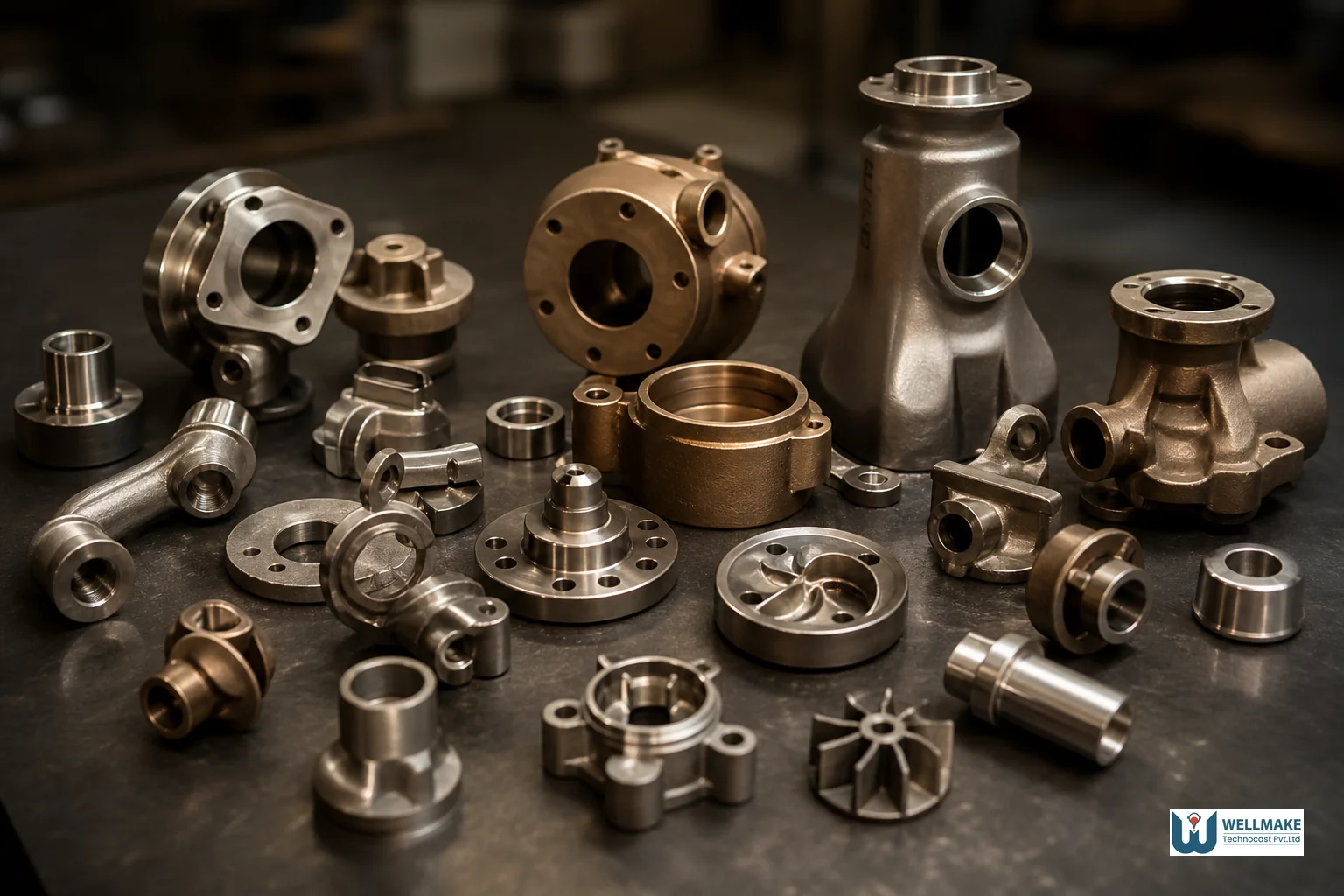
Several practical tactics can lower the effective minimum order quantity a foundry needs, without forcing a buyer into an unfavorable per-unit price:
- Multi-cavity tooling: Building a tool with 4, 6, or 8 cavities instead of one means each wax injection cycle produces more parts, lowering the effective per-part tooling amortization even at a modest total order size.
- Family tooling: If you're sourcing several related components (say, a valve body, bonnet, and disc from the same product family), a shared tool base with interchangeable inserts can spread fixed costs across multiple part numbers.
- Soft tooling or 3D-printed patterns for prototypes: For first-article or low-volume validation runs, additive-manufactured patterns avoid the cost of a full production die entirely, letting you validate a design before committing to hard tooling and its associated MOQ.
- Blanket purchase orders with scheduled call-offs: Commit to an annual volume that meets or exceeds MOQ economics, but have the foundry release smaller batches on a rolling schedule. This captures volume pricing while avoiding a single large inventory receipt.
- Consolidating across product lines or sister facilities: If multiple business units or plants use similar castings, combining forecasts into one purchase order can clear MOQ thresholds that no single site could reach alone.
Buyers weighing casting against sand casting or forging for similar parts should also factor MOQ into that comparison; our investment casting vs forging comparison for oil and gas components and the related look at investment casting vs die casting cost differences both show how tooling and batch economics shift between processes, not just within investment casting itself.
6. Negotiating MOQ and Pricing With Your Foundry
Foundries have more flexibility than most buyers assume, but that flexibility usually applies to specific cost elements rather than a blanket price cut. Before signing a purchase order, it's worth asking directly:
- Can tooling cost be shared or amortized differently? Some foundries will spread tooling cost across the first two or three purchase orders instead of charging it upfront, easing initial cash outlay.
- Is there a volume price break at a specific threshold? Ask for pricing at your target volume plus the next tier up. Foundries often have a natural break point tied to furnace or shell-line capacity that isn't listed on a standard quote.
- Can delivery be phased instead of shipped as one lot? Locking in a larger order's pricing while receiving parts in smaller scheduled shipments can solve both the cost and the warehousing problem at once.
- What happens if forecasted volume changes? Clarify how price and tooling ownership are affected if your actual off-take comes in under or over the committed volume.
None of this negotiation matters much if the foundry itself can't hold quality and delivery at the volume you're committing to. Before locking in an MOQ-driven contract, it's worth running the supplier through a structured check, covered in our guide on how to choose the right investment casting foundry and our piece on red flags to avoid when sourcing from a foundry. Wellmake Technocast's ISO 9001, ISO 14001, and ISO 45001 certifications, combined with in-house spectrometer, UTM, and hardness testing, are the kind of documented quality controls worth verifying with any supplier before committing to volume.
7. Balancing MOQ Against Inventory and Cash Flow
Even when the per-unit math favors a larger order, cash flow constraints can make that order impractical. A 500-unit batch at a lower per-piece price still requires paying for 500 units upfront (or on standard payment terms), storing them, and managing the risk that a design change or demand shift leaves stock unused.
A few structures help balance these competing pressures:
- Just-in-time call-off scheduling: Agree on total annual volume for pricing purposes, but receive and pay for smaller shipments monthly or quarterly.
- Consignment stock arrangements: Some foundry relationships allow finished parts to sit at a bonded location or the foundry's own warehouse until called off, shifting the carrying cost timeline.
- Safety stock sized to lead time, not full annual demand: Rather than ordering a full year's volume to hit a price break, size safety stock to cover lead time variability plus a buffer, and reorder more frequently at slightly higher unit cost.
- Currency and freight consolidation: For international buyers sourcing from India, consolidating shipments to reduce freight-per-kilogram can offset some of the per-unit premium of a smaller order, especially relevant for buyers comparing landed cost against regional foundries, as explored in our India vs local foundry cost comparison for Australian buyers.
Component tolerances and surface finish requirements also factor into this planning, since tighter specifications can increase scrap rates on small batches more than on larger, better-optimized runs. It's worth reviewing expected tolerance bands before finalizing an MOQ-driven order to avoid surprises at final inspection.
Frequently Asked Questions
What is a typical MOQ for investment casting?
It varies by part size, complexity, and alloy, but many foundries set practical minimums in the range of 50 to 200 pieces for a new tooling program. Simpler geometries with lower tooling cost may have lower thresholds, while complex multi-core parts or exotic alloys often carry higher minimums to justify the setup.
Can I get a one-off casting without hitting MOQ?
Yes, but expect a significant per-unit premium, since you're paying for the full tooling and setup cost against a single part. This route makes sense for prototypes, first-article approval, or spares for legacy equipment where the part is no longer produced elsewhere. Soft tooling or 3D-printed patterns can reduce this premium for a true one-off.
Does part size or alloy change the MOQ math?
Yes. Larger, heavier components fill a furnace load with fewer pieces, which can lower the practical MOQ in unit count even though the total tonnage requirement stays similar. Exotic or hard-to-source alloys may raise MOQ because the foundry needs a minimum melt size to justify a furnace charge of that material.
How does MOQ compare between investment casting and machining or die casting?
Die casting typically requires a much higher MOQ than investment casting because hardened steel dies cost significantly more and only make economic sense at high volume. CNC machining from bar stock generally has no formal MOQ since there's no tooling to amortize, but the per-unit material waste and machining time make it more expensive than casting once volumes climb past a few hundred units. Our investment casting versus machining comparison breaks down the crossover point in more detail.
Plan Your Next Order Around Real Cost, Not Guesswork
MOQ decisions shape your casting budget more than almost any other line item on a quote, from tooling amortization down to furnace scheduling and finishing setup. Getting this right means forecasting honestly, asking your foundry the right questions about volume breaks and phased delivery, and choosing a supplier that can document its quality process at whatever tier you commit to. Wellmake Technocast works with OEM procurement teams across automotive, pump and valve, oil and gas, and defence sectors to structure order volumes that reduce cost-per-part without forcing unnecessary inventory risk.
If you're planning an upcoming casting program and want to see how volume tiers, tooling amortization, and phased delivery could apply to your specific part, explore our product range to see the components and alloys we cast across ferrous and non-ferrous metals. For a detailed quote that breaks down tooling cost against your target order volume, get in touch with our engineering team today and start planning an order strategy that actually fits your production schedule and cash flow.