
Investment Casting vs Forging for Oil & Gas in France
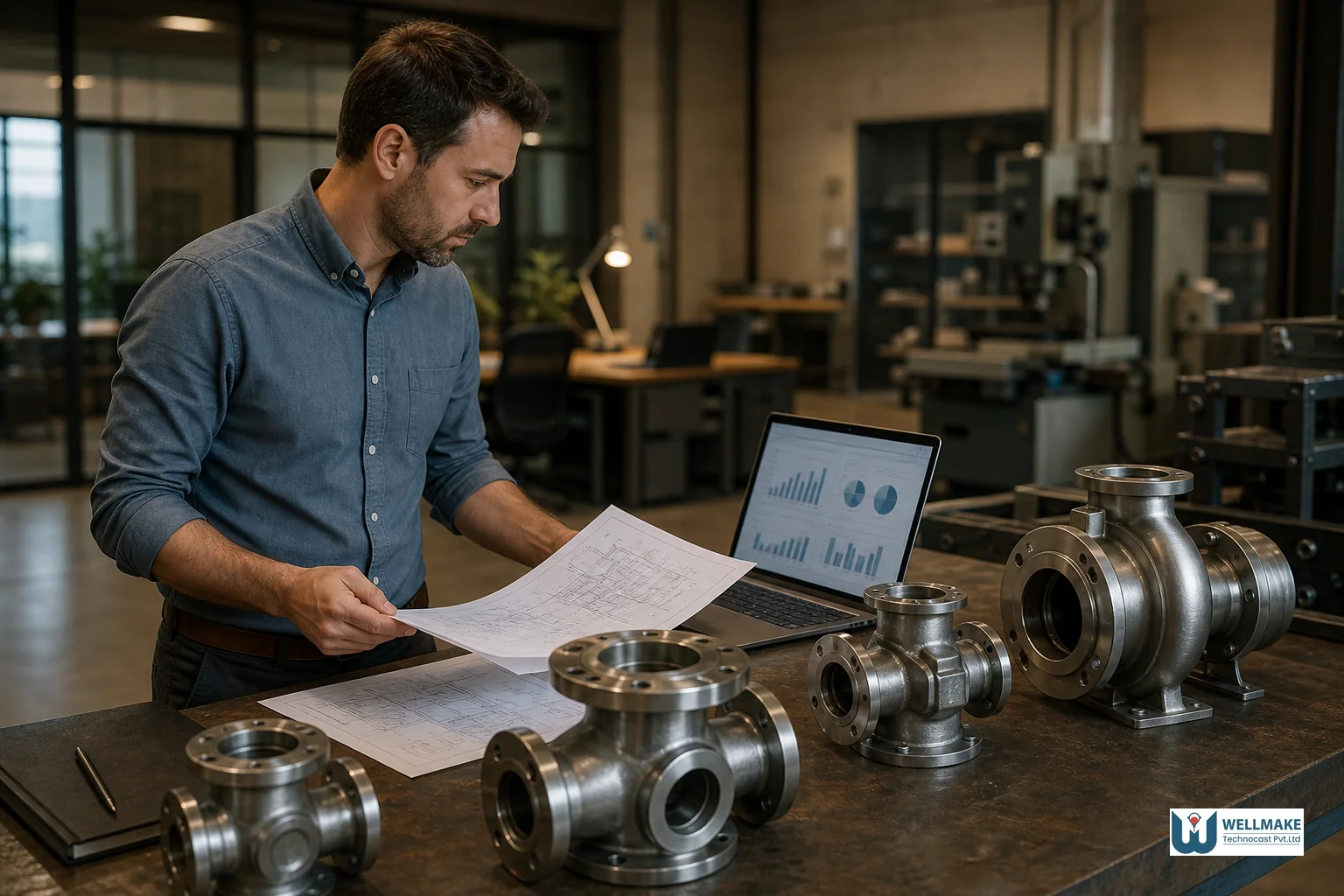
A maintenance planner at a compressor station outside Lacq recently found himself stuck between two bad options. His usual forging supplier, a mid-sized shop near Lyon, quoted 22 weeks for a batch of duplex stainless steel valve bodies. The second supplier, in Germany, could do it faster but at a price that made the project budget unworkable. Neither option solved the real problem: he needed a complex, high-tolerance part, not a simple forged blank that would still need weeks of machining. That is the exact fork in the road facing procurement teams across France's oil and gas sector right now, and it's why the question of investment casting vs forging for oil gas France sourcing has become urgent rather than academic.
Both processes have decades of proven use in energy infrastructure. But they are not interchangeable, and choosing the wrong one can quietly inflate your total component cost by 30% or more once machining, tooling, and delays are factored in. This guide breaks down how investment casting and forging actually differ for wellhead, valve, pump, and manifold components, and explains why a growing number of French buyers are looking toward ISO-certified investment casting foundries in India as a practical alternative to shrinking local forging capacity.
Why Oil & Gas Buyers in France Are Rethinking Their Component Sourcing
France's oil and gas equipment supply base has been under strain for several years. Energy-intensive forging operations have been hit hard by industrial electricity prices, and several regional forge shops have reduced shifts or shut down entirely. That has pushed lead times out and made capacity unpredictable for buyers who need wellhead components, choke valves, pump casings, and manifold fittings on a fixed project schedule.
At the same time, component geometries are getting more demanding. Modern valve and pump designs increasingly call for internal flow passages, thin-wall sections, and integrated flanges that reduce weld joints and points of failure. Forging, which shapes metal through compressive deformation, was never designed to produce that kind of complexity in a single piece. Investment casting was. That mismatch between what forging does well and what today's oil and gas components actually need is the real driver behind this comparison.
Investment Casting vs Forging: The Core Process Differences
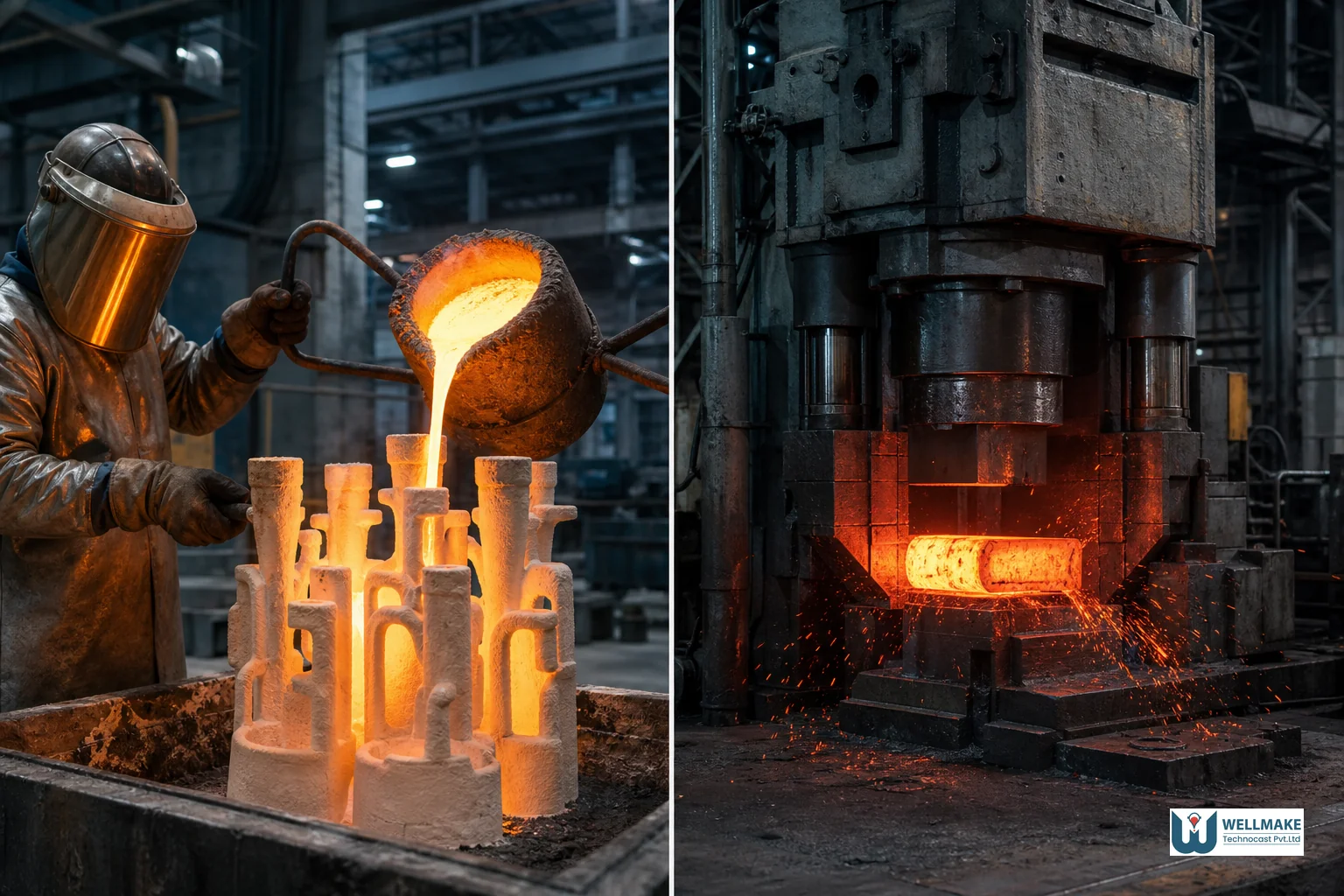
Forging works by applying compressive force, usually through a hammer or hydraulic press, to a heated metal billet until it takes the shape of a die. The metal never melts. This process aligns the internal grain structure along the shape of the part, which is why forged components are prized for parts under continuous directional stress, such as flanges, shafts, and simple pressure-retaining bodies.
Investment casting takes a different path entirely. A wax pattern of the part is built, coated in ceramic slurry to form a shell, then the wax is melted out and molten metal is poured into the resulting cavity. Once the metal solidifies, the shell is broken away to reveal a near-net-shape component. The full step-by-step investment casting process involves eight distinct stages, each controlling dimensional accuracy and metallurgical quality.
The practical difference for a French buyer comes down to this: forging is a deformation process best suited to relatively simple geometries in one alloy family per die set. Investment casting is a shape-forming process that can produce intricate, multi-feature parts in a single pour, in a much wider range of alloys, without needing a new die for every minor design change.
Precision and Tolerances: Which Process Wins for Oil & Gas Components
Oil and gas components rarely tolerate loose fits. Valve seats, stem bores, and flow passages often carry tolerance callouts measured in tenths of a millimeter. Investment casting typically achieves tolerances in the range of ±0.1mm to ±0.5mm depending on part size and geometry, straight out of the shell, well before any secondary machining begins. That level of dimensional accuracy in investment casting is one reason the process has become the default for pump and valve manufacturers handling pressure-critical parts.
Forging, by contrast, produces a rougher near-shape that almost always requires significant machining to reach final dimensions, especially on internal features. For a solid shaft or a simple hex flange, that extra machining is minor. For a valve body with an internal seat profile and multiple bore intersections, it can mean hours of CNC work per part, along with the material waste that comes from cutting away forged stock to expose internal geometry.
This is where the comparison becomes less about which process is "better" in the abstract and more about which process fits your specific part. Simple, solid, load-bearing shapes favor forging. Geometrically complex, pressure-boundary components favor casting.
Material Flexibility for Oil & Gas Applications
Oil and gas equipment operates across a brutal range of conditions: sour service wells, high-pressure subsea manifolds, corrosive offshore environments, and high-temperature processing units. Material selection is not optional, it's dictated by standards like API 6A, API 6D, and NACE MR0175 for sulfide stress cracking resistance.
Investment casting supports an unusually broad material range for a single process: carbon steels, low-alloy steels, martensitic and austenitic stainless steels, duplex and super duplex stainless steels, and nickel-based alloys such as Inconel and Monel. The materials suitable for investment casting cover almost every alloy family that oil and gas specifications call for, and the process can hold consistent chemistry and mechanical properties across large production runs.
Forging is generally limited to wrought-grade alloys with good hot workability. Some high-alloy or duplex grades are more difficult and expensive to forge without cracking or requiring extensive heat treatment cycles. For a buyer sourcing sour-service duplex stainless valve bodies, this is a genuine constraint, not a minor technical footnote. It often means fewer qualified forging suppliers are available for the exact alloy and grade a project specification demands.
Lead Times and Total Cost Comparison for French Buyers
French forging capacity has tightened noticeably over the past two years. Energy costs for reheating billets multiple times through a forging sequence are significant, and that cost gets passed straight into the quote. Add typical forge shop backlogs of four to six months for specialty alloys, and a project timeline can slip well past its original schedule before a single part reaches machining.
Investment casting changes the cost structure in three specific ways. First, near-net-shape production cuts machining time dramatically, since most of the final geometry already exists after casting. Second, material waste drops, because you're not cutting away 40-60% of a forged billet to expose internal features. Third, tooling costs behave differently: forging dies are expensive, hardened steel tools that only make sense at high volumes, while investment casting tooling costs for wax pattern dies are typically lower and better suited to the small-to-mid batch sizes common in oil and gas MRO and capital projects.
Together, these factors mean a casting quote often lands lower on total landed cost, even after adding international freight from a foundry outside Europe. For a deeper look at what actually drives casting pricing part-to-part, this cost-per-kg breakdown walks through the specific variables, and buyers weighing an outright process choice may also find this casting-versus-machining cost comparison useful context for the broader sourcing decision.
Complex Geometries: Where Investment Casting Outperforms Forging
This is where the gap between the two processes is widest. Wellhead valve bodies, choke valves, manifold blocks, and multi-port pump casings often need internal flow channels, integrated bosses, and non-symmetric wall thicknesses that a forging die simply cannot produce in one piece. Forging these shapes usually means fabricating from multiple forged sub-components and welding them together, which introduces weld inspection requirements, potential leak paths, and additional labor.
Investment casting handles this kind of complexity in a single pour. Whether a part is genuinely suited to casting usually comes down to whether it has internal features, thin sections, or integrated flanges that would otherwise require extensive machining or fabrication. For most modern oil and gas valve and pump designs, the answer is yes.
- Wellhead and Christmas tree components: Complex bore intersections and pressure-retaining bodies benefit from casting's ability to form internal geometry directly.
- Choke and control valve bodies: Intricate flow paths designed to manage erosion and pressure drop are difficult to forge without heavy secondary machining.
- Manifold and header fittings: Multi-port designs consolidate into a single cast piece instead of several welded forged sections.
- Pump casings and impeller housings: Curved internal passages and volute shapes are far more efficient to cast than to forge and machine.
Why French Procurement Teams Are Turning to Indian Investment Casting Foundries
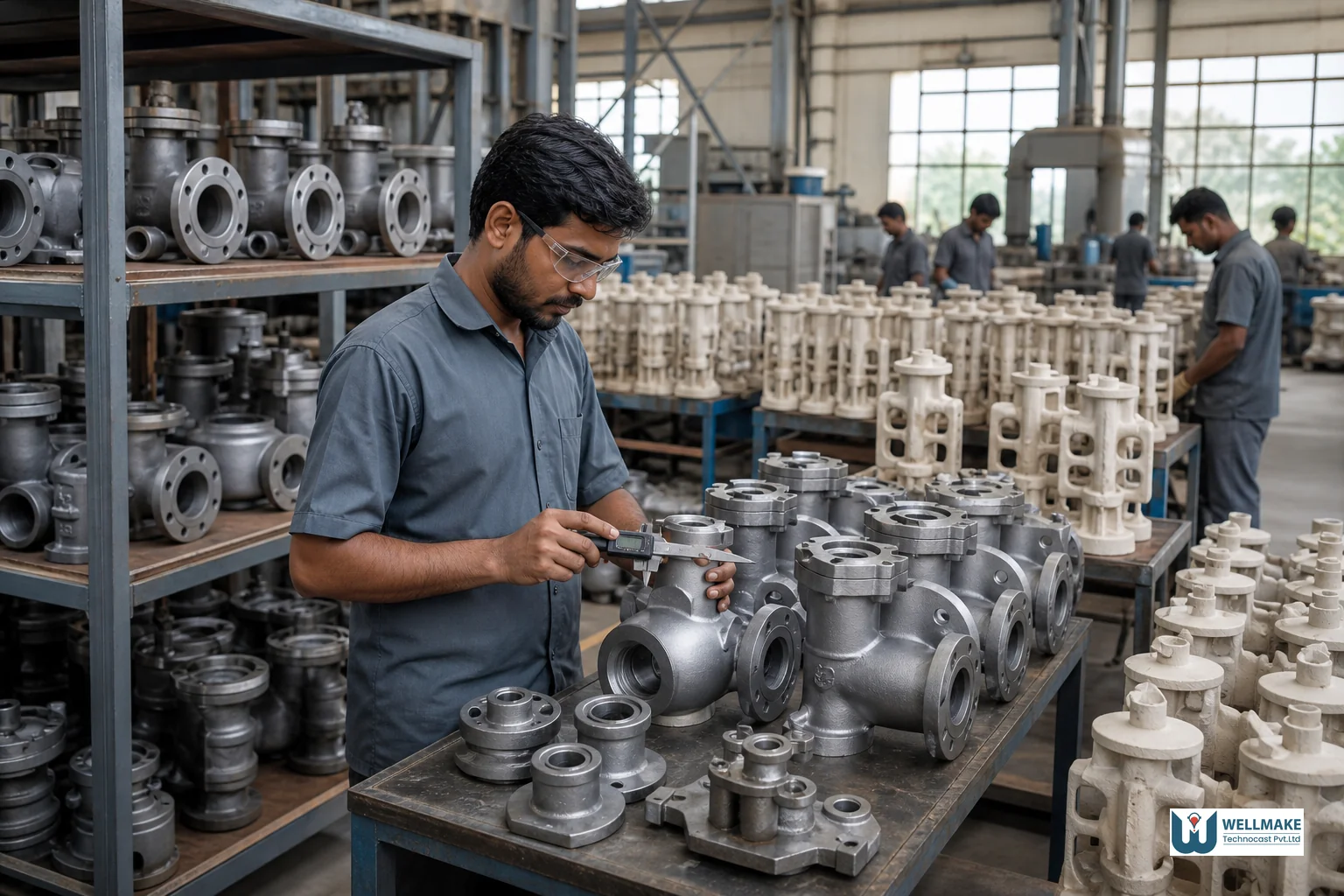
With domestic forging capacity tightening and casting proving to be the better technical fit for complex oil and gas geometries, the next question French buyers face is straightforward: where do you source it? Local European casting foundries exist, but many are booked out on long-term automotive or aerospace contracts, leaving oil and gas orders competing for limited slack capacity.
This is where India's established investment casting sector, and foundries like Wellmake Technocast in Rajkot, Gujarat, have become a serious option rather than a fallback. Wellmake operates with ISO 9001, ISO 14001, and ISO 45001 certification covering quality management, environmental management, and occupational health and safety, giving French procurement teams the documentation trail their internal audit processes expect. The foundry runs an 8-step ceramic shell investment casting process and produces both un-machined and fully machined components in ferrous and non-ferrous metals, from parts weighing a few grams up to 180 kilograms, with a monthly capacity of 70 metric tons.
In-house quality control matters just as much as certification on paper. Wellmake maintains spectrometer analysis for chemical composition verification, universal testing machines for mechanical property confirmation, hardness testing, and impact testing, the kind of testing regime oil and gas buyers typically require before accepting duplex or super duplex stainless steel components into a pressure-critical application.
Buyers evaluating any overseas source, not just Wellmake, should still apply scrutiny. Red flags when sourcing castings from an overseas foundry typically include vague material certification, no in-house testing capability, and an inability to explain their own process controls. A properly qualified Indian foundry will welcome that scrutiny, not avoid it. If you're building out a formal supplier qualification process, this guide to qualifying an overseas investment casting supplier covers the audit steps worth including before placing a first production order.
It's also worth noting this dynamic isn't unique to France. Pump and valve manufacturers in Sweden and buyers across Germany have faced the same local capacity squeeze and reached similar conclusions about sourcing complex castings from qualified Indian foundries rather than competing for scarce European forging and casting slots.
How to Decide: A Practical Checklist for Oil & Gas Buyers in France
Neither process is universally correct. Use this checklist to work through the decision on a part-by-part basis rather than defaulting to whatever your last supplier happened to offer.
- Geometry complexity: If the part has internal passages, thin walls, or integrated features, lean toward investment casting. Simple solid shapes like shafts, plain flanges, or bar-stock fittings often suit forging fine.
- Alloy requirements: Duplex, super duplex, and nickel alloys are generally easier to source through casting. Standard carbon and low-alloy steels are workable in either process.
- Production volume: High-volume runs of a simple part can justify forging die costs. Small-to-mid batch runs of complex parts favor casting's lower tooling investment.
- Lead time pressure: If your project timeline can't absorb a four-to-six-month forge backlog, a qualified casting foundry with available capacity may be the only realistic path.
- Certification needs: Confirm whichever supplier you choose can document material traceability, mechanical testing, and compliance with your project's API or NACE requirements.
- Total cost, not unit price: Factor in machining hours, scrap rates, and tooling amortization, not just the quoted price per kilogram.
When you run an actual part through this checklist, most complex oil and gas components, valve bodies, choke assemblies, manifold blocks, pump casings, land clearly on the casting side. Simple, high-volume, load-bearing shapes still make sense to forge, particularly when a qualified local supplier has capacity.
Frequently Asked Questions
Is investment casting as strong as forging for oil and gas service?
For pressure-retaining components with complex geometry, properly cast parts with correct heat treatment and verified mechanical properties meet the same design codes and material specifications as forged parts. Forging retains an advantage for parts under high directional stress with simple shapes, such as certain shafts and flanges, where grain flow alignment adds fatigue resistance.
What certifications should a French buyer require from an overseas casting foundry?
At minimum, look for ISO 9001 quality management certification, along with documented material test reports, spectrometer chemical analysis, and mechanical testing records for each heat or batch. ISO 14001 and ISO 45001 add assurance on environmental and safety management, which many European procurement policies now require from all suppliers regardless of location.
Can investment casting meet API and NACE standards for oil and gas components?
Yes. Investment casting foundries producing components for API 6A, API 6D, or NACE MR0175 sour-service applications need to control alloy chemistry, heat treatment, and mechanical properties precisely, and demonstrate that control through traceable testing. This is a matter of foundry qualification and process discipline rather than a limitation of the casting process itself.
What is the typical lead time difference between casting and forging?
Forging lead times in France for specialty alloys have stretched to four-to-six months in many cases due to constrained shop capacity. Investment casting lead times vary by part complexity and foundry capacity, but established foundries with dedicated tooling and available production slots can often offer materially shorter and more predictable timelines, particularly for parts that would otherwise need extensive post-forge machining.
Is investment casting suitable for complex geometries in high-pressure applications?
Yes, this is one of investment casting's core strengths. The process forms internal passages, variable wall thickness, and integrated features directly in the mold, which is difficult or impossible to achieve through forging without extensive machining or multi-piece fabrication and welding.
Choosing between investment casting and forging isn't a brand preference, it's an engineering and sourcing decision that should follow your part's geometry, alloy, volume, and timeline. For French oil and gas procurement teams facing tightening domestic forging capacity, a qualified investment casting partner offers a practical way to keep projects on schedule without compromising on material integrity or certification. Explore Wellmake's investment casting product range to see the alloy families, part sizes, and machined component capabilities available for oil and gas applications, or get in touch to discuss a specific valve, pump, or manifold component drawing. If you're currently weighing quotes from local forging shops against an overseas casting alternative, contact Wellmake's engineering team today for a technical review of your part before you commit to a supplier.