
Best Investment Casting Supplier for Italy's Pump Industry
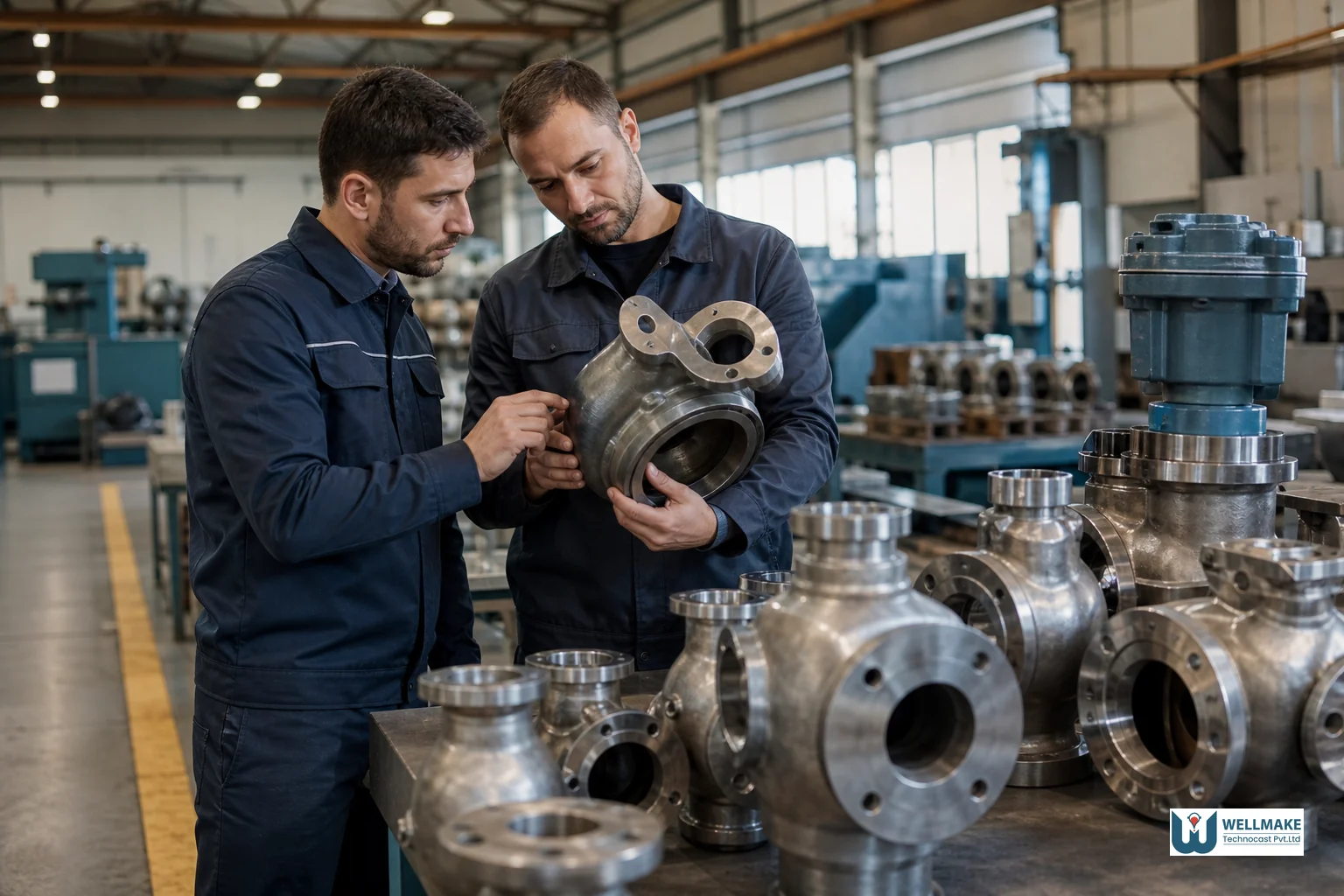
An investment casting supplier in Italy for pump and valve parts increasingly means looking beyond Italy's borders. Rajkot-based foundries in India now supply Italian pump OEMs with ISO-certified, line-ready cast components at 30-40% lower landed cost than shrinking domestic foundry capacity, provided buyers verify certifications, sample quality, and lead times before committing to a production order.
Key Takeaways
- Cost gap is real but conditional: Rajkot foundries typically quote 30-40% below northern Italian shop rates on comparable duplex stainless and CD4MCu castings, but only once freight, duties, and machining are factored into the landed price.
- Certifications are non-negotiable: ISO 9001, ISO 14001, and ISO 45001 should be verified with certificate numbers, not just claimed on a website, before any sample order is placed.
- Line-ready machining matters most: Sourcing fully machined pump housings and valve bodies (not just raw castings) removes a costly secondary processing step from an Italian buyer's own shop floor.
- Sample-first ordering reduces risk: A first article inspection batch, checked against spectrometer and dimensional reports, should always precede a full production run.
- MOQ flexibility beats headline pricing: Mid-size Italian pump manufacturers often gain more from a supplier willing to run smaller batches than from the lowest quoted unit price at high volume.
Snapshot: What Italian Pump OEMs Need to Know
| Factor | Typical Northern Italian Foundry | Rajkot, India Foundry (ISO-Certified) |
|---|---|---|
| Unit cost (duplex/CD4MCu castings) | Baseline | 30-40% lower before freight |
| Typical lead time | 10-16 weeks | 8-14 weeks including sea freight |
| Certifications | Varies by shop, often ISO 9001 only | ISO 9001, ISO 14001, ISO 45001 common at established exporters |
| Minimum order quantity | Often low, but higher unit price | Negotiable; small trial batches available from established suppliers |
| Machining availability | Sometimes outsourced separately | In-house machining for line-ready parts at select foundries |
| Material range | Limited by shop specialization | Broad ferrous and non-ferrous range, few grams to 180 kg components |
| Shipping route | Domestic/EU road freight | Sea freight to Genoa, La Spezia, or Trieste |
Why Italy's Pump and Valve Manufacturers Are Looking Beyond Local Foundries
Northern Italy has long been a stronghold of industrial casting, particularly around Lombardy, Veneto, and Emilia-Romagna. That capacity has been shrinking. Rising energy prices have pushed several regional foundries to cut shifts or close entirely over the past few years, echoing a pattern seen across other parts of the EU's foundry base. Fewer active shops means longer queues, and longer queues mean Italian pump and valve manufacturers sometimes wait months for castings they used to get in weeks.
At the same time, demand for higher-grade materials has grown. Italian pump builders serving petrochemical, marine, and desalination markets increasingly specify duplex stainless steel and CD4MCu castings, alloys that not every remaining regional foundry pours reliably at scale. When a domestic shop can't handle the metallurgy or the volume, procurement teams start looking at export markets, and India's investment casting sector, with Rajkot as its densest cluster, has become a default answer.
This isn't a story about abandoning Italian manufacturing. Most OEMs still keep final assembly, testing, and certification work in Italy. What's shifted is where the raw and semi-finished castings come from. An investment casting supplier in Italy for pump valve parts increasingly functions as a hybrid model: cast and machine in India, assemble and certify in Italy.
What to Look for in an Overseas Investment Casting Supplier
Not every foundry claiming export capability can actually deliver to European quality expectations. Italian buyers should treat supplier evaluation as a structured process, not a single quote comparison. A few criteria separate a dependable long-term partner from a one-off gamble.
ISO Certifications, Verified
ISO 9001 (quality management), ISO 14001 (environmental management), and ISO 45001 (occupational health and safety) form the baseline for any serious industrial supplier. Ask for certificate numbers and the issuing body, then check they're current. A foundry holding all three, rather than just ISO 9001, signals a more mature operation with better documentation habits across the board.
Material Traceability and In-House Testing
Pump and valve components often carry pressure ratings and safety implications, so material certificates need to trace back to the actual heat of metal poured. Ask whether the foundry runs its own spectrometer analysis, hardness testing, and mechanical testing (UTM, impact testing) in-house, or whether it outsources every test to a third party with a two-week turnaround. In-house testing capability usually means faster problem detection and fewer surprises at final inspection.
Ferrous and Non-Ferrous Range
Pump and valve programs rarely use a single alloy. A supplier that only pours carbon steel will send you elsewhere for bronze impellers or duplex stainless valve bodies. Look for a foundry that handles both ferrous and non-ferrous metals under one roof, which simplifies your supply chain considerably.
Line-Ready Machined Parts
This is where many overseas sourcing arrangements fall short. A raw casting still needs machining to final tolerance before it's usable on an assembly line, and if that machining has to happen back in Italy, you've added cost, time, and a second quality checkpoint. Suppliers offering in-house CNC machining alongside casting can deliver components that go straight to assembly, which is exactly the kind of efficiency covered in more depth in this guide to how investment casting works step by step.
Sample and First Article Process
Never skip the sample stage. A proper first article inspection batch, with full dimensional reports and material certificates, tells you far more about a foundry's real capability than any brochure. For a deeper look at structuring this evaluation, how to qualify an overseas investment casting supplier walks through the specific checks worth running before a production order.
Investment Casting vs Local Italian Foundry: A Cost and Capability Comparison
Italian buyers comparing a domestic pump castings supplier against an Indian alternative are really comparing two different cost structures. Local foundries carry higher energy and labor overhead but no shipping lag. Overseas suppliers offer lower base pricing but require freight time and more upfront verification work. The table below breaks down the trade-offs across the factors that matter most for pump and valve sourcing decisions.
| Comparison Point | Local Italian Foundry | Rajkot, India Foundry | Practical Impact |
|---|---|---|---|
| Base casting cost | Higher, driven by energy and labor | 30-40% lower typically | Bigger savings on high-volume duplex/CD4MCu runs |
| Tooling cost | Often similar globally for wax pattern dies | Comparable, sometimes lower | See tooling cost breakdown for full detail |
| Lead time to first delivery | Shorter transit, but longer queue at busy shops | Longer transit, but often shorter production queue | Net lead time can be similar or better from India |
| Quality documentation | Variable, sometimes informal for smaller shops | Formalized at ISO-certified exporters | Easier compliance audits with the right supplier |
| Communication | Same time zone, same language | English-speaking technical teams standard at export-focused foundries | Requires clear specs upfront to avoid delays |
| Machining bundling | Sometimes a separate vendor | Increasingly available in-house | Fewer vendors to manage, one point of accountability |
For manufacturers weighing whether casting itself is even the right process versus machining from billet or forging, it's worth reviewing investment casting vs machining: which costs less and, for oil and gas adjacent pump applications, investment casting vs forging for oil and gas. Buyers who've already compared casting methods domestically may also find the investment casting vs sand casting guide for Italy useful background before extending the search internationally.
Why Rajkot, India Has Become a Global Hub for Pump and Valve Castings
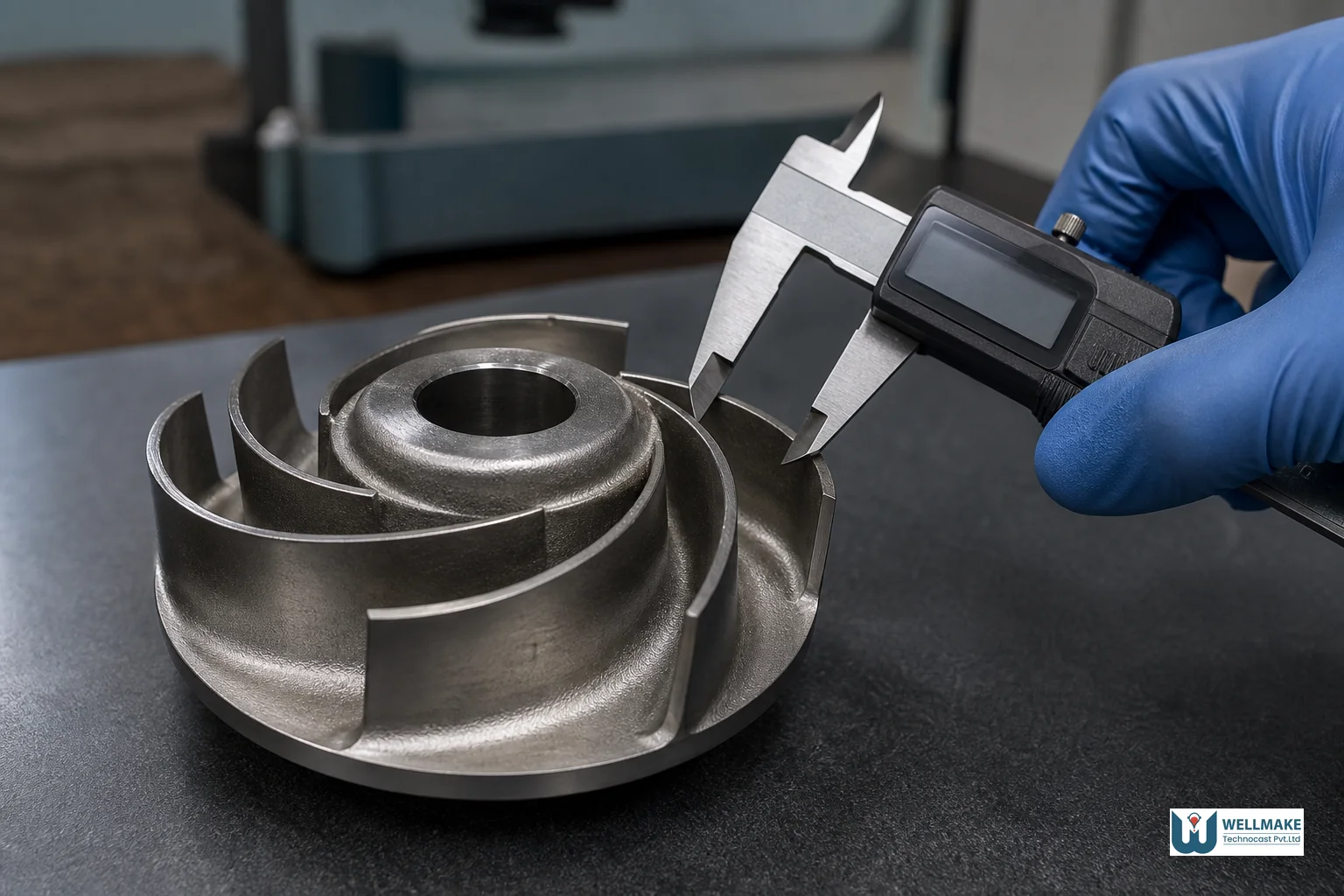
Rajkot, in Gujarat, hosts one of the densest concentrations of investment casting foundries anywhere in the world. Decades of specialization have built up a supplier base with genuine metallurgical depth, not just low labor costs. Foundries here regularly export to Europe, North America, and the Middle East, which means many have already navigated the compliance and documentation expectations that Italian and other EU buyers require.
The cost advantage comes from a combination of lower energy pricing, competitive labor costs, and scale. A foundry running 70 metric tons of monthly capacity, for example, can absorb the fixed costs of maintaining ISO 9001, ISO 14001, and ISO 45001 certification, in-house testing equipment like spectrometers and universal testing machines, and a dedicated export documentation team, spreading those costs across a large production volume in a way a small regional Italian shop pouring a few tons a month often cannot.
Component size range matters too. Pump and valve programs span everything from small wear rings weighing a few grams to large pump casings and volutes reaching well over 100 kg. A foundry capable of handling components from a few grams up to 180 kg under one roof avoids the need to split an order across multiple suppliers based on part size, which is a common headache for Italian buyers dealing with mixed casting programs.
A single-source foundry that can pour both a small bronze wear ring and a large duplex stainless pump casing removes a whole layer of supplier coordination that Italian OEMs otherwise have to manage internally.
Sustainability credentials are increasingly part of the conversation too. Many Italian OEMs now face their own reporting obligations under EU supply chain sustainability rules, and a supplier that runs on renewable energy inputs and active waste recycling programs makes that downstream reporting considerably easier.
Materials and Components Commonly Sourced for Pump and Valve Applications
Pump and valve manufacturing covers a wide material spectrum, and Italian buyers should confirm a prospective supplier's actual experience with the specific alloys their designs call for, rather than assuming a generalist foundry can pour everything equally well.
- CD4MCu and duplex stainless steel: Standard for corrosion-resistant pump housings, impellers, and valve bodies used in petrochemical and marine service.
- Super duplex stainless steel: Specified for higher chloride environments, such as seawater handling pumps and offshore-adjacent equipment.
- Carbon steel and low-alloy steel: Common for valve bodies, bonnets, and discs in less corrosive process lines where cost efficiency matters more than exotic corrosion resistance.
- Bronze and nickel-aluminum bronze: Frequently used for marine pump impellers and components exposed to seawater, valued for their combination of corrosion resistance and machinability.
- Stainless steel grades (304, 316, and variants): Widely used across general industrial pump housings, wear rings, and casing components.
Typical components sourced under a pump and valve casting program include impellers, volutes, casings, wear rings, valve bodies, bonnets, discs, and seats. A foundry that produces the full range in-house, rather than subcontracting certain shapes, gives an Italian buyer a single point of accountability for the whole component family. For a broader technical reference on what's achievable, what materials are used in investment casting and what tolerances investment casting can achieve both cover ground worth reviewing before finalizing a technical spec sheet.
How to Evaluate and Onboard an Indian Casting Supplier from Italy
Onboarding a new overseas foundry works best as a staged process rather than a single leap. Rushing straight to a full production order, without verification steps, is where most sourcing problems originate.
Step 1: Request Documentation Before Any Sample
Ask for ISO 9001, ISO 14001, and ISO 45001 certificates, along with recent material test reports for the specific alloy your parts require. A supplier that hesitates to share this basic documentation is not one to move forward with.
Step 2: Order a First Article Sample Batch
Run a small trial order before committing to volume. Check dimensional accuracy against your drawing, verify surface finish, and cross-reference the material certificate against an independent spectrometer reading if the part is safety-critical. How to evaluate casting quality from an overseas foundry covers this inspection process in more detail, though the core principle is simple: never skip the sample stage regardless of how strong the supplier's references look.
Step 3: Clarify Machining Specs in the Same RFQ
If you need line-ready parts, specify final machined tolerances, surface finish requirements, and any coating or plating needs in the original request for quote, not as a follow-up. This avoids a second negotiation cycle after the casting quote is already agreed.
Step 4: Nail Down Incoterms and Port Logistics
Most Italian pump manufacturers will receive shipments through Genoa, La Spezia, or Trieste. Confirm whether the supplier quotes FOB, CIF, or another Incoterm, and who handles customs clearance on the Italian side. This single detail affects your landed cost calculation more than most buyers expect.
Step 5: Establish a Direct Technical Contact
Set up a recurring point of contact, ideally an engineer rather than only a sales representative, who can answer metallurgical and tolerance questions directly. Time zone overlap between India and Italy is manageable (India is 3.5 hours ahead), which allows same-day email exchanges during working hours.
Lead Times, MOQs, and What Realistically Fits an Italian Production Schedule
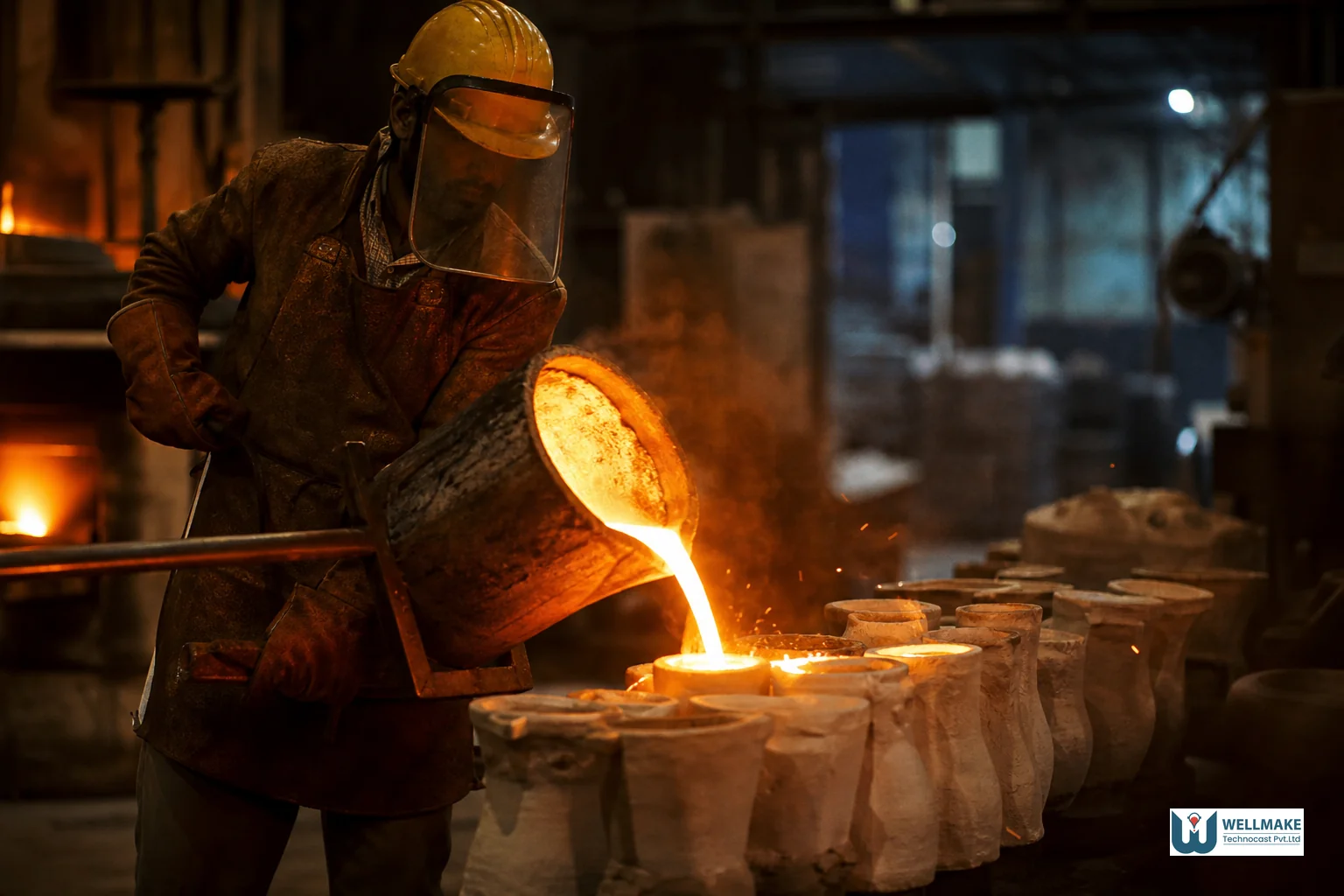
Investment casting is not an instant process. From wax pattern creation through ceramic shell building, dewaxing, pouring, and finishing, a typical production run takes several weeks before it's even ready to ship. Add machining, quality inspection, and sea freight to an Italian port, and total lead time from order confirmation to arrival commonly runs 8 to 14 weeks, depending on part complexity and current foundry backlog.
Minimum order quantities are often more negotiable than buyers assume. Established Rajkot foundries dealing with export clients understand that a mid-size Italian pump manufacturer may want to test a new supplier relationship with a modest trial batch before scaling up. The unit price on a small first order will typically be higher than the eventual volume price, but that premium is a reasonable trade for verifying quality before a larger commitment. For a full breakdown of how batch size interacts with unit economics, see how minimum order quantities affect overall casting cost.
Sea freight transit time from Gujarat ports to Italian ports typically runs three to five weeks depending on routing and transshipment, so building that buffer into your production schedule from the start avoids last-minute scrambling. Buyers running just-in-time assembly schedules should plan orders at least one full lead-time cycle ahead of when previous domestic sourcing would have required, until a track record with the new supplier is established.
Frequently Asked Questions
Is it actually cost-effective for a mid-size Italian OEM to source castings from India?
In most cases, yes, particularly for duplex stainless and CD4MCu components where local Italian foundry capacity has tightened. The savings on base unit cost, often 30-40%, generally outweigh freight and duty costs once volumes reach a moderate production scale. Very small one-off orders may not clear that threshold, since fixed shipping and documentation costs matter more at low volumes.
What certifications should an Italian buyer require before placing an order?
At minimum, ISO 9001 for quality management. For a more robust supplier relationship, ISO 14001 (environmental) and ISO 45001 (occupational health and safety) indicate a foundry with mature operational practices across the board, which typically correlates with more consistent output quality.
Can Indian foundries deliver fully machined, line-ready parts, or only raw castings?
It depends on the specific supplier. Not every foundry offers in-house machining, but a growing number of export-focused Rajkot suppliers now provide both casting and CNC machining under one roof, which removes the need to manage a separate machining vendor back in Italy.
How long does shipping take from Rajkot to Italian ports like Genoa or La Spezia?
Sea freight transit generally takes three to five weeks, depending on shipping line and transshipment points. Combined with production lead time, total order-to-delivery timelines typically fall between 8 and 14 weeks.
What is a realistic minimum order quantity for pump and valve castings?
This varies by supplier and part complexity, but many established foundries will accommodate a smaller trial batch for new customers, with unit pricing improving as volume scales. It's worth discussing your specific part geometry and volume plans directly with a supplier's technical team rather than relying on a generic published MOQ.
Are there red flags Italian buyers should watch for when sourcing overseas?
Yes. Vague or unverifiable certification claims, reluctance to provide sample batches before a large order, inconsistent communication, and unclear Incoterms are all warning signs. A closer look at red flags to avoid when sourcing from a foundry covers the full list of warning signs worth checking before signing a contract.
Italian pump and valve manufacturers don't need to choose between quality and cost when sourcing investment castings. Wellmake Technocast, based in Rajkot, Gujarat, holds ISO 9001, ISO 14001, and ISO 45001 certification, runs in-house spectrometer and mechanical testing, and delivers both raw castings and fully machined, line-ready components for pump and valve applications across ferrous and non-ferrous metal ranges. If your team is evaluating an investment casting supplier in Italy for pump valve parts, or weighing whether an overseas alternative makes sense for your next production run, explore the full product range to see the component families and material grades available, or get in touch to discuss your drawings and request a sample quote. For manufacturers ready to move past the research stage, contact us today to start the qualification process on your next pump or valve casting program.