
Best Investment Casting Supplier for Finland 2026
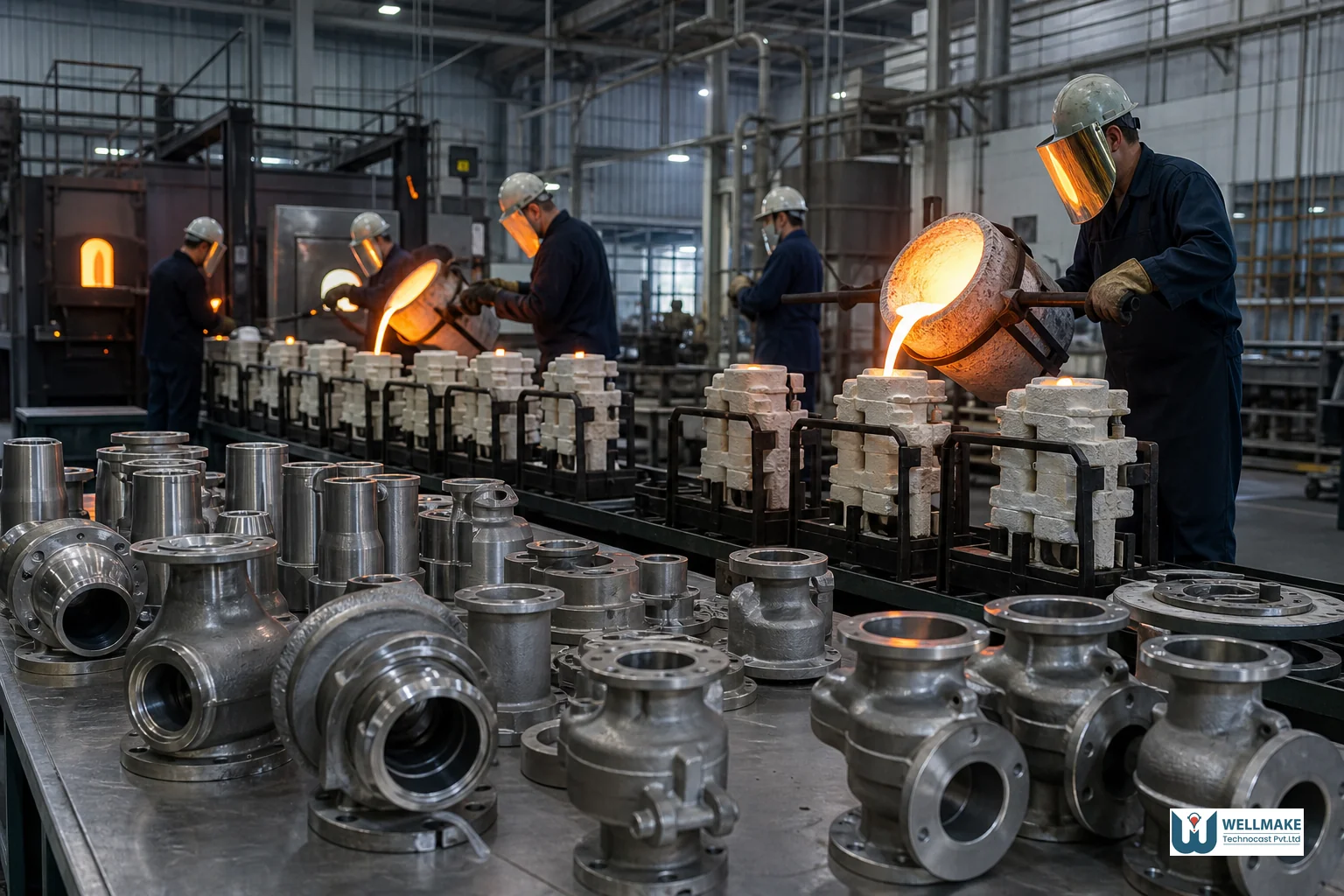
A procurement engineer at a pump manufacturer near Tampere recently ran into a wall familiar to most Finnish industrial buyers: the local foundry that used to handle her impeller castings had a nine-month backlog, and the two other regional options quoted lead times that would have delayed a critical export order. She started looking outside Finland, and outside Europe altogether. That search is what brings most buyers to this guide. Finding a reliable precision investment casting supplier Finland manufacturers can actually depend on, without inheriting new quality risks, is a real sourcing problem, not a hypothetical one.
This guide walks through exactly how to evaluate a casting partner for pump, valve, and general engineering applications common across Finland's industrial economy, including what certifications actually matter, which quality checks to demand, and why a growing number of Nordic buyers are qualifying foundries in Rajkot, Gujarat, as part of their supply chain.
Why Finnish Manufacturers Are Looking Beyond Local and European Foundries
Finland's industrial sector runs on precision components. Pump and valve manufacturers supply process industries, marine equipment builders serve the Baltic shipping trade, and mining equipment producers support operations in Lapland and the north. All of these sectors depend on castings that hold tight tolerances and perform reliably in cold, corrosive, or high-pressure conditions.
The trouble is capacity. Many Nordic and Central European foundries are running at or near full utilization, and labor and energy costs in Western Europe have pushed casting prices upward for several years running. A foundry that once turned around a pump housing order in six weeks might now quote twelve. Some smaller regional foundries have closed entirely, consolidating demand onto fewer suppliers with less flexibility on custom geometries or small-batch runs.
This is why more Finnish OEMs are qualifying suppliers in India, particularly in Rajkot, a city with one of the world's densest clusters of investment casting expertise. The shift isn't about chasing the lowest possible unit price. It's about finding a foundry with the technical capability, certifications, and export discipline to act as a genuine extension of a Finnish production line, not just a low-cost vendor three time zones away.
What Finnish OEMs Actually Need From a Casting Partner
Before comparing suppliers, it helps to be specific about requirements. Finnish pump, valve, and equipment manufacturers typically need a foundry that can deliver on four fronts at once:
- Tight dimensional tolerances on complex geometries, particularly internal passages in valve bodies and pump housings where machining access is limited.
- Corrosion-resistant alloys such as duplex and austenitic stainless steels, suited to marine environments, district heating systems, and process plants.
- Consistent metallurgical quality from batch to batch, since a single inconsistent lot can halt an assembly line.
- Dependable delivery windows that fit into lean, just-in-time-style Nordic manufacturing schedules rather than open-ended lead times.
Any supplier evaluation should be built around these four requirements rather than price alone. A foundry that is cheap but inconsistent will cost more in scrap, rework, and missed shipments than one priced fairly with proven process control.
1. Verify ISO Certifications That Matter for European Buyers
Certifications are the first filter, not the last. Finnish and broader EU procurement teams should treat ISO 9001 as a non-negotiable baseline for any casting supplier, since it confirms a documented quality management system covering everything from incoming raw material checks to final inspection.
Beyond that baseline, two other certifications matter more than buyers often realize:
- ISO 14001 (environmental management) signals that a foundry manages waste, emissions, and resource use responsibly, an increasingly important factor as Finnish companies face their own sustainability reporting obligations under EU frameworks.
- ISO 45001 (occupational health and safety) reduces the risk of labor disruptions or ethical sourcing concerns that can complicate a long-term supply relationship.
A foundry holding all three certifications, rather than just ISO 9001, is signaling a lower overall risk profile. Wellmake Technocast, for example, operates under ISO 9001, ISO 14001, and ISO 45001 simultaneously, which is uncommon among smaller regional casting shops in India and worth specifically confirming with any supplier under consideration. Ask for current certificates, not just a logo on a website, and check the issuing body and expiry date directly.
2. Check Real Quality Benchmarks, Not Just Certificates
Certification tells you a quality system exists. It doesn't tell you how the foundry actually performs. Finnish buyers evaluating a casting partner should ask for evidence of in-house testing capability, including:
- Spectrometer analysis to confirm chemical composition matches the specified alloy grade, critical for corrosion-resistant materials used in marine or process applications.
- Universal Testing Machine (UTM) results for tensile strength and yield verification.
- Hardness testing to confirm heat treatment consistency across a batch.
- Impact testing, particularly relevant for components that will operate in Finland's cold-climate conditions, where low-temperature toughness matters.
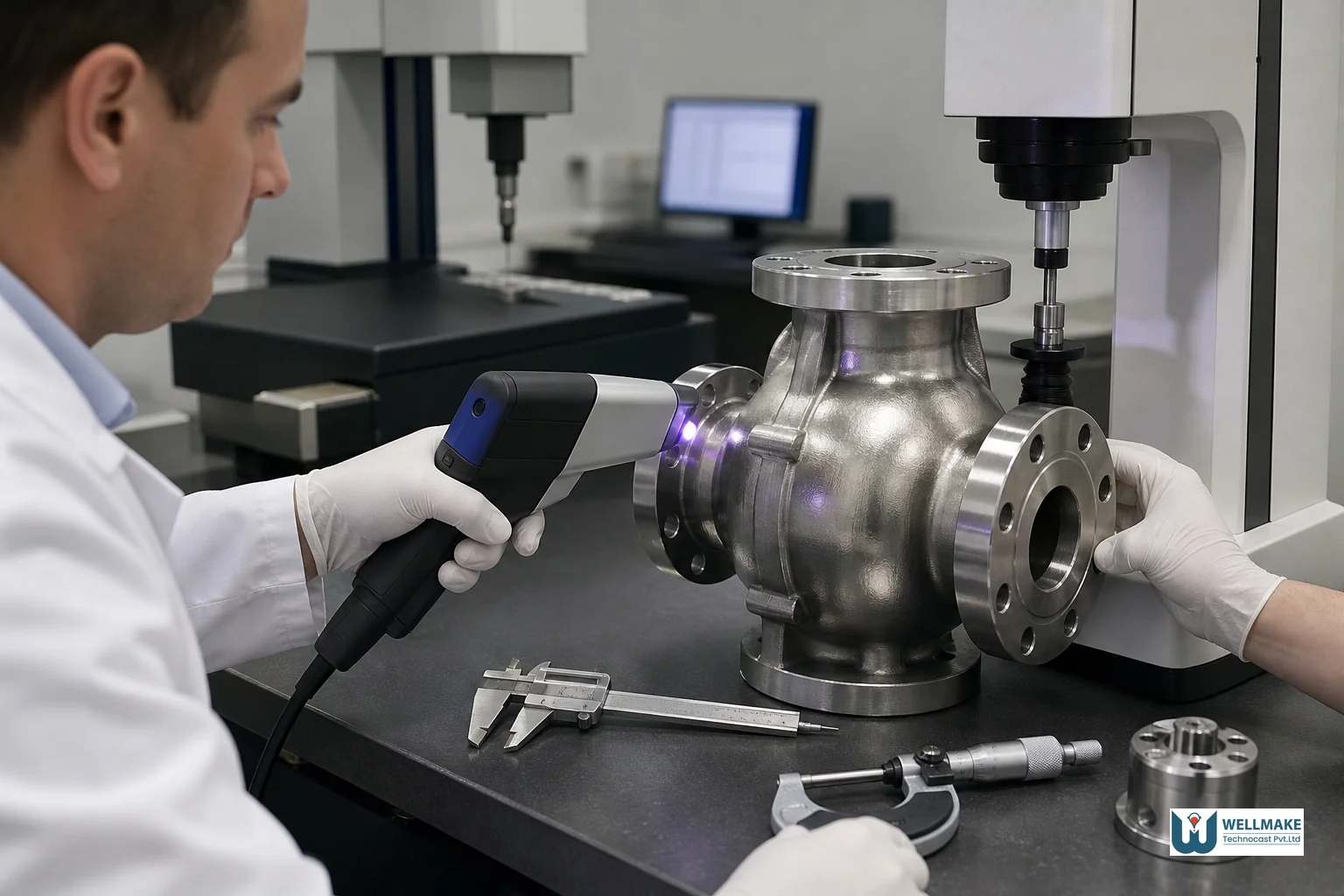
Request a full dimensional inspection report alongside material test certificates for any sample order. A supplier that can produce this documentation without hesitation is demonstrating process maturity. One that resists or delays is a warning sign worth taking seriously. For a deeper technical breakdown of what tolerance ranges and surface finishes are realistic for different component types, see our detailed look at how the investment casting process works step by step, which explains where dimensional accuracy comes from at each stage of production.
3. Look for a Single-Source Cast-and-Machined Component Supplier
One of the most common frustrations Finnish procurement teams describe is coordinating two separate vendors, one for casting and another for machining, and managing the quality and scheduling risk that sits between them. A dimensional mismatch discovered after the casting has already shipped to a second machining vendor wastes weeks and adds freight costs on top of the delay.
A foundry that offers both casting and precision machining under one roof removes that handoff entirely. Components arrive line-ready, with machined mating surfaces, threads, and bores already inspected against the drawing before they ever leave the facility. This matters most for pump and valve manufacturers, where impellers, casings, and bonnets often need finished surfaces on critical interfaces.
When evaluating a potential partner, ask directly: does the foundry perform machining in-house, or does it outsource to a third party? A true single-source supplier controls both processes under one quality system, which is a meaningfully different risk profile than a foundry that simply subcontracts machining and passes along whatever quality issues arise.
4. Match Materials and Applications to Finland's Industrial Sectors
Material selection drives everything else in a casting project, and the right alloy depends heavily on the application. Finnish industrial buyers typically source components across a fairly consistent set of material families:
- Duplex and austenitic stainless steels for marine hardware, seawater-handling pumps, and process industry valves exposed to corrosive media.
- Carbon and low-alloy steels for general engineering components, structural hardware, and railway fittings.
- Alloy and tool steels for mining equipment components used in Lapland's mineral extraction operations, where abrasion resistance is critical.
- Bronze and other non-ferrous alloys for specific pump and valve internals requiring wear resistance and lower friction.
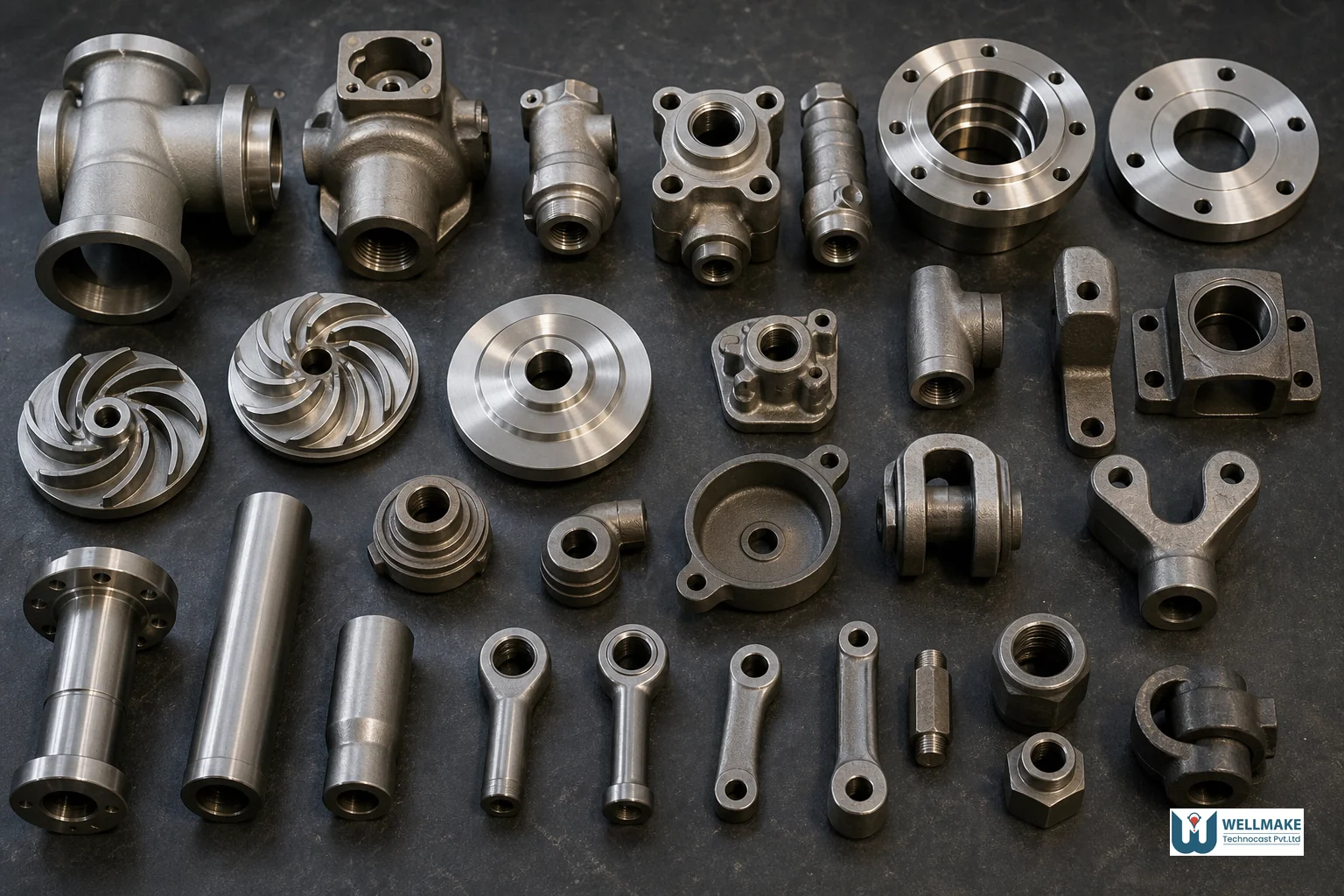
A capable foundry should be able to walk through material equivalencies between Finnish and EU standards (EN, DIN) and the material grades commonly referenced in Indian and ASTM specifications, since a mismatch in standard naming conventions is a frequent source of confusion in cross-border sourcing. If you're unsure what alloy family fits a given application, our overview of the range of metals used across ferrous and non-ferrous casting projects is a useful starting reference before a technical discussion with any supplier.
5. Compare Cost Structures: India vs Local European Foundries
Cost comparisons between Indian and Finnish or Western European foundries need to go beyond the quoted per-piece price. A few structural factors consistently separate the two:
- Tooling and pattern costs are typically lower in India, since die and pattern-making labor costs less without sacrificing precision, particularly for aluminum or wax tooling used in mid-volume runs.
- Production labor and energy costs in Gujarat's industrial belt remain considerably lower than in Finland or Germany, which shows up directly in per-kilogram casting rates.
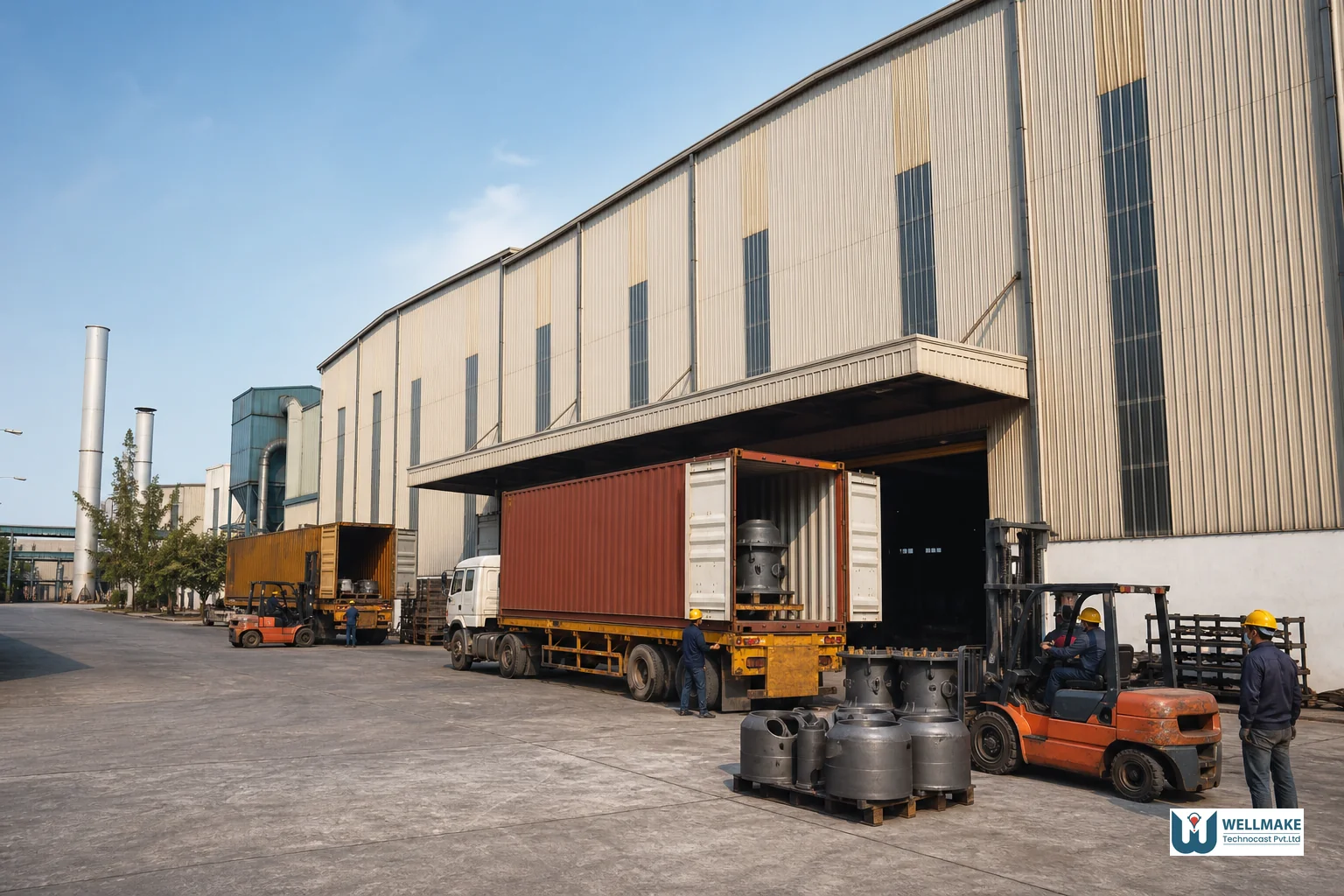
- Freight and logistics add cost and transit time that a local supplier wouldn't carry, so total landed cost, not FOB price, is the number that actually matters.
- Lead-time tradeoffs run both ways: shipping adds weeks, but a foundry with open production capacity can often still deliver faster overall than a backlogged European shop.
The right comparison is total cost of ownership across a full order cycle, not a single line-item quote. Our detailed breakdown of what actually affects investment casting cost per kilogram covers the six variables that explain why two quotes for the same component can differ by 30% or more, which is useful context before comparing bids from Finnish and Indian suppliers side by side.
6. Watch for Red Flags When Qualifying an Overseas Foundry
Not every foundry that claims export capability is ready for a serious industrial buyer. A few warning signs consistently show up when Finnish or other European buyers run into trouble sourcing overseas:
- Vague documentation: material certificates that don't specify heat number, batch traceability, or testing method are effectively worthless.
- No willingness to run a sample or pilot order before committing to a full production run.
- Unclear tolerance discussions: a foundry that agrees to any tolerance you ask for without pushback likely hasn't actually reviewed the drawing.
- Communication gaps around design changes, revision control, or shipment timing that only surface after the order is placed.
A structured qualification process, including a facility audit (in person or via video walkthrough), a sample part inspection, and a review of past export references, catches most of these issues before they become expensive problems. This topic deserves its own deep dive, and readers weighing supplier options across multiple countries may also find it useful to compare how German OEMs approach the same qualification challenge in our guide to sourcing investment casting suppliers for German buyers, since many of the qualification steps translate directly to the Finnish market.
Why Rajkot, India Foundries Offer a Competitive Edge
Rajkot has developed, over several decades, into one of the world's most concentrated hubs for investment casting expertise. The city hosts hundreds of foundries, a deep base of skilled pattern-makers and metallurgists, and a supply chain of raw materials and refractory suppliers that keeps production costs competitive without cutting corners on process control.
Wellmake Technocast operates from this base with a 70 MT monthly production capacity, handling components ranging from a few grams up to 180 kilograms, in both ferrous and non-ferrous metals. That range covers the majority of pump, valve, and general engineering parts a Finnish OEM would need, from small precision fittings to larger structural castings.
Beyond scale, sustainability has become a genuine differentiator rather than a marketing line. Wellmake's operations incorporate renewable energy use and waste recycling into daily production, which aligns with the environmental due diligence increasingly expected by Finnish and broader Nordic procurement teams under EU supply chain sustainability expectations. Combined with in-house R&D focused on process improvement and new casting techniques, the foundry positions itself less as a low-cost vendor and more as a long-term engineering partner capable of supporting design iterations, not just repeat orders of an unchanged drawing.
For Finnish manufacturers in pump and valve, oil and gas, mining, railways, and fire safety sectors, this combination of triple ISO certification, single-source casting-and-machining capability, and export-scale capacity is what separates a dependable precision investment casting supplier Finland buyers can build a multi-year relationship with, from a foundry that only looks good on a first quote.
Frequently Asked Questions
What certifications should a Finnish buyer require from an Indian casting supplier?
At minimum, confirm current ISO 9001 certification for quality management. For sectors with environmental or safety compliance obligations, such as railways, defence, or mining, also request ISO 14001 and ISO 45001. Ask for the actual certificate documents and verify the issuing registrar and expiry date rather than relying on a website badge.
Can Indian foundries meet EN and DIN standards used in Finland?
Yes, provided the foundry has direct experience with European specifications. A qualified supplier should be able to map EN and DIN material grades to equivalent ASTM or IS standards and confirm chemical composition and mechanical property ranges through spectrometer and UTM testing before shipment.
What is the typical lead time for casting orders shipped to Finland?
Lead times vary by component complexity, tooling requirements, and order volume, but production plus sea freight to Northern European ports typically runs several weeks longer than a domestic Finnish order. Air freight can shorten this for urgent orders, though at a higher logistics cost. Discuss specific timelines directly with your supplier based on the component and quantity involved.
What component sizes can be cast for pump and valve applications?
Investment casting foundries with broad capacity ranges, such as those handling parts from a few grams up to 180 kilograms, can cover most pump housings, valve bodies, impellers, and bonnets used in Finnish industrial and marine applications. Confirm your foundry's specific size and weight range against your component drawings before finalizing a sourcing decision.
What red flags suggest an overseas foundry isn't ready for export orders?
Reluctance to provide material test certificates with batch traceability, resistance to running a sample order first, and vague answers about tolerance capability are the clearest warning signs. A foundry confident in its process will welcome a structured qualification review rather than avoid it.
Building a Reliable Casting Supply Chain for Finland's Industrial Sector
Sourcing precision castings from outside Finland doesn't have to mean accepting more risk. It means applying a more rigorous qualification process: verified ISO certifications, documented quality benchmarks, single-source casting-and-machining capability, and material expertise matched to your specific application. Foundries in Rajkot, India, including Wellmake Technocast, have built the infrastructure and export track record to meet these requirements for Finnish pump, valve, mining, and general engineering manufacturers looking for a dependable alternative to constrained local capacity.
If your team is evaluating suppliers for an upcoming project, start by reviewing the specific component types and materials Wellmake Technocast produces by exploring the full range of investment cast products available across ferrous and non-ferrous metals. From there, the most effective next step is a direct technical conversation. Get in touch with the Wellmake Technocast engineering team to discuss your drawings, tolerance requirements, and material specifications, or contact us today to request a sample order and see the quality benchmarks firsthand before committing to a full production run.