
India vs Local Foundry: Best Castings for Germany?
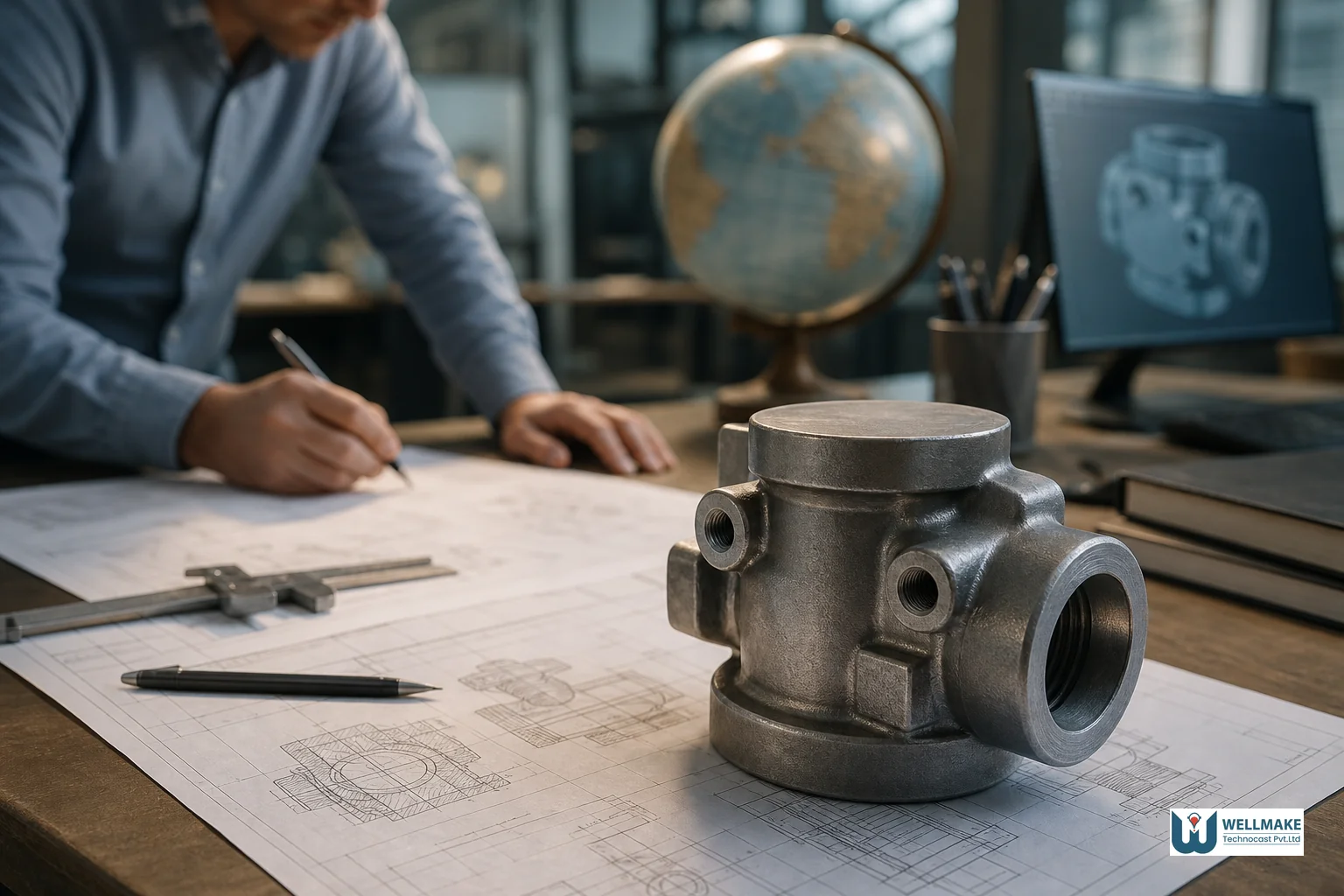
A procurement engineer at a mid-sized pump manufacturer near Stuttgart recently pulled up two quotes for the same duplex stainless steel valve body. One came from a regional foundry that had supplied the company for over a decade. The other came from an ISO-certified investment casting foundry in Rajkot, India. The line-item cost per piece was lower on the Indian quote, as expected. What surprised her was that the total landed cost, freight, duties, and all, still came in below the domestic quote once she factored in the regional foundry's new energy surcharge.
That scenario is playing out across German industry right now. Rising energy prices, shrinking domestic foundry capacity, and longer backlogs at regional casting shops have pushed procurement teams to look outward. But switching suppliers isn't just about chasing a lower number on a quote sheet. It means understanding investment casting vs local foundry Germany cost at every stage: raw material, conversion, tooling, freight, customs, and the quality assurance that keeps a supply chain from breaking down six months into a contract.
This comparison walks through what German OEMs and engineering firms actually weigh when deciding between a domestic foundry and an overseas supplier like Wellmake Technocast, and where the real savings and real risks sit.
What German OEMs Are Really Comparing When They Weigh Casting Sources
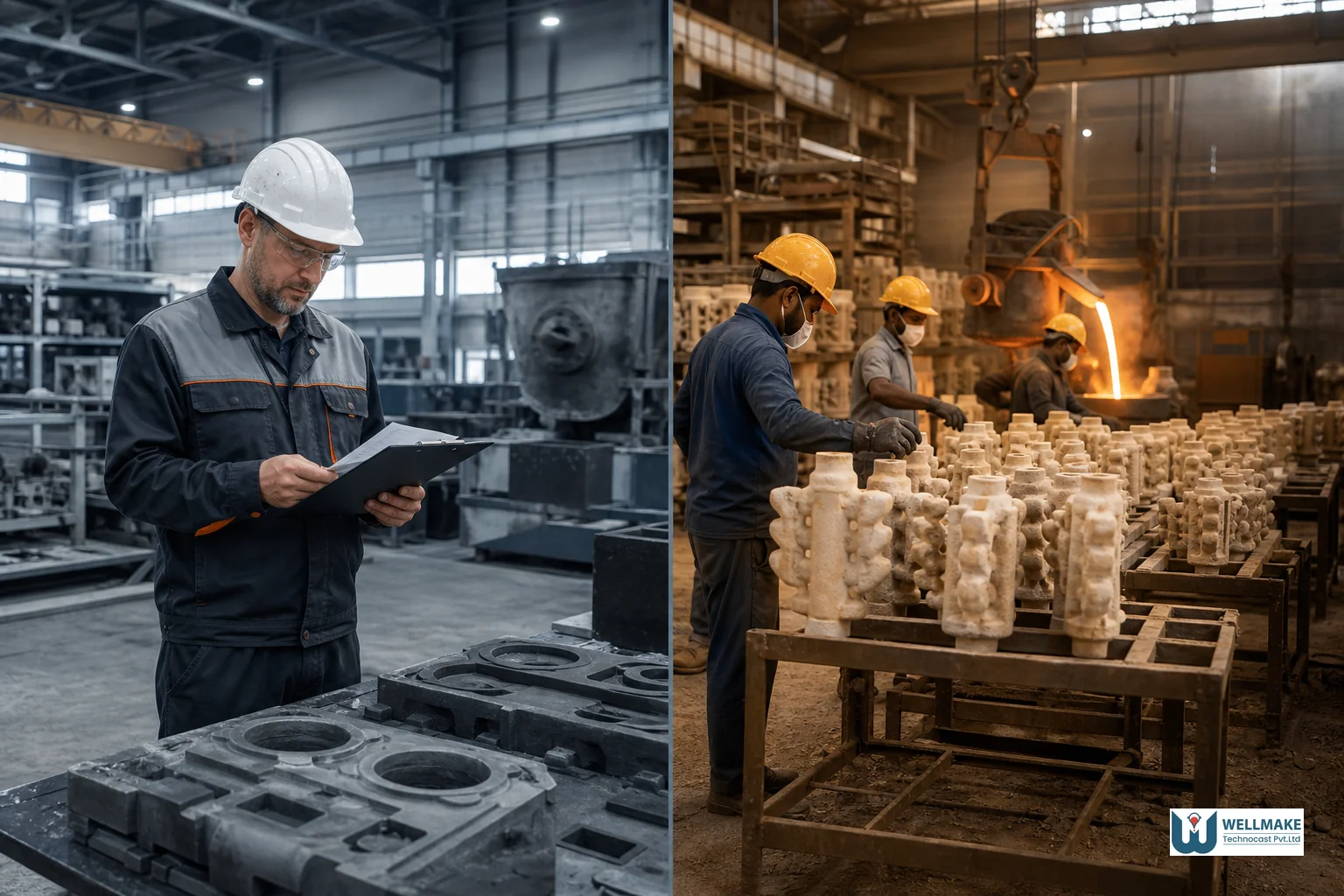
Germany still has one of Europe's strongest metal casting industries, but it's under real pressure. Energy-intensive foundry operations have absorbed some of the sharpest cost increases of any manufacturing subsector since 2022, and several smaller casting houses have consolidated, closed, or scaled back shifts. That has tightened capacity for niche runs, especially for complex investment castings in duplex stainless, nickel alloys, and specialty steels used in pump, valve, and oil & gas applications.
When a German buyer compares a domestic quote against an overseas one, price per kilogram is only the starting point. The decision usually comes down to five factors:
- Total landed cost — unit price plus freight, insurance, duties, and any rework or expediting fees
- Lead time reliability — not just the quoted number, but the supplier's actual on-time delivery record
- Certification and traceability, ISO 9001 quality management, material test certificates, and compliance with EN standards
- Minimum order quantity flexibility, whether the foundry can support prototype runs and mid-volume production without punishing pricing
- Communication and technical support, how easily engineering questions get answered across time zones
The rest of this comparison breaks each of these down, because a foundry that wins on price but loses on delivery reliability isn't actually cheaper once a production line sits idle waiting on a shipment.
Investment Casting vs Local Foundry Germany Cost: The Real Numbers
German foundry pricing reflects the country's labor and energy structure. Skilled foundry labor in Germany is among the highest paid in the casting industry globally, and natural gas and electricity costs for melting and shell-firing operations have remained elevated compared to pre-2022 levels. Those costs get built directly into the conversion cost, the price a foundry charges to turn raw metal into a finished shape, separate from the metal itself.
Indian foundries, including those based in Rajkot's dense casting cluster, operate with a different cost structure. Labor costs are meaningfully lower, and many foundries, including Wellmake Technocast, have invested in renewable energy and waste recycling to control utility costs further. That difference shows up directly in the quoted price per kilogram, often enough to offset international freight, customs duties, and a few weeks of extra transit time.
Here's where the math gets specific. On a typical stainless steel valve body or pump housing casting, German domestic conversion costs commonly run well above Indian conversion costs for the same alloy and geometry. Freight from an Indian port to a German industrial hub by sea typically adds a modest per-kilogram cost, and import duties within the EU's common external tariff framework add another layer. Even after stacking those costs, many German buyers still land on a lower total cost per part when sourcing from a qualified Indian foundry, particularly on production volumes above a few hundred pieces where sea freight economics improve.
Where the equation shifts is on very small, urgent runs. A 50-piece emergency order needed within three weeks favors a domestic German foundry every time, because air freight and expedited customs erode the unit cost advantage. This is why most experienced buyers split their sourcing: overseas for planned production volumes, domestic or regional for urgent, low-quantity needs.
Side-by-Side: Germany vs India Investment Casting Comparison
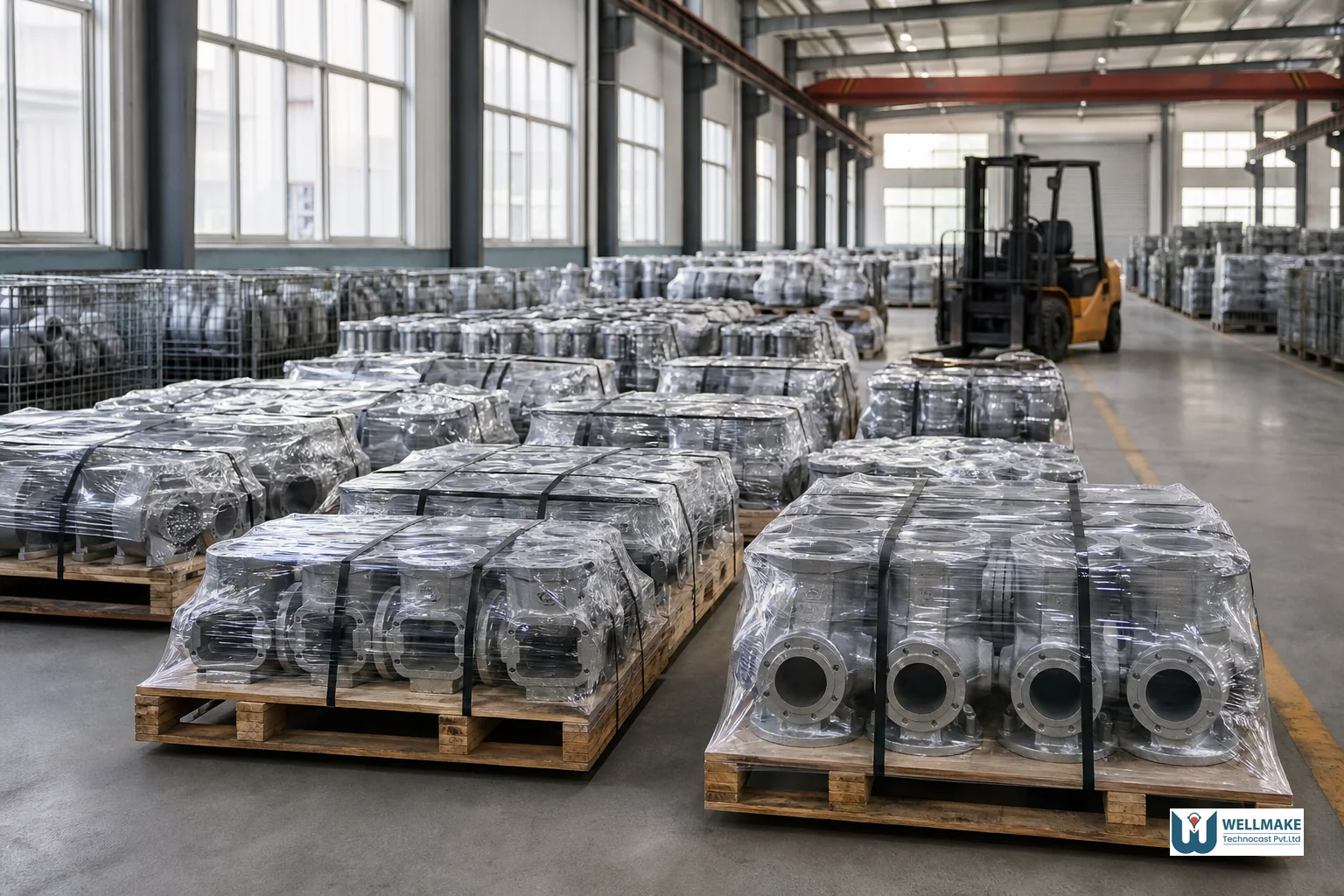
The table below summarizes how the two sourcing options typically compare across the factors that matter most to German procurement and engineering teams. Figures represent general industry patterns rather than a specific quote, and actual numbers vary by alloy, geometry, and order volume.
| Factor | Local German Foundry | Rajkot-Based Foundry (India) |
|---|---|---|
| Typical conversion cost | Higher, driven by labor and energy costs | Lower, offset partially by freight and duties |
| Standard lead time | Often 10-20 weeks amid current backlogs | Typically 8-14 weeks including sea freight |
| Minimum order quantity | Frequently high due to limited small-batch capacity | Often more flexible, including prototype and low-volume runs |
| Tooling cost ownership | Included but amortized over fewer parts | Often lower absolute tooling cost, amortized over agreed volumes |
| Certification availability | ISO 9001 common; local EN compliance well understood | ISO 9001, ISO 14001, ISO 45001 available at established exporters |
| Freight and customs complexity | None (domestic delivery) | Requires Incoterms planning, customs clearance, sea or air freight |
| Best fit for | Urgent, low-volume, rapid-turnaround orders | Planned production volumes, cost-sensitive programs, multi-year contracts |
Notice that neither column wins across every row. That's the real story behind investment casting vs local foundry Germany cost comparisons: the right answer depends on order volume, urgency, and how much buffer stock a buyer is willing to hold. Many German OEMs now run a dual-sourcing model, similar to the approach used by oil and gas buyers in France comparing casting against forging, where cost and lead time pressures pushed a shift toward alternative suppliers.
Lead Times and Delivery Reliability: Where Backlogs Actually Hurt
Lead time is where German buyers report the most frustration right now. Domestic foundry consolidation means fewer shops are absorbing the same order volume, and several regional casting houses have quoted lead times stretching past four months for specialty alloys. A single missed delivery window can idle an assembly line or delay a customer shipment, and that cost rarely shows up on the original quote.
Wellmake Technocast operates a 70 MT monthly production capacity across ferrous and non-ferrous metals, which gives German buyers planning visibility that's harder to get from a smaller regional shop running at or near capacity. Components ranging from a few grams up to 180 kilograms can move through the same eight-step ceramic shell process, which means a buyer consolidating multiple part numbers with one supplier doesn't need to juggle separate vendors for small and large components.
That said, overseas lead times still include sea freight transit, typically several weeks depending on the destination port, plus customs clearance. The way to manage this isn't to assume every order will move perfectly on schedule. It's to build in:
- A buffer stock policy for critical, high-usage part numbers
- Staggered shipment schedules that split large orders into partial deliveries
- Clear Incoterms (commonly FOB or CIF) agreed upfront so there's no ambiguity about who owns freight risk
- A realistic first-order timeline that includes sample approval before full production release
Buyers who treat the first overseas order as a qualification run, not a full production commitment, tend to have far fewer surprises. For more detail on how casting lead times actually break down stage by stage, see how the investment casting process moves from wax pattern to finished part.
Quality Standards and Certifications: What to Verify Before You Commit
Cost and lead time matter, but German engineering teams are trained to ask about certifications first for good reason. A casting that fails in the field costs far more than the unit price ever suggested. Before approving any overseas supplier, procurement and quality teams should verify:
- ISO 9001 certification for quality management systems, confirming the foundry has documented, auditable process controls
- ISO 14001 for environmental management, increasingly relevant for German and broader EU buyers under growing sustainability reporting expectations
- ISO 45001 for occupational health and safety management, which speaks to workforce stability and consistent output quality
- Material test certificates (typically EN 10204 3.1 or equivalent) confirming chemical composition and mechanical properties match the specified alloy grade
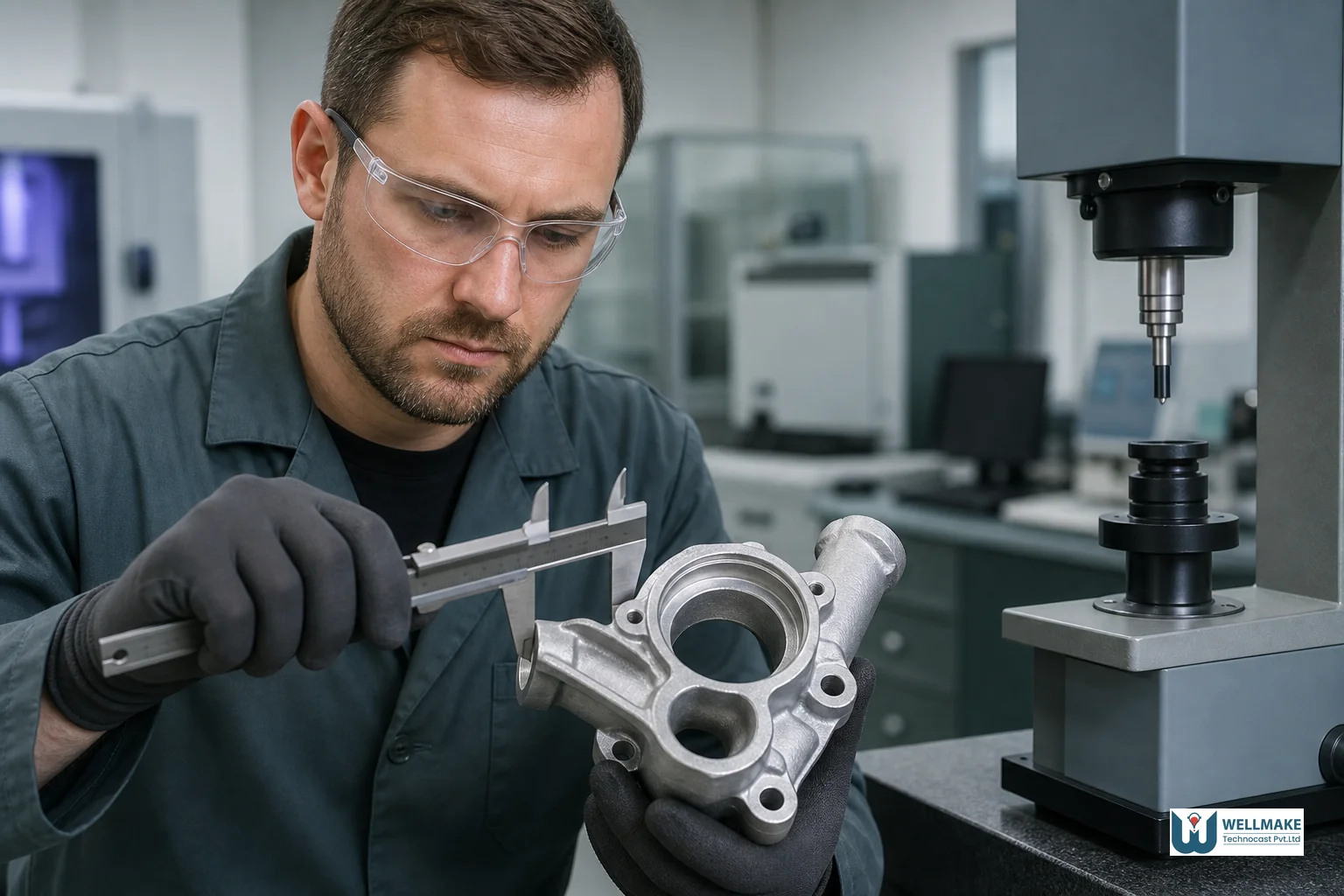
- In-house testing capability, including spectrometer analysis for chemical composition, universal testing machines (UTM) for tensile strength, hardness testing, and impact testing for toughness verification
Wellmake Technocast holds all three ISO certifications, ISO 9001, ISO 14001, and ISO 45001, and maintains in-house spectrometer, UTM, hardness, and impact testing equipment rather than outsourcing quality verification to third-party labs for every batch. That combination matters to German buyers who need traceable documentation for every heat and lot, not just a general assurance that "quality is good."
One nuance worth flagging: German and EU material specifications are often written to EN standards, while many Indian foundries quote to ASTM equivalents. The two standards frequently align closely on chemical composition and mechanical properties, but it's the buyer's responsibility to confirm exact cross-references before finalizing a purchase order, not assume equivalence. This is exactly the kind of detail covered in how to evaluate casting quality from an overseas foundry and in a broader supplier qualification process before placing a first order.
Is Investment Casting the Right Process for Your German Application?
Before comparing suppliers, it's worth confirming that investment casting is even the right process for the part in question. Investment casting excels at complex geometries, thin walls, and near-net-shape parts that would otherwise require extensive machining from bar stock or heavy tooling investment for forging. Pump housings, valve bodies, impellers, and manifold components with internal passages or curved features are classic use cases where investment casting outperforms both machining and forging on total cost and design freedom.
Wellmake Technocast produces both ferrous alloys, including carbon steel, stainless steel, and duplex stainless, and non-ferrous alloys, across sectors including automotive, pump and valve, oil and gas, fire safety, and railways and defence. For a German OEM weighing whether casting or machining makes more sense for a specific part, the investment casting versus machining cost comparison breaks down where each process wins by geometry and volume. Buyers evaluating forging as an alternative for oil and gas components can find a similar breakdown in the comparison of casting against forging approaches used elsewhere in Europe.
The right process decision comes before the right supplier decision. A part that's a poor fit for investment casting won't perform better just because it comes from a cheaper foundry.
Supply Chain Risk: Managing an Overseas Sourcing Relationship
Cost and quality aside, the practical mechanics of managing an overseas supplier relationship deserve honest attention. Freight costs fluctuate with fuel prices and container availability. Currency exposure between the euro and the Indian rupee can shift landed cost over the life of a multi-year contract. Time zone differences mean engineering questions don't get same-hour answers the way they might with a domestic supplier down the road. None of these are reasons to avoid overseas sourcing. They're reasons to plan for it deliberately.
Practical steps that reduce supply chain risk include:
- Start with a sample order before committing to full production volumes, and inspect it against your own drawings and material specs rather than relying solely on the supplier's certificate
- Agree on clear Incoterms so there's no confusion about who arranges and pays for freight, insurance, and customs clearance
- Request a factory audit or virtual facility tour to confirm production capacity claims match what you see on the floor
- Set a communication cadence, weekly or biweekly status updates during the first few orders, so issues surface early rather than at delivery
- Scale order volume gradually, moving from sample to pilot batch to full production release as confidence builds
These steps mirror the guidance in red flags to avoid when sourcing from a foundry and how to choose the right investment casting foundry, both worth reviewing before signing a first purchase order with any new overseas partner.
Why Rajkot-Based Foundries Like Wellmake Technocast Fit the German OEM Profile
Rajkot, in Gujarat, is one of India's most established investment casting clusters, with decades of accumulated expertise in ferrous and non-ferrous precision casting. Wellmake Technocast, founded in 2005, operates from this base with a production capacity of 70 metric tons per month and the ability to cast components ranging from a few grams to 180 kilograms, covering both small precision parts and larger structural components in the same facility. For a German procurement team evaluating whether an Indian supplier can meet the compliance bar expected in EU industrial supply chains, the combination that matters most is triple ISO certification (9001, 14001, 45001), documented in-house testing capability, and export experience across automotive, aerospace, pump and valve, oil and gas, mining, railways and defence, and fire safety sectors. That breadth means the foundry has already navigated the documentation, traceability, and material certification requirements that regulated European industries expect, rather than treating export compliance as a new learning curve.
Sustainability is increasingly part of the conversation too. German and broader EU buyers face growing internal and regulatory pressure to document supply chain environmental impact. A foundry running on renewable energy inputs and active waste recycling programs, alongside ISO 14001 environmental management certification, gives procurement teams a stronger answer when sustainability reporting questions come up during customer or regulatory audits.
None of this replaces the need for due diligence on any specific order. But it does mean German OEMs comparing investment casting supplier Germany options against an Indian alternative aren't choosing between "certified" and "uncertified." They're choosing between two certified paths with different cost structures, lead time profiles, and logistics considerations. Buyers researching options closer to home can also review the dedicated guide to investment casting suppliers within Germany for a fuller picture of the domestic landscape before deciding how to split sourcing.
Frequently Asked Questions
Is investment casting from India actually cheaper than a German local foundry?
On planned production volumes, many German buyers find total landed cost, including freight and duties, lower when sourcing from an established Indian foundry, largely due to lower conversion costs. For small, urgent runs, a domestic German foundry often remains more cost-effective once expedited freight is factored in. Ask any prospective supplier for a full landed cost quote rather than comparing unit prices alone.
How long does shipping take from a Rajkot foundry to Germany?
Sea freight transit time from Indian ports to major European hubs typically runs several weeks, on top of production lead time. Combined production-to-delivery timelines commonly land in the range discussed in our guide on how investment casting production timelines break down. Air freight is available for urgent orders at a higher cost.
What certifications should a German buyer require from an overseas casting supplier?
At minimum, confirm ISO 9001 for quality management. Many buyers also look for ISO 14001 (environmental) and ISO 45001 (occupational health and safety), plus material test certificates aligned with EN standards or a documented cross-reference to the ASTM equivalent used in the quote.
Can Indian foundries meet EN material standards used in German engineering specs?
Reputable exporters can typically supply material chemistry and mechanical properties that align closely with EN equivalents, but this should be confirmed part by part rather than assumed. Request a detailed material data sheet and, where possible, a sample test report before finalizing a purchase order.
What's the minimum order quantity for an Indian investment casting foundry?
This varies by part complexity and tooling requirements. Many foundries can support smaller prototype and pilot batch runs than a comparable domestic German shop, though per-unit pricing typically improves at higher volumes. It's worth reviewing how order size affects unit economics before finalizing a quantity commitment.
Choosing between a German local foundry and an overseas supplier isn't a one-time decision; it's an ongoing sourcing strategy that should evolve with your production volumes, urgency, and risk tolerance. If your team is evaluating whether an ISO-certified, export-experienced foundry in Rajkot can support your next casting program, explore Wellmake Technocast's product range across pump and valve, automotive, oil and gas, and railways and defence components. For a specific part drawing or material spec, get in touch with our engineering team to discuss feasibility, lead times, and a sample quote. Whether you're testing a first overseas order or rebalancing a multi-supplier strategy, contact us today to start with a conversation, not a commitment.