
Investment Casting for Aerospace Parts: Canada Guide
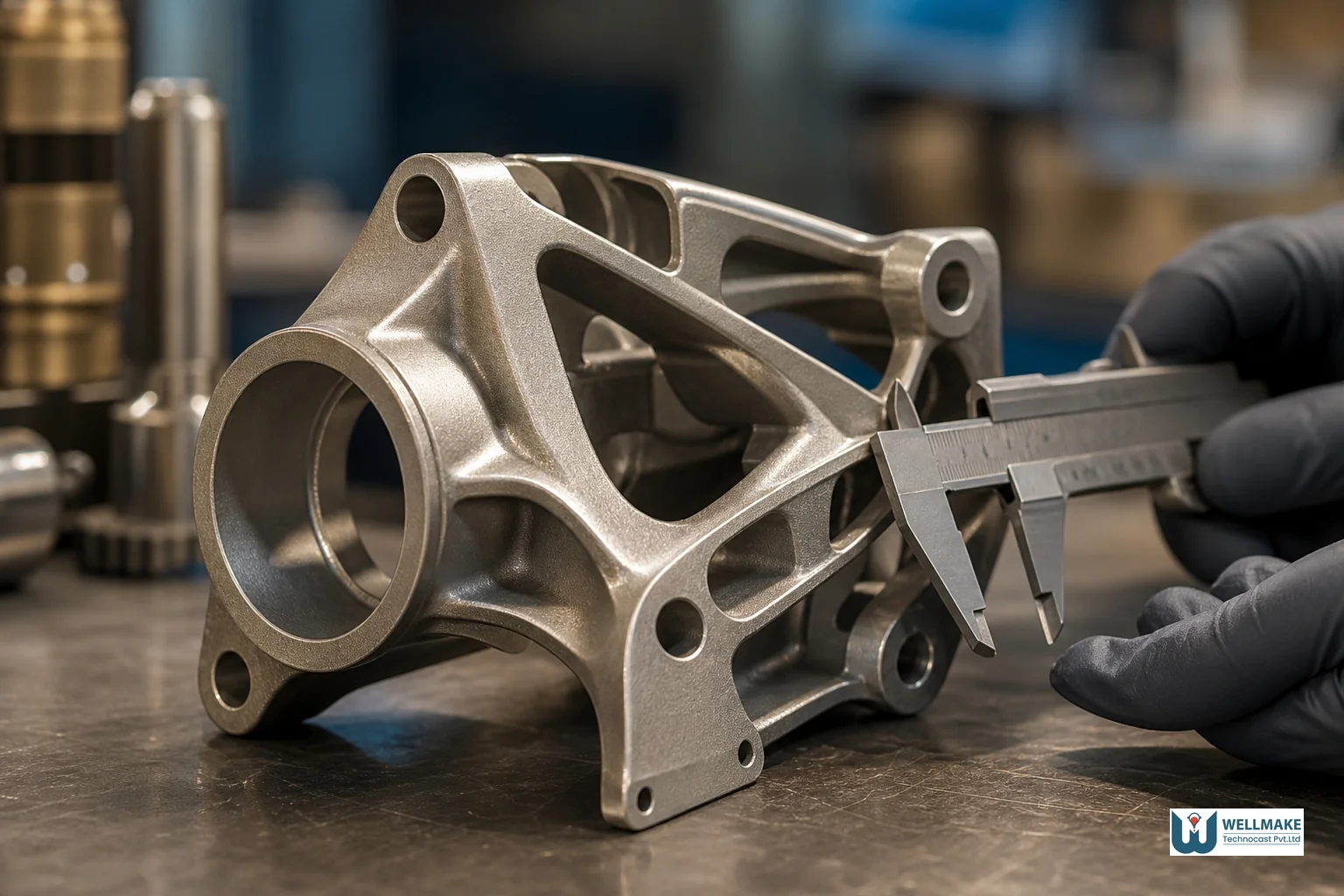
A sourcing engineer at a Montreal-area landing gear subcontractor recently pulled up her supplier scorecard and found a gap she couldn't ignore. Her domestic foundry, one of only a handful in Canada still casting flight-critical brackets, had quoted a 34-week lead time for a redesigned titanium fitting. The part needed to reach her assembly line for a program milestone in five months. That gap between what the supply chain could deliver and what the aircraft program required is becoming a familiar story across Canada's aerospace manufacturing base, and it's pushing more OEMs to look at investment casting for aerospace components in Canada sourced from qualified overseas foundries.
Canada's aerospace sector, anchored by companies like Bombardier, De Havilland Canada, CAE, and a dense tier of Quebec and Ontario subcontractors, depends on a steady stream of precision-cast metal parts: brackets, manifolds, housings, and structural fittings that must meet exacting weight, strength, and dimensional requirements. Domestic casting capacity hasn't kept pace with that demand, and many Canadian buyers are now qualifying foundries outside North America to fill the gap without compromising on quality or documentation. This guide walks through what the investment casting process actually delivers for aerospace-grade parts, which materials and certifications matter, and what a Canadian OEM should expect when working with an established Indian foundry.
1. Understand What Investment Casting Actually Delivers for Aerospace Parts
Investment casting, also called lost-wax casting, starts with a wax replica of the final part. That wax pattern gets dipped repeatedly in ceramic slurry to build a hard shell, the wax is melted out, and molten metal fills the resulting cavity. The result is a near-net-shape metal component that mirrors the wax pattern's geometry almost exactly, including internal passages, thin walls, and organic curves that would be difficult or impossible to machine from solid stock.
For aerospace buyers, that geometric freedom solves a real engineering problem. A bracket with an internal cooling channel, a manifold with multiple intersecting bores, or a housing with variable wall thickness can be cast in one piece rather than fabricated from several machined and welded sub-components. Fewer joints mean fewer failure points, and fewer machining operations mean less scrap and shorter cycle times downstream. Investment casting for aerospace components in Canada buyers is increasingly attractive precisely because it collapses several manufacturing steps into one process.
Aerospace-grade castings also demand tighter process control than most industrial applications. Ceramic shell thickness, pour temperature, and cooling rate all affect grain structure and mechanical properties, so a foundry working on flight-critical parts needs documented process parameters for every alloy and part family it runs. If you want the full mechanical breakdown of each stage, from wax injection through shell building, dewaxing, and pouring, see our detailed walkthrough on how investment casting works step by step.
2. Choose the Right Alloy for Your Aerospace Application
Material selection drives almost everything else in an aerospace casting program, from mechanical performance to machinability to cost. Aerospace buyers typically fall into one of two material families, and the right choice depends on where the part sits on the aircraft.
Ferrous Alloys for Structural and Airframe Parts
- Stainless steels (17-4PH, CA6NM, CA15): Common for brackets, fittings, and structural hardware where corrosion resistance and moderate strength are needed.
- Investment cast carbon and low-alloy steels: Used for non-flight-critical structural components and ground support equipment where weight is less of a constraint.
Non-Ferrous Alloys for Weight-Sensitive and High-Temperature Parts
- Aluminum alloys: Lightweight housings, brackets, and covers where weight savings matter more than extreme temperature resistance.
- Nickel-based superalloys (Inconel 625, Inconel 718): Reserved for parts exposed to high heat and cyclic stress, such as components near engine exhaust paths or auxiliary power units.
- Titanium alloys: Considered for the highest weight-to-strength requirements, though titanium casting requires specialized vacuum melting capability that not every foundry offers.
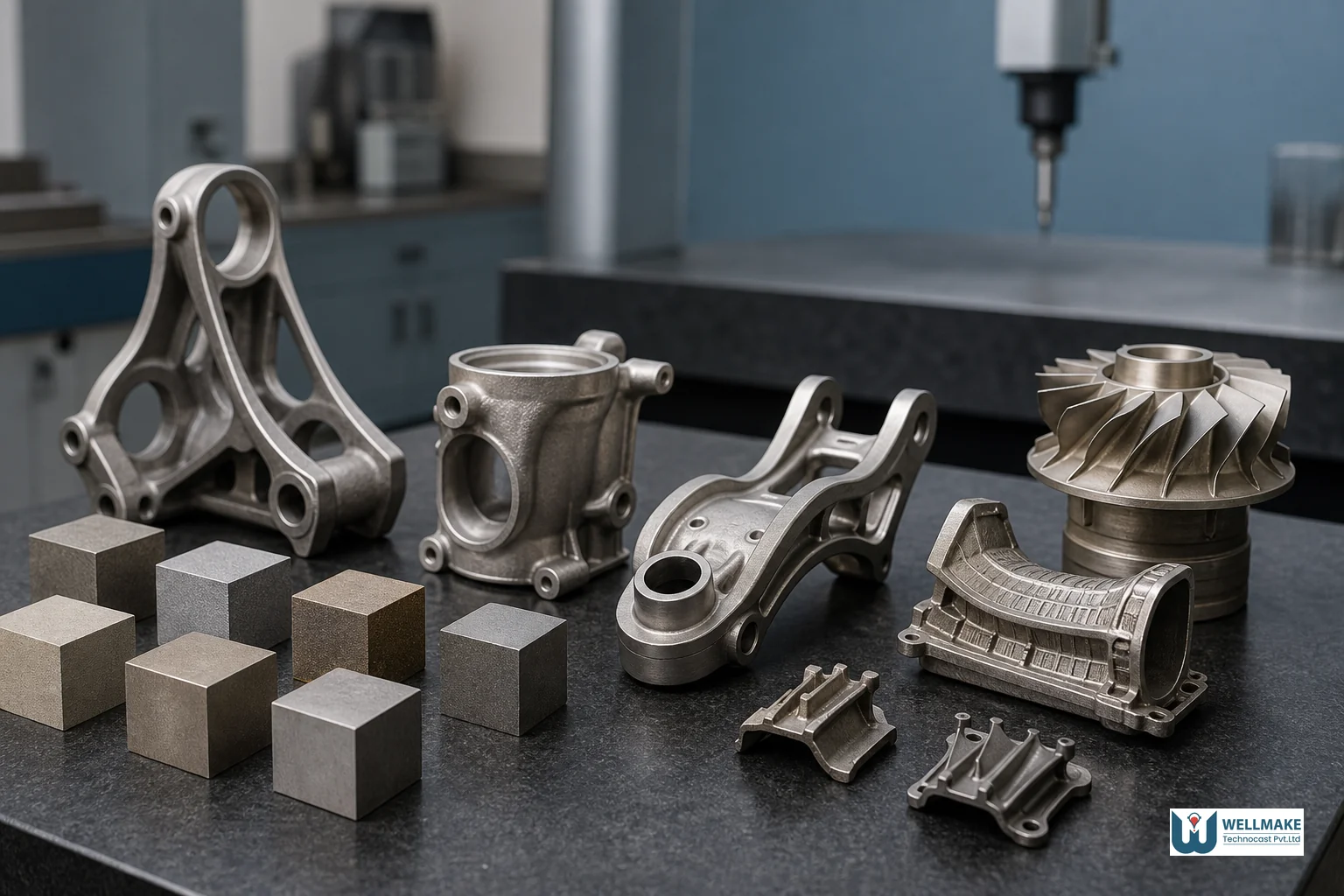
A capable foundry should be able to walk you through trade-offs between these families rather than defaulting to whatever alloy is easiest to pour. For a broader reference on alloy families and where each performs best, our guide on what materials are used in investment casting covers ferrous and non-ferrous options across multiple industries, including the aerospace-adjacent pump and valve sector.
3. Verify Certifications That Actually Matter for Aerospace Sourcing
Certifications are the first filter any Canadian OEM should apply when qualifying a new casting supplier, and aerospace buyers should look for more than a single ISO 9001 stamp on a website. Three certifications form a baseline for serious industrial suppliers:
- ISO 9001 (Quality Management): Confirms the foundry runs a documented, auditable quality management system with traceability from raw material to finished part.
- ISO 14001 (Environmental Management): Signals responsible handling of the waste streams, water use, and emissions that come with metal melting and ceramic shell production.
- ISO 45001 (Occupational Health and Safety): Reflects a formal safety management system, which correlates strongly with process discipline on the shop floor.
Beyond these three, Canadian aerospace buyers should also ask any prospective foundry directly about its experience with AS9100-aligned quality practices and NADCAP-style process controls, since these frameworks build on ISO 9001 with aerospace-specific traceability, first article inspection, and special process requirements. A foundry that already runs triple ISO certification (9001, 14001, 45001) and has documented experience supplying aerospace-adjacent sectors, such as oil and gas, defence, or railways, is generally better positioned to adapt its systems to aerospace-specific documentation requests than one that has never worked outside general industrial castings.
Wellmake Technocast holds ISO 9001, ISO 14001, and ISO 45001 certifications and has supplied precision cast components into defence, railways, and other high-reliability sectors where documentation and traceability expectations run close to aerospace standards. If you're building a supplier qualification checklist, our post on red flags to avoid when sourcing from a foundry outlines the warning signs that separate a properly audited foundry from one that only claims to be.
4. Confirm Tolerances, Surface Finish, and Testing Standards
Aerospace drawings rarely leave room for interpretation, and tolerance capability is where many casting suppliers quietly fall short. Investment casting typically achieves dimensional tolerances in the CT4 to CT6 range under ISO 8062, tighter than sand casting and comparable to many machined features straight off the shell. Surface finish on as-cast parts commonly lands between 1.6 and 3.2 micrometers Ra, smooth enough that many non-critical surfaces need no secondary finishing at all.
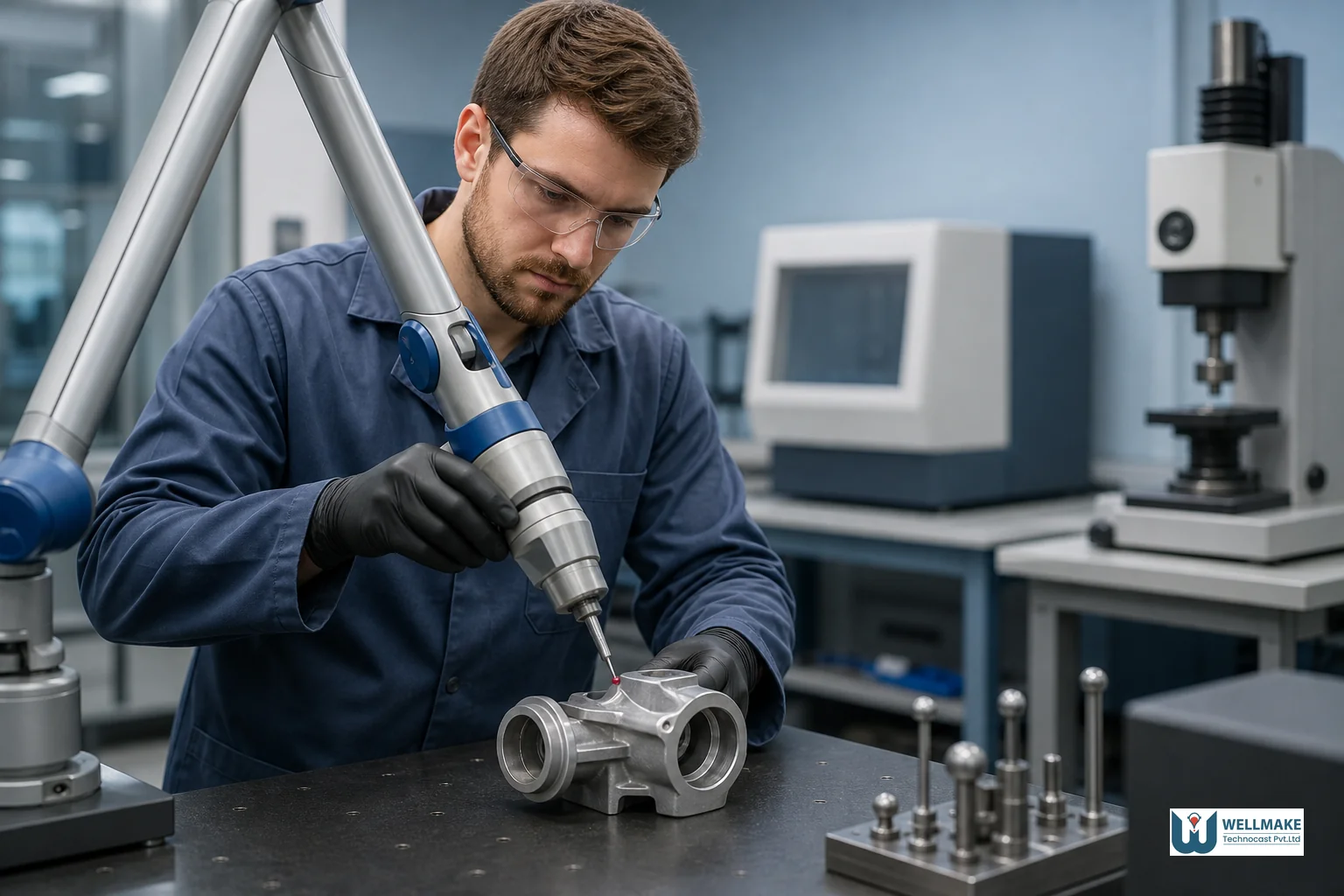
What matters more than the published tolerance range is what the foundry can actually verify in-house. Ask any prospective supplier what testing equipment sits on their own floor, not at a subcontracted lab three weeks away. At minimum, you want direct access to:
- Spectrometer analysis to confirm chemical composition matches the specified alloy grade, batch by batch.
- Universal Testing Machine (UTM) data for tensile strength and elongation verification.
- Hardness testing to confirm heat treatment achieved the specified condition.
- Impact testing for parts subject to shock loading or low-temperature service.
For flight-critical parts, expect to specify radiographic inspection or other non-destructive testing on a sampling basis, and confirm the foundry can either perform this in-house or coordinate it through a qualified third party without adding months to your timeline. Our detailed reference on what affects investment casting cost per kg also touches on how testing and inspection intensity change the economics of a program, which is worth reviewing before you finalize a testing plan with any supplier.
5. Plan for Line-Ready Machined Components, Not Just Raw Castings
Most Canadian aerospace buyers don't actually need a raw casting. They need a part that bolts, seats, or seals correctly the moment it arrives on the assembly line. That means someone has to machine critical faces, bore holes to final dimension, tap threads, and finish surfaces to print. If your casting supplier only pours metal and ships it, you're left managing a second vendor relationship for machining, along with the freight, scheduling, and quality handoffs that come with it.
A single-source supplier that casts and machines under one roof removes an entire layer of coordination risk. It also shortens the feedback loop when a dimensional issue shows up, because the same team that poured the part controls the fixturing and cutting parameters used to finish it. Wellmake Technocast produces both un-machined and fully machined, line-ready components, handling components ranging from a few grams up to 180 kilograms within its 70 MT monthly capacity, so Canadian buyers can specify a finished print-ready part rather than managing two separate supply chains for the same component.
This distinction matters even more for programs with tight assembly windows, where a part that needs rework after arrival can stall an entire production cell. If you're weighing whether casting plus in-house machining beats a machining-only approach for your part geometry, our comparison on investment casting versus machining costs breaks down where each method wins on total landed cost.
6. Set Realistic Lead Time and Logistics Expectations When Sourcing from India
Lead time is usually the first question a Canadian buyer asks, and it deserves an honest answer rather than a marketing number. Tooling development, meaning the design and machining of the metal die used to injection-mold wax patterns, typically takes several weeks depending on part complexity. Once tooling is approved, production lead times for aerospace-grade castings depend on batch size, alloy, and how much testing and machining the order requires. Build in time for:
- First article sample approval: A round-trip sample shipment and sign-off cycle before full production begins.
- Production and testing: Casting, heat treatment, machining, and quality documentation for the batch.
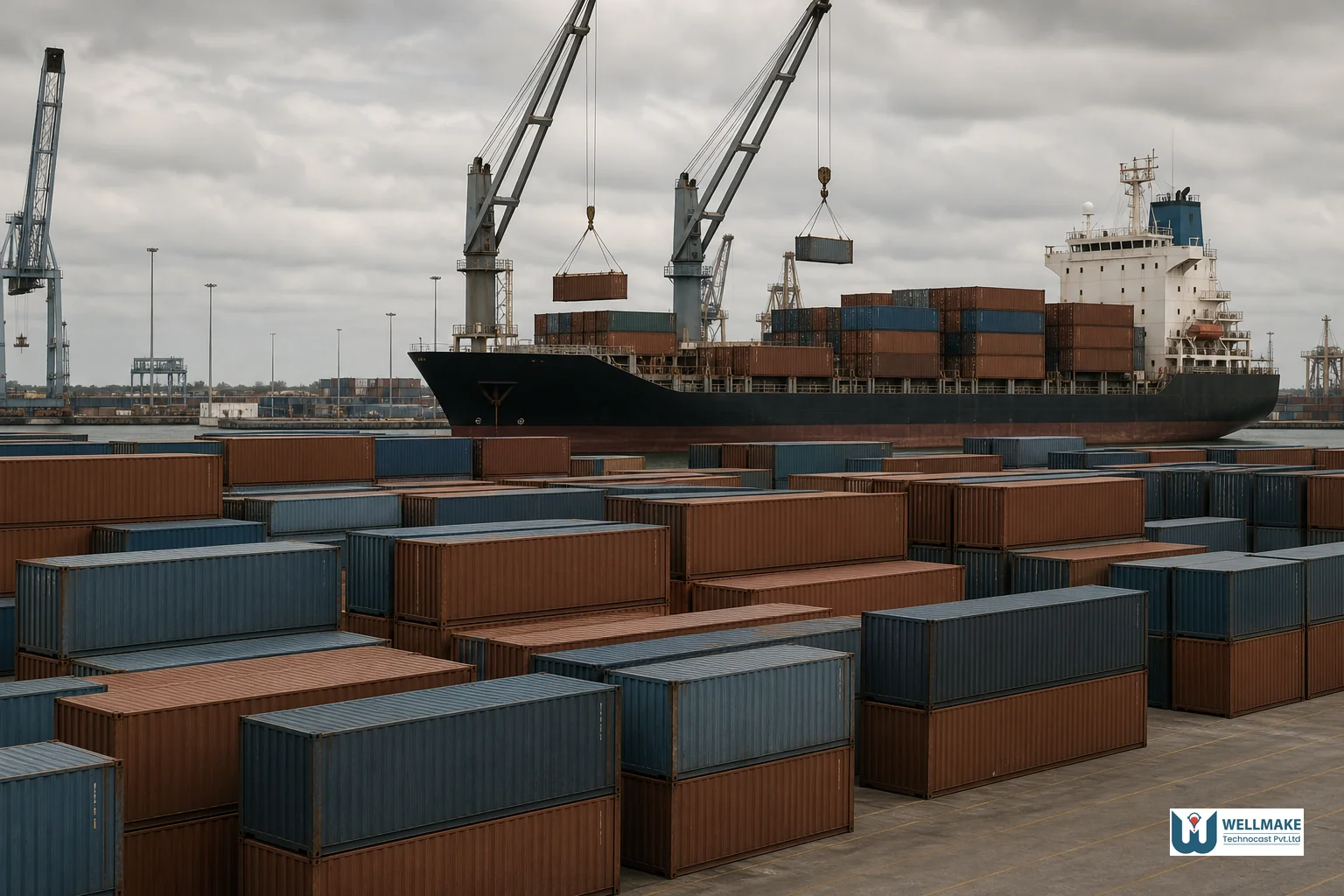
- Ocean or air freight to Canada: Ocean freight is more economical for larger orders but adds several weeks in transit; air freight cuts that time significantly for urgent or smaller shipments.
- Customs clearance and import documentation: Canadian import requirements for aerospace-grade metal parts typically call for material certificates, test reports, and country-of-origin documentation, so confirm your supplier can produce this paperwork without delay.
A foundry that communicates clearly on a fixed cadence, weekly production updates, prompt responses to sample feedback, and transparent notice of any schedule risk, is a stronger long-term partner than one that only reports once a shipment is already late. Establishing that communication rhythm early, ideally during the sample approval phase, tells you a great deal about how the relationship will run once you're placing recurring production orders.
7. Compare the Cost Case: Indian Investment Casting vs North American and European Alternatives
Cost comparisons between domestic Canadian casting, European suppliers, and Indian foundries rarely come down to a single number. Labor rates, energy costs, and overhead structures differ substantially between regions, and those differences show up most clearly in tooling cost and per-unit pricing at production volume. Indian foundries with modern ceramic shell process lines can typically offer meaningfully lower tooling investment and per-kilogram casting costs than North American or Western European counterparts, while still meeting ISO-based quality management requirements.
The comparison only holds up, though, if quality stays consistent across the cost gap. A lower unit price loses its value fast if a batch fails incoming inspection or if inconsistent tolerances force rework on your line. That's why total cost of ownership, not just the quoted per-piece price, should anchor your supplier decision. Our breakdown on investment casting tooling cost and the related analysis of cost per kilogram drivers both walk through the variables that separate a genuinely competitive quote from one that looks cheap on paper but carries hidden risk.
It's also worth noting that Canadian buyers aren't alone in running this comparison. Manufacturers across Germany, the UK, and other established industrial economies are making similar decisions between domestic capacity and qualified overseas foundries for the same reasons: capacity constraints, rising energy costs at home, and the need for a supplier that can hold aerospace-adjacent tolerances at a defensible price. According to Statistics Canada, aerospace product and parts manufacturing remains one of the country's most export-intensive advanced manufacturing sectors, which puts continuous pressure on Canadian OEMs to keep their supply chains both cost-competitive and globally compliant (Statistics Canada). The International Organization for Standardization also maintains the current ISO 9001, 14001, and 45001 standards referenced throughout this guide, which buyers can review directly when building their own supplier audit checklist (ISO.org).
Frequently Asked Questions About Aerospace Investment Casting Sourcing
Can investment casting meet AS9100-adjacent quality expectations?
Investment casting itself is fully compatible with AS9100-level documentation and traceability requirements. What matters is whether the specific foundry has built its quality management system to support first article inspection reports, material certification, and full lot traceability. A foundry already certified to ISO 9001, 14001, and 45001, with experience in defence and other high-reliability sectors, typically has much of that documentation discipline already in place and can adapt it to aerospace-specific formats.
What minimum order quantities are realistic for aerospace prototype and production runs?
Minimum order quantities vary by part size, alloy, and tooling complexity. Prototype and first article runs are usually smaller and priced to reflect tooling amortization, while production quantities bring the per-unit cost down significantly. Our detailed guide on investment casting tooling cost breakdown explains how MOQ decisions interact with tooling investment.
How do Canadian OEMs handle export and import compliance for aerospace castings from India?
Canadian import of aerospace-grade metal components generally requires standard commercial documentation, material test certificates, and country-of-origin paperwork consistent with Canada Border Services Agency requirements. Confirm early in the qualification process that your supplier can generate this documentation as a standard part of every shipment, not as a special request.
What size range of aerospace components can be cast using investment casting?
Investment casting comfortably covers a wide range, from small brackets and fittings weighing a few grams up to larger structural housings weighing well over a hundred kilograms. Wellmake Technocast's production range spans from a few grams to 180 kilograms within its 70 MT monthly capacity, covering the majority of bracket, housing, and structural fitting geometries common in aerospace supply chains.
Is investment casting suitable for complex internal geometries required in aerospace parts?
Yes. One of investment casting's core advantages is its ability to produce complex internal passages, thin walls, and organic shapes in a single piece that would otherwise require multiple machined components welded or bolted together. This reduces joints, weight, and potential failure points, which is exactly why aerospace engineers specify it for brackets, manifolds, and housings with intricate internal features.
Your Next Step Toward a Reliable Aerospace Casting Supply Chain
Canadian aerospace OEMs don't need to choose between quality and cost when sourcing cast components. What they need is a supplier that can prove its certifications, show its testing data, and deliver line-ready parts on a schedule that matches program milestones rather than best-case estimates. Wellmake Technocast has built its foundry around exactly that combination: triple ISO certification, in-house spectrometer, UTM, hardness, and impact testing, and both un-machined and fully machined component capability across ferrous and non-ferrous alloys.
If you're evaluating suppliers for an upcoming aerospace program, start by reviewing the range of components already in production across similarly demanding sectors through our product catalog, then reach out directly to discuss your drawings, alloy requirements, and timeline. Get in touch with our engineering team to request a quote, or contact us today to start the sample qualification process before your next program deadline puts you in the same position as so many Canadian buyers already searching for a better source of investment casting for aerospace components in Canada's supply chain.